
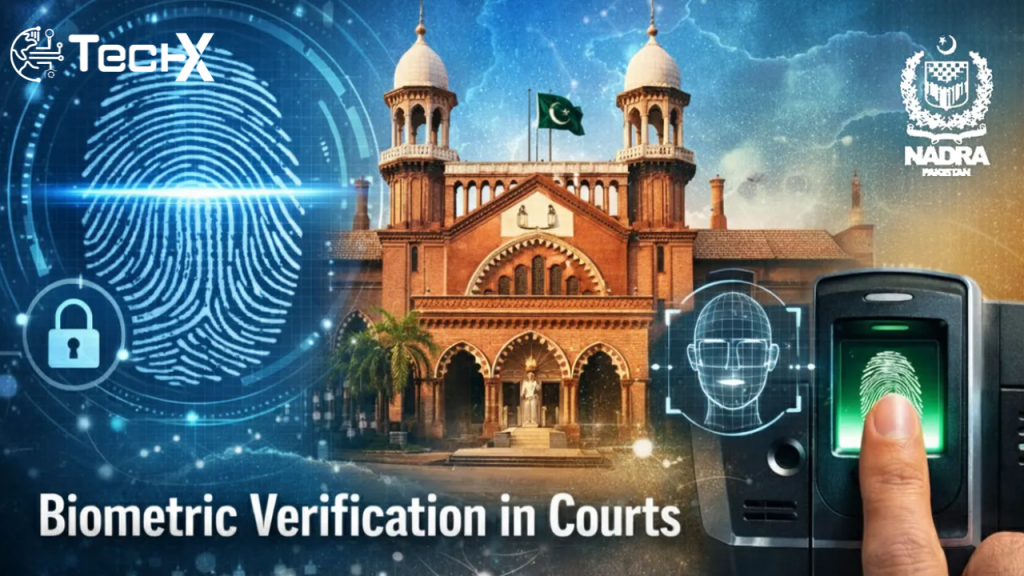
The Punjab Government has finally enforced the biometric verification system, with effect from 20–21 January 2026, within all courts, including the Lahore High Court and all district courts, in collaboration with the National Database and Registration Authority for ensuring the authenticity of parties in court cases and discouraging fraudulent practice.
Mandatory Biometric Verification
In the new system, all parties in a legal case, whether petitioners, respondents, witnesses, and sureties, must undergo biometric verification by NADRA before any case can be heard. It has been made clear that without successful biometric verification, there shall be no hearing of any case, bail acceptance, and legal proceedings. In this way, a reduction in hearing of fictitious cases, fictitious sureties, and allegations in the judicial system has been made possible.
Objectives and Impact
The purpose of the inclusion of the biometric verification process is to:
- Improve judicial transparency.
- Protect the presence of the actual litigants in the case, which will ensure there are no imitators involved in
- Getting rid of fake sureties, decreasing use of false identities.
- Improve accountability during case hearings and court documentation.
Lawyers have appreciated this amendment in the justice system. According to them, this is quite an important step towards the digital integration of the justice system in Punjab.
Implementation Details
- System Integration: NADRA biometric database (fingerprint and CNIC verification) is integrated with Punjab courts case management systems.
- Coverage: LHC, all district courts, and all court levels in Punjab.
- Requirement: Without biometric verification, no hearing, bail, or case-related action can be performed.
- Start Date: 20–21 January 2026.
- Expected Outcome: Significantly reduce fake cases, fraudulent sureties, and legal impersonation, while improving efficiency and trust in court proceedings.
Broader Significance
In this scheme, a digital transformation of the judiciary with technology integration in identity verification in courts. The initiative reflects a proactive attitude in judicial reforms, aiming that justice delivery in this case be transparent, accountable, and fraud-proof.