
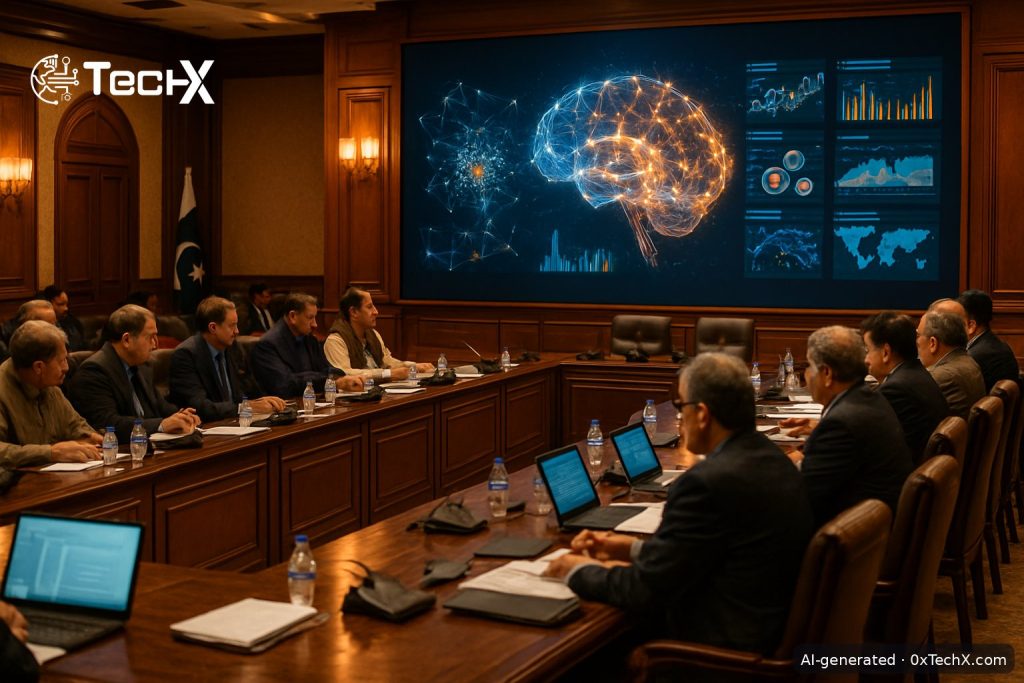
Punjab AI Vision 2029 is the most concrete AI commitment any Pakistani province has made so far. On August 15, 2026, Chief Minister Maryam Nawaz Sharif sat down with her AI adviser to review exactly how far the plan has come, and to push it harder toward a single, clear deadline: making Punjab the most AI-enabled province in South Asia by 2029.
Punjab is home to more than 110 million people. What happens with AI adoption here does not just affect Lahore. It shapes jobs, public services, and digital investment across the whole country.
What Is Punjab AI Vision 2029?
CM Maryam Nawaz reviewed progress on the “Punjab AI Vision 2029” and set a target to transform Punjab into the most AI-enabled province in South Asia by 2029. The plan is not a loose aspiration. It is built around six strategic pillars designed to integrate artificial intelligence into governance, public service delivery, and overall institutional performance.
CM Maryam Nawaz approved the province’s first AI roadmap back in March 2026, and also approved the establishment of an AI Technical Advisory Board, directing that leading experts be included to guide the initiative. The August 15 meeting was a formal progress check, not just a press release, but a structured review of the two months since the AI Office opened.
The August 15 Review: What Was Discussed
The chief minister chaired a meeting with Provincial Adviser for Artificial Intelligence and Special Initiatives Ali Mustafa Dar to review preparations for the formal launch of the vision and evaluate the performance of the AI Office over the past two months.
Three key things came out of that meeting:
- The world’s first AI-enabled Delivery Unit. Ali Mustafa Dar briefed the chief minister on the establishment of the world’s first AI-enabled Delivery Unit in Punjab, created to accelerate the implementation of priority government initiatives through data-driven monitoring and artificial intelligence.
- A high-level implementation team. A high-level implementation team has been constituted, while an onboarding programme has been developed with the assistance of global delivery experts to support the rollout.
- The CM AI Stocktake. The meeting discussed the first “Chief Minister AI Stocktake,” a performance review mechanism established to assess progress on the roadmap, monitor implementation, and ensure the timely achievement of key milestones.
The Stocktake is particularly significant. It means the chief minister is personally accountable for hitting targets, not just announcing them. That kind of built-in review is often what separates a policy that works from one that stalls.
Jobs and Schools: The Numbers That Matter Most
The plan is not only about government offices switching to AI dashboards. Punjab AI Adviser Ali Dar informed the chief minister that the initiative is expected to generate more than 100,000 employment opportunities over the next three years. That is a figure most news coverage of the August 15 review did not highlight, but it is the one that matters most to ordinary Punjabis.
An AI curriculum has already been launched in 100 schools, with another 155 set to begin classes. This means the groundwork for a future AI-literate workforce is already being laid in classrooms, not just in boardrooms.
CM Maryam Nawaz emphasised that the AI roadmap would help harness the potential of the youth and bring young talent together under a unified technological vision for the province.
Pakistan’s startup ecosystem is already growing fast. You can read more about how that broader momentum is building in our coverage of the Pakistan startup ecosystem reaching $4 billion. Punjab’s AI push could channel investment and talent that has so far been mostly Islamabad-focused into Lahore and beyond.
Why This Matters Beyond Punjab
Punjab accounts for roughly 53 percent of Pakistan’s population. When the provincial government builds AI into how it delivers health, education, and civic services, millions of ordinary people feel the change directly, in shorter queues, faster approvals, and more reliable public records.
Under the Punjab AI Vision 2029, AI is set to move from emerging technology to a core part of governance and public service delivery. That shift, if real, would make Punjab a model for Sindh, KP, and Balochistan to follow. It also signals to foreign investors and tech companies that Pakistan’s largest province is serious about digital infrastructure.
Pakistan is also building its AI credibility on the global stage. The country recently made its case at the UN Youth Summit in New York on AI governance, and Punjab’s concrete targets give that diplomacy something real to point to.
CM Maryam Nawaz directed the relevant authorities to ensure the effective implementation of the AI agenda and maintain the momentum of reforms to achieve the objective of making Punjab a leader in AI adoption within the region by 2029.
Frequently Asked Questions
What is Punjab AI Vision 2029?
It is the Punjab government’s official plan to make Punjab the most AI-enabled province in South Asia by 2029. It rests on six strategic pillars covering governance, public services, and institutional performance, and is led by CM Maryam Nawaz with AI Adviser Ali Mustafa Dar overseeing day-to-day progress.
What is the AI-enabled Delivery Unit and why is it special?
The AI-enabled delivery unit in Punjab is described as the first of its kind in the world. It uses data monitoring and AI tools to track whether government projects are actually being completed on time, moving beyond announcements to real accountability.
How many jobs does the plan aim to create?
The Punjab AI roadmap targets more than 100,000 new jobs over three years. These are expected to come from AI-linked industries, government tech projects, and a broader push to train and deploy young tech talent across the province.
What is the CM AI Stocktake?
The CM AI Stocktake is a review mechanism aimed at assessing progress on Punjab AI Vision 2029 and monitoring the implementation of the province’s artificial intelligence initiatives. It puts the chief minister directly in the accountability loop, which is unusual for a government tech programme in Pakistan and gives the plan more credibility than a simple press announcement.