
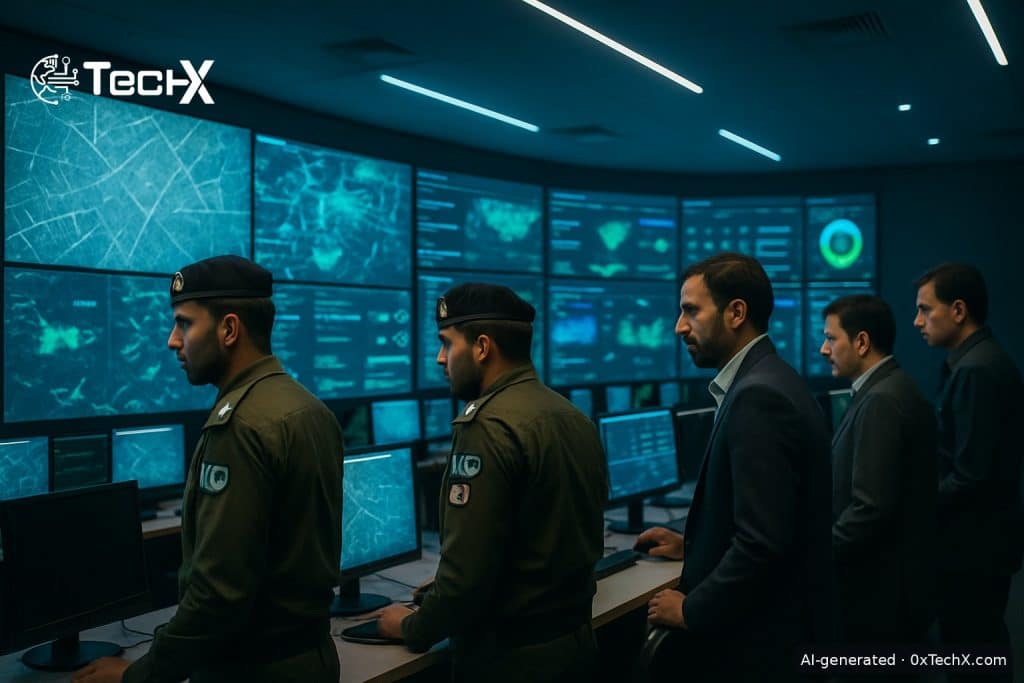
The Punjab AI Intelligence Hub has made Punjab the first province in Pakistan to use artificial intelligence as a core part of its law-enforcement system. Chief Minister Maryam Nawaz Sharif launched the facility on 5 September 2026 at the headquarters of the Punjab Enforcement and Regulatory Authority (PERA) in Lahore, alongside a new centre called PIFTAC, the Provincial Intelligence Fusion and Threat Assessment Center. Together, the two form a system designed to stop threats before they turn into incidents, rather than reacting after the fact.
What Is the Punjab AI Intelligence Hub?
The Punjab government has established a dedicated Artificial Intelligence Hub, a facility that the provincial government says will allow law-enforcement agencies to detect threats early and act before incidents occur rather than after them. It is housed at PERA, the province’s enforcement body that was set up in October 2024 and now has more than 8,000 staff across 154 stations.
The chief minister inaugurated the AI Intelligence Hub through an e-launch and was given a detailed briefing on the project at the PERA headquarters. Punjab has become the first province in Pakistan to establish an Artificial Intelligence Intelligence Hub, CM Maryam Nawaz Sharif said on Friday while formally launching the facility at the PERA office.
Maryam Nawaz said the concept of artificial intelligence had been transformed into a practical reality within a few months, describing the establishment of the AI Hub in record time as a major achievement.
How PIFTAC and the Punjab AI Intelligence Hub Work Together
The hub does not operate alone. It feeds directly into PIFTAC, which acts as the analysis and command layer for the whole system.
According to the chief minister, the AI-enabled system will issue digital alerts to district coordination committees, allowing authorities to identify potential threats before they develop into major incidents. This is a significant change from the old way of doing things, where threat information typically travelled upward through the reporting chain before reaching district administrations. Now, alerts go directly to the districts, cutting the time it takes to act.
Maryam Nawaz said PIFTAC would improve coordination among security agencies and help reduce response times against terrorism and other security threats, particularly those originating from the tri-border region and neighbouring provinces.
Joint check posts in vulnerable areas have also been strengthened and equipped with bulletproof facilities, thermal cameras, and night-vision technology. This physical upgrade works alongside the digital hub, giving field teams better tools on the ground.
Army Backing and Government Support
One thing most coverage has not highlighted clearly enough is the Army’s direct role in making this happen. CM Punjab said the concept of artificial intelligence had been translated into reality within a few months, with the support of the Pakistan Army and other security institutions.
She thanked Lahore Corps Commander Lt Gen Fayyaz Hussain Shah for the Army’s cooperation and congratulated Home Minister Khawaja Salman Rafique, Home Secretary Ahmed Javed Qazi and other officials for establishing the AI hub in record time.
This is not just a tech project from a government department. It was built with active military cooperation, which is why the launch was a high-profile, CM-level event rather than a routine ministry announcement.
Punjab AI Intelligence Hub and the Bigger Tech Push
The Punjab AI Intelligence Hub sits inside a much larger effort to modernise Punjab’s public services through technology. The province already runs a predictive policing programme through the Punjab Safe Cities Authority (PSCA), which uses data to find crime hotspots and deploy police resources more effectively. By anticipating crime trends, officers can focus on preventative measures, community engagement, and targeted patrols in high-risk areas. By forecasting potential crime occurrences, law enforcement agencies can take proactive measures to prevent crime before it happens, significantly enhancing public safety.
The new AI hub and PIFTAC take this idea further. Instead of just mapping past crimes, the system is designed to detect and flag active or emerging threats in near real time and push those alerts down to local district administrations without delay.
The chief minister said the government’s broader goal was to create a safer, technologically enabled and better-governed Punjab. She also noted that the government has spent billions of rupees on technology to reach this point.
Why This Matters Beyond Punjab
Pakistan’s other provinces will be watching closely. If the Punjab AI Intelligence Hub delivers measurable results, it sets a template that Sindh, KP, and Balochistan could follow. Punjab is Pakistan’s most populous province, home to well over 110 million people, so any security system that works here at scale carries real weight as a national model.
There is also a broader signal for Pakistan’s technology sector. Building an AI-driven security platform in-house, within months, with local teams and army technical support, shows that Pakistan can design and deploy complex AI infrastructure for public services without depending entirely on foreign vendors.
She said crime in Punjab had declined by as much as 70%, adding that the government had shifted towards preventing crimes instead of responding only after they occurred. Independent verification of that figure will come with time, but the direction of travel is clear: Punjab is betting on data and AI to hold that progress.
The chief minister expressed hope that the establishment of the AI Intelligence Hub would substantially improve Punjab’s response time in countering terrorism and help authorities prevent incidents before they occurred. As she put it at the launch, ‘If we can control incidents before they happen, that will be the real success.’
Frequently Asked Questions
What is the Punjab AI Intelligence Hub?
It is Pakistan’s first provincial AI-based security facility, launched by CM Maryam Nawaz on 5 September 2026 at PERA’s Lahore headquarters. It uses artificial intelligence to detect security threats early and send digital alerts to district administrations across Punjab.
What is PIFTAC and how is it linked to the hub?
PIFTAC stands for the Provincial Intelligence Fusion and Threat Assessment Center. It works directly with the AI hub. The hub generates and processes threat data; PIFTAC coordinates the response across police, Special Branch, and other security agencies, then pushes alerts to district coordination committees in real time.
What role did the Pakistan Army play in this project?
The Pakistan Army provided active technical and institutional support throughout the project. CM Maryam Nawaz specifically thanked Lahore Corps Commander Lt Gen Fayyaz Hussain Shah at the launch ceremony. The Army’s involvement helped the hub get built in a matter of months.
Will other provinces follow Punjab’s lead?
There is no official announcement yet from Sindh, KP, or Balochistan. However, Punjab’s model, built at provincial level with local expertise and army backing, is likely to be studied by other provincial governments. If the system shows results, other provinces will face pressure to build similar infrastructure.