
Pakistan’s telecom data crackdown took a concrete step forward in July 2026, when the Pakistan Telecommunication Authority (PTA) filed a formal complaint with the National Cyber Crime Investigation Agency (NCCIA) in Lahore, setting off an operation that ended with three men in custody and a large cache of illegal data and equipment seized. The case shines a harsh light on a long-running underground trade in Pakistani mobile users’ most sensitive personal records.
How the Telecom Data Crackdown Unfolded
The PTA Lahore office lodged the complaint after it detected an organised network allegedly buying and selling confidential subscriber information. The NCCIA registered FIR No. 146/2026 and launched a formal investigation. The investigation led to the arrest of three suspects identified as Muhammad Saghir, Muhammad Ashfaq, and Malik Saddham.
Preliminary findings revealed that they were allegedly operating an organised network to illegally obtain and sell citizens’ CDRs, SIM registration records, and other sensitive information. The scale of what was found during the raid shows this was no small side operation.
What Was Seized During the Raid
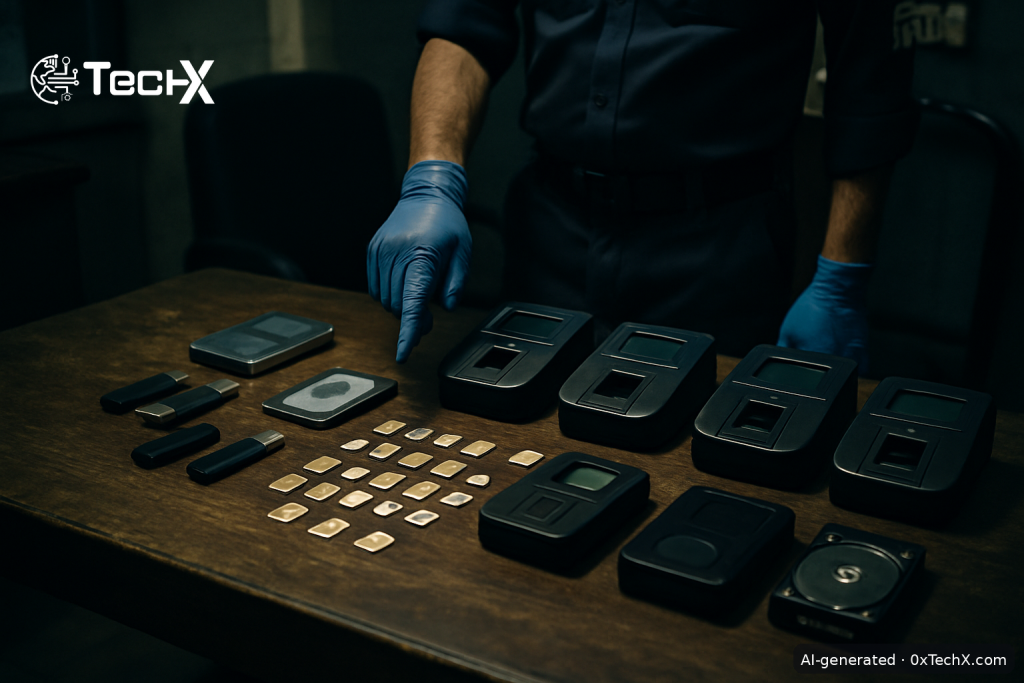
The haul recovered by NCCIA officers was significant. During the operation, NCCIA recovered 14 mobile phones, a laptop, a tablet, 38 SIM cards, 10 internet devices, nine Biometric Verification System (BVS) devices, seven fingerprint scanners, three Bluetooth fingerprint scanners, three card readers, 11 memory cards, nine USB drives, eight hard disks and RAM modules, and hard copies of 60 fingerprints from the suspects.
The presence of multiple BVS devices in criminal hands is the detail that many reports have glossed over. BVS machines are the same biometric tools used at legitimate SIM registration points to verify a person’s thumbprint against NADRA records. Finding nine of them at an illegal data operation raises serious questions about how deep the misuse of official verification infrastructure goes.
Forensic analysis of the seized devices revealed WhatsApp conversations allegedly linked to the unauthorised sale of sensitive telecom subscriber information. The recovered material included Call Detail Records (CDRs), subscriber and IMEI data, location information, fingerprint and CNIC records, as well as evidence of financial transactions related to the alleged operation.
What Is a CDR and Why Does It Matter?
A Call Detail Record (CDR) is a log that your mobile network keeps of every call you make or receive, including the time, duration, and tower location. Your network operator holds this data for technical and legal purposes. In the wrong hands, a CDR tells a stranger exactly who you called, when, for how long, and roughly where you were standing. Combined with CNIC details and IMEI data, it becomes a full personal profile that can be used for blackmail, targeted fraud, or stalking.
When an IMEI number is combined with other leaked personal information such as identity card copies or call records, it becomes even more dangerous. Criminals can build a detailed profile of a person’s contacts, habits, and movements, and then exploit this data for scams, fraud, or blackmail.
The Dark Web Price List for Pakistani Data
This is not a one-off case. A wider data trade has been operating for some time. On various platforms, mobile phone location data has been offered for Rs500, detailed mobile data records for Rs3,500, and foreign travel details for Rs5,000. IMEI-linked data has been listed for as much as Rs25,000, and colour copies of CNICs are also sold openly.
These are not large sums of money. At those prices, almost anyone with bad intentions can afford to look up a specific person’s movements, call history, or identity documents. That is the real danger for ordinary Pakistani mobile users.
PTA’s Broader Telecom Data Crackdown
The Lahore arrests are part of a wider effort by Pakistani authorities. In its ongoing crackdown on unlawful content, the PTA has blocked 1,372 sites, apps, and social media pages involved in selling or sharing personal data. The Ministry of Interior has also formed an inquiry committee that is probing the matter.
The NCCIA’s investigative team has asked all cellular companies to submit comprehensive records and stand briefed on data security protocols. The NCCIA will continue its investigation to determine whether additional individuals or organisations were involved in the alleged network, and may also examine whether further data was accessed or distributed through the operation.
Where did the data come from in the first place? The PTA has been careful on this point. PTA clarifies it does not hold or manage subscriber data, which remains solely with licensed operators. An initial review showed the reported datasets include family details, travel records, vehicle registrations, and CNIC copies, suggesting aggregation from multiple external sources rather than telecom operators.
What Pakistan’s Data Protection Law Says
Pakistan’s Personal Data Protection Act 2025, enacted in response to years of data breach concerns, establishes mandatory breach notification, data security requirements, and compensation rights for breach victims. Under PDPA 2025, future confirmed breaches carry penalties of up to Rs25 million or 4% of annual Pakistan turnover for major violations.
This law gives regulators and courts real teeth for the first time. The FIR registered in this case falls under existing cybercrime law, but future prosecutions could also invoke PDPA 2025 provisions, which set higher standards for how data must be stored and protected. You can read more about the PTA’s official consumer protection resources at pta.gov.pk. For understanding the legal framework, the National Assembly of Pakistan’s legislation portal carries the enacted text of PDPA 2025.
How to Protect Yourself Right Now
There is no foolproof way for an individual Pakistani mobile user to prevent their data from being traded if it has already been compromised at the network or franchise level. However, a few practical steps reduce your exposure:
- Check active SIMs on your CNIC by sending your CNIC number to 668 via SMS. Any SIM you did not register should be reported to your operator immediately.
- Watch for unusual calls or messages claiming to be from your bank or network. Scammers who buy CDRs know which bank you use and can craft very convincing stories.
- Do not share OTPs with anyone, even if the caller already knows your name and mobile number. Bought data makes callers sound legitimate.
- Avoid third-party SIM-checking apps and websites that promise to show you subscriber details. Many of these harvest your CNIC the moment you type it in.
Frequently Asked Questions
What is a CDR and why is it sensitive?
A CDR, or Call Detail Record, is a log of every call made or received on a mobile number, including timing, duration, and the cell tower used. It reveals a person’s contacts and physical movements over time, making it highly sensitive if it falls into the wrong hands.
How did the PTA telecom data crackdown lead to the Lahore arrests?
The PTA Lahore office filed a formal complaint with the NCCIA after detecting suspicious activity. The NCCIA registered FIR No. 146/2026, launched an investigation, and arrested three suspects, Muhammad Saghir, Muhammad Ashfaq, and Malik Saddham, recovering a large amount of equipment and data from them.
What are BVS devices and why were they found at the crime scene?
BVS stands for Biometric Verification System. These are the machines used at SIM registration outlets to scan fingerprints and verify identity against NADRA records. Finding nine of them in the possession of suspected data traders suggests the suspects may have been using biometric tools to access or verify subscriber records illegally.
What should a Pakistani mobile user do if they think their data has been leaked?
Send your CNIC number to 668 via SMS to check all SIMs registered on your name. Report any unknown SIMs to your network operator and the PTA. Stay alert to phishing calls or messages that use personal details to sound trustworthy, and never share OTPs or banking passwords over the phone.