
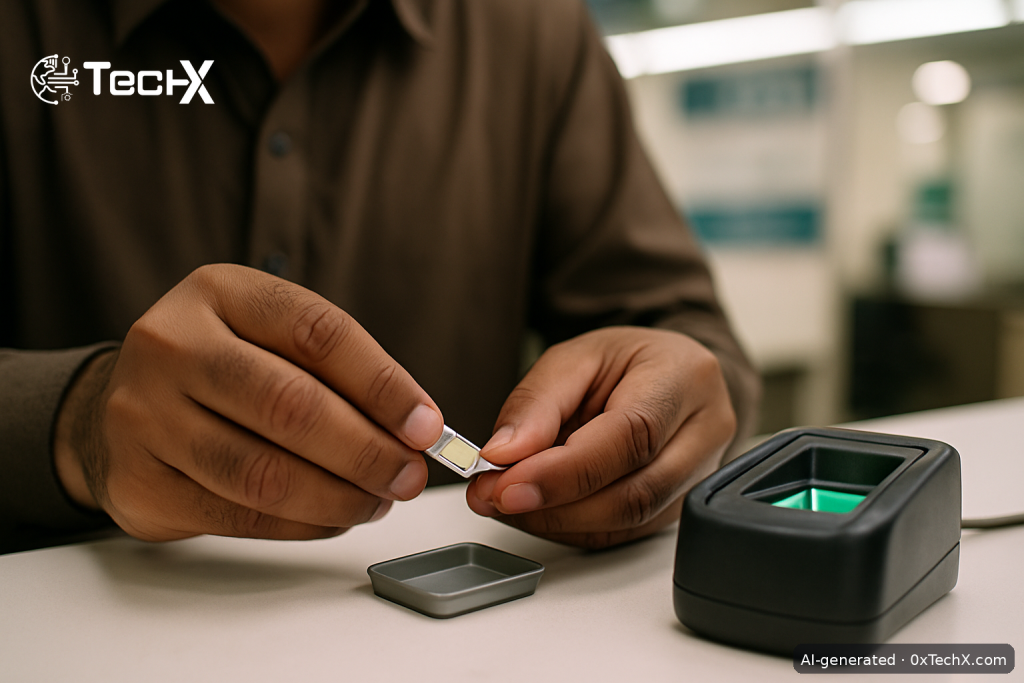
Pakistan’s PTA SIM card rules just got a lot stricter. The Pakistan Telecommunication Authority issued fresh directives on July 24, 2026, making it harder for anyone to walk into a random shop and walk out with a new mobile number. The changes affect consumers, retailers, and mobile operators alike, and they come on the back of hundreds of millions in fines already handed out this month.
What the New PTA SIM Card Rules Actually Say
The core of the new directives is simple: SIM cards can only be sold through authorized customer service centres, franchises, and approved outlets. No more buying a new number from just any corner shop. Every sales representative working at those outlets must now carry a unique identification number that links them to the SIM they sell.
That is not the only change. New SIM activation will only be allowed after successful biometric verification of customers through NADRA’s Biometric Verification System using the original national identity card. Customers must show up in person with their CNIC. No proxy, no workaround.
The regulator has also ordered mobile companies to increase monitoring of franchises and retailers through regular inspections and monthly reviews, while maintaining detailed records of SIM issuance, biometric verification, and sales personnel.
Critically, operators will be held responsible for any unauthorized or illegal SIM sales carried out through their franchises, retailers, or sales channels. This shifts accountability directly onto Jazz, Telenor, Zong, and Ufone, not just the small shopkeeper who broke the rules.
Why PTA Is Tightening the Rules Now
The timing is no coincidence. Just days before these new directives, the PTA sent a very loud message to the industry.
The Pakistan Telecommunication Authority imposed cumulative penalties of around Rs 740 million on the country’s four cellular mobile operators for repeated violations of SIM issuance regulations, holding them responsible for unauthorized activation of SIMs and serious lapses in biometric verification and oversight of franchise networks.
The breakdown was stark. Zong was fined Rs 155.6 million, while Jazz, Telenor Pakistan, and Ufone each faced multiple enforcement actions carrying fines of Rs 116.7 million, Rs 116.7 million, and Rs 116.7 million respectively. Ufone’s total actually reached over Rs 233 million when multiple orders were combined.
The PTA stressed that the illegal issuance of SIM cards can lead to identity theft, cyber fraud, and financial crimes, making strict enforcement of SIM registration rules essential for protecting consumers and strengthening national security.
The regulator has also been building toward this moment for months. Earlier in May 2026, PTA imposed a nationwide restriction on the sale of SIM cards between 12:00 am and 6:00 am to prevent the illegal issuance and misuse of unauthorized SIMs. Around the same time, the SIM disowning period was extended from 60 days to 365 days, meaning once a SIM is activated on your CNIC, you cannot transfer or disown it for a full year.
The scale of the problem explains the urgency. The most recent enforcement phase included the largest single blocking campaign in the system’s history, 4.9 million SIMs blocked in June 2026 alone.
What This Means for Everyday Pakistani Mobile Users
For most honest users, the process of getting a new SIM will just take more effort. You will need to visit an officially authorized outlet, bring your original CNIC, and complete biometric verification on the spot. There is no shortcut.
Getting a second SIM on the same CNIC is also slower now. The second new SIM for an individual will now be available and activated in seven days instead of the previous eight hours, while the first new SIM will be issued and activated within eight hours.
One practical tip: you can check exactly which SIM cards are registered against your CNIC right now. Citizens can confirm which SIM numbers are registered under their identity card at no cost within seconds using the official SMS code 668 or the government web portal cnic.sims.pk, no internet connection is required for the SMS method. If you spot a number you do not recognize, report it to PTA immediately.
There is also help coming for people whose fingerprints fail during verification. PTA has taken steps to make SIM issuance easier for thousands of people by proposing a new verification system that will use facial recognition instead of just fingerprints, a move especially aimed at senior citizens and laborers who often face problems when their fingerprints fail during the registration process.
If you use a Telenor connection and want to understand your current package before any changes take effect, you can check the Telenor monthly call and SMS package guide for the latest details. For a broader picture of how Pakistan’s mobile market is shifting, see our coverage of Pakistan’s telecom market share changes in 2026.
What Operators Must Do Differently
The burden on mobile operators is now heavier than ever. They must maintain a list of all authorized sales points, assign unique IDs to every sales rep, run monthly audits of their franchise networks, and keep records of every SIM sold. If a franchise sells a SIM illegally, the operator, not just the retailer, pays the price.
PTA said the measures are aimed at preventing the illegal sale and misuse of SIM cards and ensuring compliance with existing telecom laws and licensing requirements. Companies that fail to comply face the kind of penalties the industry saw earlier this month.
Frequently Asked Questions
Where can I now buy a new SIM card in Pakistan?
Under the new PTA SIM card rules, you can only buy a new SIM from authorized customer service centres, official franchises, or PTA-approved retail outlets. Buying from an unauthorized shop is no longer permitted and any SIM sold that way can be blocked.
Do I still need biometric verification to get a new SIM?
Yes. New SIM activation will only be allowed after successful biometric verification through NADRA’s Biometric Verification System using the original national identity card. You must be present in person with your CNIC.
How do I check how many SIMs are registered on my CNIC?
Send your 13-digit CNIC number (no dashes or spaces) to 668 and you will get an automated reply listing every SIM registered to that CNIC, along with the network operator, registration date, and current status. You can also visit cnic.sims.pk online. Both are free.
Can I transfer or disown a new SIM if I change my mind?
Not quickly. The SIM disowning period has been extended from 60 days to 365 days, meaning any newly activated SIM can only be disowned after one full year from the date of activation. This rule was put in place to stop scammers from repeatedly cycling fake SIMs through the system.