
Post Details
|
Field |
Content |
|---|---|
|
Title |
How Museums in Pakistan Are Using Projection and AR |
|
Meta description |
How museums in Pakistan are using projection mapping, holograms and augmented reality to make collections easier to understand and harder to walk past. |
|
Suggested slug |
/museums-pakistan-projection-ar/ |

How Museums in Pakistan Are Using Projection and AR
STANDFIRST
Holograms in Lahore, augmented reality in the Mughal gallery, and light on the facade of a palace in Karachi. A look at what is actually happening.
OPENING
A museum has a problem no amount of collecting solves. The objects are extraordinary and the labels beside them are two hundred words long, and the visitor has a phone in their pocket that is competing for the same attention. Understanding an artefact usually requires knowing what surrounded it, and that context is precisely what a glass case removes.
Projection and augmented reality are being used to put some of that context back. In Pakistan the shift has been quieter than in the Gulf or Europe.
Pakistan’s first digital museum
The clearest example is the National History Museum in Lahore, which opened in Greater Iqbal Park in 2018 as a joint project of the Parks and Horticulture Authority and the Citizens Archive of Pakistan. It is generally described as the country’s first digital museum.
Across roughly 35,000 square feet and five halls, it uses holograms, virtual reality, interactive screens and 3D cinema alongside more than 8,700 digitised photographs to move visitors from the period before independence through partition and into contemporary Pakistan. The point is not that the technology is present. It is that a story spanning decades and millions of people is difficult to tell through objects alone, and the digital layer carries the parts that objects cannot.
Augmented reality inside the gallery
At Lahore Museum, established in 1894, an augmented reality experience known as the Lahore Project was developed around the Mughal gallery. Visitors follow a virtual tour through the exhibit that explains the artefacts and their place in South Asian history.
That model, a phone or tablet held up to an object, is where AR and VR technology in Pakistan is most useful in a museum. It adds a layer without touching the case, the artefact or the room. A visitor can see a fragment reconstructed, a building rebuilt around a surviving doorway, or a manuscript translated as they look at it. Nothing is altered, and the visitor who prefers the label can simply read the label.
It also solves a practical problem. Museums hold far more context than any wall can carry, and much of it is specialist, multilingual, or of interest to only a fraction of visitors. AR lets that depth exist without crowding the gallery for everyone else.
When the building is the exhibit
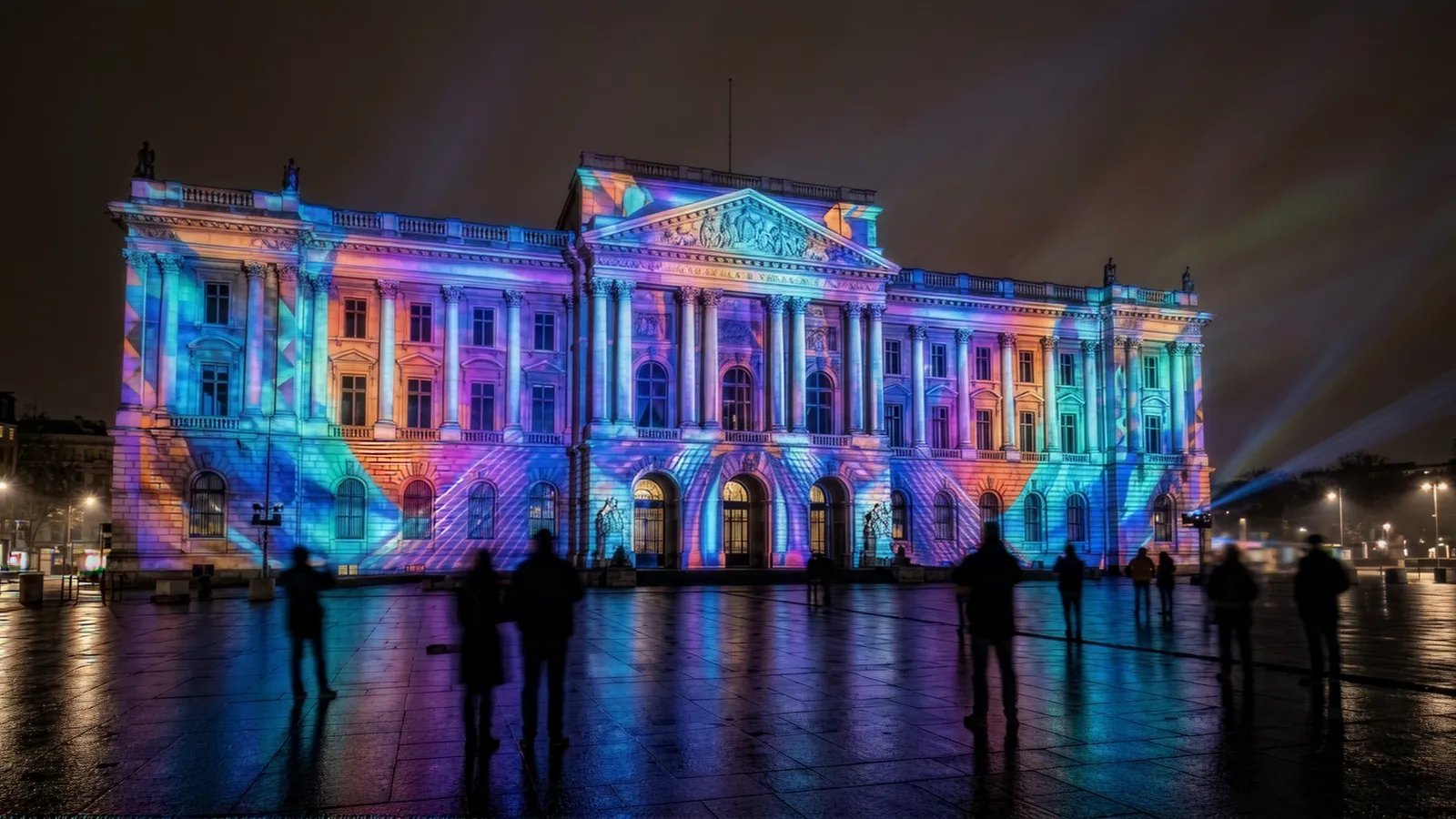
Some museums in Pakistan are housed in buildings as significant as anything inside them. Mohatta Palace in Karachi, built in 1927, is one. In cases like these the most powerful surface available is the facade itself.
Hoola has delivered projection mapping at Mohatta Palace, aligning animated content precisely to the geometry of the building so that the architecture appears to move. The same studio has worked on Mazar-e-Quaid, Governor House Lahore, Quaid’s Residency in Ziarat and the Pakistan Monument, all structures where the building carries public meaning before anything is projected onto it.
For an institution, this does something a gallery installation cannot. It reaches people who did not plan a visit. A mapped facade is seen by anyone passing, photographed widely, and frequently becomes the reason a first time visitor comes through the door the following week.
Why light suits heritage buildings
Projection has one property that matters enormously to a conservation team: nothing touches the building. No fixings, no drilling, no mounting. Equipment sits at a distance and light is the only thing that reaches the surface, so the facade is left exactly as it was found.
For a protected structure, this is often the difference between a project being possible and being refused outright. Permanent installations on heritage architecture require approvals that can take years, where a projection leaves no trace at sunrise.
The trade off is planning. Heritage work usually means short night access windows, layered permissions involving the custodian and sometimes a heritage authority, and content that may need approval from people outside the creative process. These constraints tend to extend the front of the schedule rather than the production end.
What museums should think about first
The failure mode in this field is recognisable. A museum commissions technology because peer institutions have it, the installation impresses for a season, and within two years the hardware is unsupported and the content is stale.
The projects that hold up start from a different question. Which part of this collection do visitors consistently fail to understand, and what would help. Sometimes the answer is augmented reality. Often it is better lighting, clearer writing, or a guide who knows the material. A studio worth appointing will say so.
Three further questions are worth asking at the outset. Who maintains the content after launch, and on what budget. What happens when the visitor’s device or operating system changes. And can the experience run without staff intervention on a busy Sunday, because if it needs supervision it will quietly stop being switched on.
Where this is heading
Pakistan holds an unusual density of sites worth this treatment. Mughal architecture, partition history, archaeological collections and buildings that are themselves the artefact. Very little of it has been interpreted digitally so far, which means the sector is early rather than saturated.
The institutions moving first are likely to shape what visitors come to expect. A generation raised on phones does not find a glass case self explanatory, and the museums that meet them halfway will hold their attention for longer than the ones that wait.
Planning something for a museum or heritage site?
Hoola is an immersive technology company in Pakistan working across projection mapping, augmented reality and interactive installation, with a portfolio concentrated on national and heritage architecture.
If your institution is considering a digital layer, whether on the building or inside the gallery, speak to Hoola early. On heritage sites, permissions and approvals usually set the timeline long before production does.