
https://x.com/MaryamNSharif/status/2116190821473038446
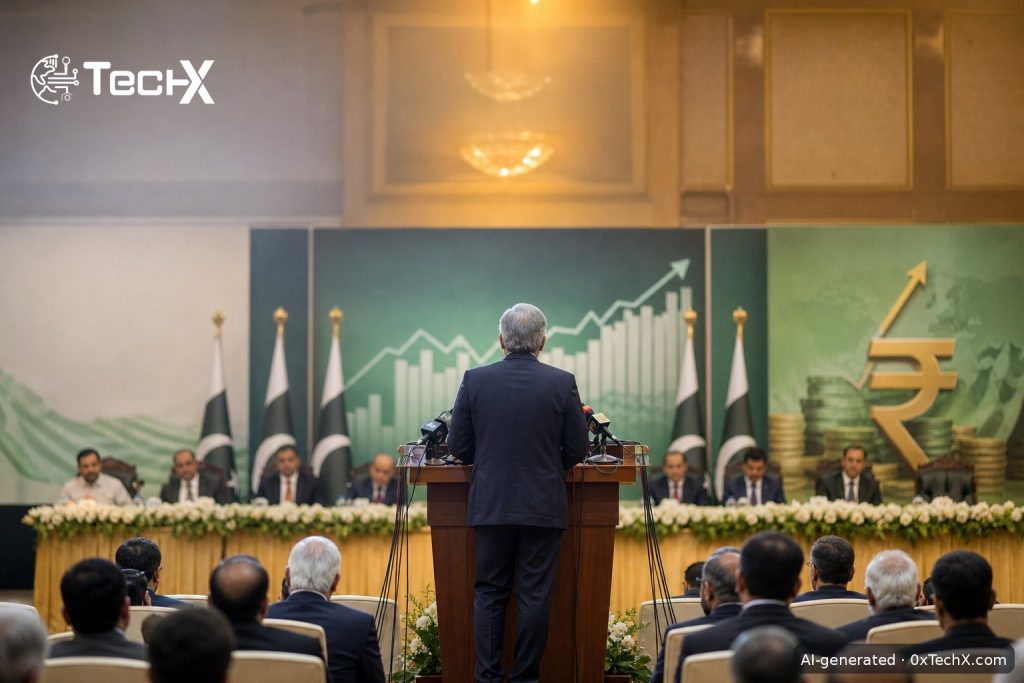
The PIVOT Plan Punjab is a nearly Rs2 trillion economic roadmap launched by Chief Minister Maryam Nawaz Sharif on 30 October 2026, and it carries some of the biggest direct promises for Pakistan’s tech, software, and digital export sector in years. The Punjab Innovation, Value Addition and Economic Transformation (PIVOT) Plan 2026-29 is a comprehensive Rs1,995.3 billion economic strategy aimed at positioning Punjab as an export-led industrial hub. Most coverage has focused on factories and farms, but there is a lot inside this plan that matters specifically to software houses, IT freelancers, startups, and digital businesses in Lahore and beyond.
What Is the PIVOT Plan Punjab, in Plain Terms?
Think of PIVOT as Punjab’s three-year blueprint to stop selling cheap raw goods and start selling finished, high-value products and services to the world. The three-year strategy targets an additional $6.8 billion in exports, the creation of 162,000 direct jobs, and improved livelihood opportunities for more than one million people. That export target alone is enormous for a province whose economy has long depended on cotton, wheat, and light manufacturing.
The programme involves Rs1,089 billion in government investment and Rs906 billion from the private sector. So this is not just public money, the government is actively trying to pull private capital in alongside it. American Business Forum President Osman Khalid Waheed hailed the PIVOT initiative as the province’s most ambitious economic expansion plan.
The STEP Portal and Cheap Financing for Businesses
One of the most practical parts of the PIVOT Plan Punjab is the Strategic Trade Enhancement Programme (STEP). STEP envisages Rs300 billion in concessional financing at interest rates ranging from zero to five per cent for eligible businesses, subject to programme conditions. That is a very low rate compared to Pakistan’s normal commercial lending rates, which have been far higher in recent years.
A primary pillar of the PIVOT framework is the Strategic Trade Enhancement Programme (STEP), supported by a newly introduced digital portal. The portal means businesses, including small IT firms and exporters, can apply online rather than standing in queues at government offices. For Pakistan’s growing community of software exporters and freelancers, access to cheap capital has always been a barrier. STEP is designed to lower exactly that barrier.
What PIVOT Means for Tech and Software Exports
This is the angle most coverage has skipped. The PIVOT Plan Punjab explicitly places digital services and technology businesses inside its priority sectors. The PIVOT programme extends beyond traditional industries, placing tourism, hospitality, digital services and technology-related businesses among Punjab’s economic priorities.
The skills and technology component is detailed and specific. The skills and technology program will focus on equipping young people with expertise suited to domestic industries and international labor markets. It includes digital skills training, IT internships, internationally recognised certifications, start-up incubation and entrepreneurship support. Punjab is home to the largest concentration of Pakistan Software Export Board (PSEB)-registered IT companies in Pakistan, so a structured pipeline of trained digital workers directly feeds the export economy.
The Punjab government has set a target of training 402,060 individuals over the next three years, focusing on skills demanded by modern industries, technology companies and emerging business sectors. At roughly 134,000 trained workers per year, that is a meaningful number if the programme delivers even half of its target.
E-Biz Reforms and Going Digital
Beyond funding and training, PIVOT introduces a digital reform layer that tech companies will feel directly. Under the E-Biz initiative, the provincial government plans to digitise 300 public services and bring 2,000 businesses onto e-commerce platforms. For software exporters who have long complained about slow, paper-heavy government processes, digitising 300 services is genuinely significant.
To improve the business environment, PIVOT introduces regulatory and administrative reforms aimed at simplifying commercial operations and attracting long-term investment. Through the E-Biz digital initiative, the provincial government aims to digitise 300 public administrative services to make business processes more accessible and transparent. This links directly to the broader push to make Pakistan a destination for B2B tech investment, a trend we covered in our article on Pakistan becoming South Asia’s next hub for B2B tech innovation.
Industrial Money and Energy Support
Even hardware-heavy tech companies and manufacturers will find useful support inside PIVOT. To address operational costs and energy challenges, the government has earmarked Rs50 billion for solar power installations and Battery Energy Storage Systems (BESS). An additional Rs50 billion has been allocated for machinery duty reimbursements to incentivise manufacturers to upgrade factories, adopt advanced technology and meet international quality standards. Energy costs have been one of the biggest complaints from Pakistani industrialists and tech park operators alike, so dedicated solar funding is a welcome addition.
How Will PIVOT Be Managed?
A programme this large needs strong oversight. Implementation and accountability will be supported by a central governance framework led by a PIVOT Board, chaired by Senior Minister Marriyum Aurangzeb on behalf of the Chief Minister. Operational coordination will be managed by a dedicated PIVOT Secretariat in the Planning and Development Department, alongside a PIVOT Cell within the Chief Secretary’s Office.
Implementation will be monitored through a central PIVOT Dashboard and an Industry Scorecard, with defined milestones, measurable performance indicators and regular reviews to track progress, identify bottlenecks and strengthen departmental accountability. A live dashboard is important, it gives civil society, journalists, and businesses a way to track whether targets are actually being hit, not just announced. You can follow Punjab’s official planning updates through the Government of Punjab portal.
The Bigger Picture for Pakistan’s Tech Sector
Pakistan’s IT exports have grown steadily but still face real structural problems: unreliable internet, expensive business registration, weak access to finance, and a skills gap. The PIVOT Plan Punjab does not solve all of these by itself. But it does address several of them at once, cheap loans through STEP, digital skills training for 400,000-plus people, 300 digitised government services, and startup incubation support.
The launch of this plan alongside broader national-level efforts, including PM Shehbaz’s push to wrap up Alibaba AI projects, suggests that both federal and provincial governments are now running parallel tracks to boost Pakistan’s digital economy. Whether these tracks converge into real export growth is the question Pakistan’s tech sector will be watching over the next three years.
Frequently Asked Questions
What does PIVOT stand for in the Punjab plan?
PIVOT stands for Punjab Innovation for Value, Opportunity and Transformation (some sources also expand it as Punjab Innovation, Value Addition and Economic Transformation). Either way, it refers to the same Rs1,995.3 billion economic programme running from 2026 to 2029.
How can a tech company or startup benefit from the PIVOT Plan Punjab?
Tech companies and startups can benefit in several ways: concessional financing at 0, 5% through the STEP portal, IT internship and certification programmes, startup incubation support, and the digitisation of 300 government services that simplifies doing business in Punjab.
What is the STEP portal launched with PIVOT?
STEP stands for Strategic Trade Enhancement Programme. It is a digital portal that allows eligible businesses to apply for concessional loans at very low interest rates (zero to five per cent) to grow their operations, upgrade technology, and boost exports.
When will the PIVOT plan be completed?
The PIVOT Plan covers the period from 2026 to 2029, a three-year window. Progress will be tracked through a central PIVOT Dashboard and regular reviews by the PIVOT Board chaired by Senior Minister Marriyum Aurangzeb.