
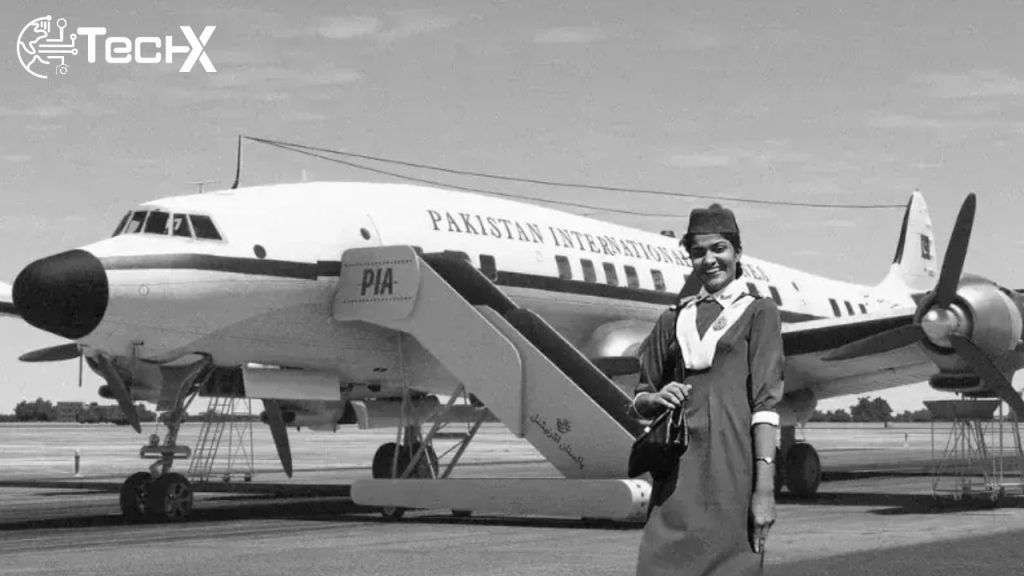
The story of Pakistan International Airlines is like a well-loved book, its pages scented with ambition, grace, and courage. From the 1960s to the 1980s, PIA was not merely an airline flying from one city to another. It was a symbol of a young nation’s confidence, carrying Pakistan’s flag across continents with pride, discipline, and warmth. This era is rightly remembered as PIA’s Golden Age.
PIA: The Mother of Many Global Airlines
At its peak, PIA did something few airlines in history have done. It helped others learn how to fly, manage, and grow. This is why aviation experts often call PIA the “mother of global airlines.”

Helping Emirates Take Its First Steps
When Emirates Airlines was founded in 1985, it did not begin alone. PIA stood beside it like an elder guide.
PIA leased two aircraft to Emirates so it could start operations without delay. The first pilots, engineers, and cabin crew of Emirates were trained in Karachi at PIA’s training facilities. For several years, senior PIA officers even worked in top management roles at Emirates, shaping its early culture and systems.
Support for Other World Airlines
PIA’s knowledge and experience were shared widely. It provided technical and engineering support to Singapore Airlines during its early separation period. It also helped airlines like Philippine Airlines, Air Malta, Yemenia, Royal Jordanian, and Somali Airlines. Many of today’s aviation giants grew stronger with PIA’s quiet guidance behind the scenes.
A Legacy of Global Firsts
PIA was never content with following others. It preferred to lead, often stepping into new territory before even larger Western airlines.

Bringing the Jet Age to Asia
In 1960, PIA became the first Asian airline to operate a jet aircraft, the Boeing 707. This single step changed air travel in the region, cutting travel times and raising comfort standards.
Opening the Door to China
In 1964, PIA made history by becoming the first non-communist airline to fly to the People’s Republic of China. The Karachi–Shanghai route was more than a flight; it was a bridge of diplomacy at a time when China was largely closed to the world.
Trusted by Global Regulators
PIA was also the first Asian airline to receive maintenance approval from the US Federal Aviation Administration. This recognition showed that PIA’s engineering and safety standards matched the best in the world.
A Modern Pioneer with Boeing 777
Even decades later, PIA continued to make history. In 2004, it became the launch customer for the Boeing 777-200LR, the world’s longest-range commercial aircraft, proving its technical confidence once again.
World Records That Still Stand Tall
Some achievements are so bold that time itself fails to erase them.
The London–Karachi Speed Record
On January 2, 1962, a PIA Boeing 720B flew from London to Karachi in just 6 hours, 43 minutes, and 51 seconds. This record for a commercial airliner on that route remains unbroken, a quiet testament to the skill of PIA’s pilots.
The Longest Non-Stop Flight
In 2005, a PIA Boeing 777-200LR flew non-stop from Hong Kong to London in 22 hours and 22 minutes, setting a world record for the longest commercial flight of its time.
PIA World Records & Historic Achievements
| Record / Achievement | Year | Description |
|---|---|---|
| Fastest Commercial Flight | 1962 | PIA’s Boeing 720B flew from London to Karachi in 6 hrs 43 min 51 sec, a record that remains unbroken for that route |
| Longest Non-Stop Commercial Flight | 2005 | A Boeing 777‑200LR flew eastbound from Hong Kong to London non‑stop (~22 hrs 22 min), setting a global distance/endurance benchmark for its time. |
| First Asian Jet Operation | 1960 | PIA became among the first Asian airlines to introduce jet aircraft commercially with Boeing 707 services. |
| First Non‑Communist Airline to China | 1964 | PIA was the first airline from the non‑Communist world to operate scheduled flights to the People’s Republic of China. |
| First Trans‑Atlantic Service by a South Asian Airline | 1961 | PIA introduced service from Karachi to New York via London, making a bold long‑haul move early in its history. |
| Early In‑Flight Entertainment Pioneer (Regional) | 1960s–1970s | PIA was one of the first carriers in South Asia to introduce onboard entertainment systems, offering movies and music before they became industry standard. |
| 100+ Global Destinations at Peak | 1970s–1980s | At its height, PIA operated flights to over 100 cities worldwide — a rare global footprint for an airline from the developing world at the time. |
| Training & Mentorship Legacy | 1970s–1980s | PIA trained crews and managers of many emerging international airlines, helping shape carriers that later became regional leaders. |
“Great People to Fly With”: More Than a Slogan
PIA’s famous slogan was not born in an office meeting alone. It came from lived experience.
When US First Lady Jacqueline Kennedy flew with PIA in 1962, she was deeply impressed by the courtesy, food, and care she received. Pakistani writer and broadcaster Omar Kureishi later shaped this spirit into the iconic words: “Great People to Fly With.” The line became one of the most respected slogans in aviation history.
Fashion Takes Flight: The Pierre Cardin Era
In 1966, PIA once again surprised the world. It became the first airline to hire a global fashion designer for cabin crew uniforms.
French designer Pierre Cardin created a graceful outfit featuring a slim kameez, trousers, and a flowing dupatta. This design, often called the “PIA pajama,” moved airline uniforms away from strict military styles toward cultural elegance. Many airlines later copied this idea, but PIA was the first.
A New Chapter: Privatization and the Road Ahead
History does not end; it turns pages.

In December 2025, PIA entered a new era when 75 percent of the airline was sold to a private consortium led by the Arif Habib Group for around Rs. 135 billion. The new management has announced plans to expand the fleet, improve services, and restart direct flights to London Heathrow from March 2026.
This moment carries hope, built on the strong foundation of a proud past.
PIA’s Golden Achievements at a Glance
| Milestone | Year | Importance |
|---|---|---|
| First Asian Jet (Boeing 707) | 1960 | Introduced the Jet Age to Asia |
| London–Karachi Speed Record | 1962 | Unbroken commercial flight record |
| First Non-Communist Airline to China | 1964 | Major diplomatic breakthrough |
| Pierre Cardin Uniforms | 1966 | Changed airline fashion globally |
| Helped Launch Emirates | 1985 | Trained and supported a future global giant |
| Boeing 777-200LR Launch Customer | 2004 | Led long-range aviation technology |
Final Thoughts
PIA’s Golden Age was not an accident. It was built by vision, discipline, and people who believed that excellence was a duty, not a luxury. As the airline steps into a new future, its past remains a guiding star, reminding us that greatness, once achieved, can be found again when roots are respected and dreams are allowed to fly.
Frequently Asked Questions (FAQs)
1. Why is PIA called the “mother of global airlines”?
PIA earned this title because it helped several new airlines start their operations. It trained staff, leased aircraft, and even provided senior managers to airlines like Emirates and Singapore Airlines. Many world-class carriers today were shaped by PIA’s early technical and management support.
2. What makes PIA’s Golden Age so special in aviation history?
During the 1960s to 1980s, PIA was among the world’s leading airlines. It introduced jet aircraft to Asia, opened routes to China, set long-standing world records, and became known for its high service standards. At that time, PIA was seen as a global trendsetter rather than a follower.
3. Does PIA still hold any world aviation records?
Yes. PIA still holds the record for the fastest commercial flight between London and Karachi, set in 1962. It also made history in 2005 by operating one of the world’s longest non-stop commercial flights using the Boeing 777-200LR.
4. How will privatization affect PIA’s future?
Privatization is expected to improve efficiency, service quality, and financial stability. The new management plans to expand the fleet, modernize operations, and restore key international routes like London Heathrow. The goal is to rebuild PIA using the strength of its historic legacy and modern business practices.