
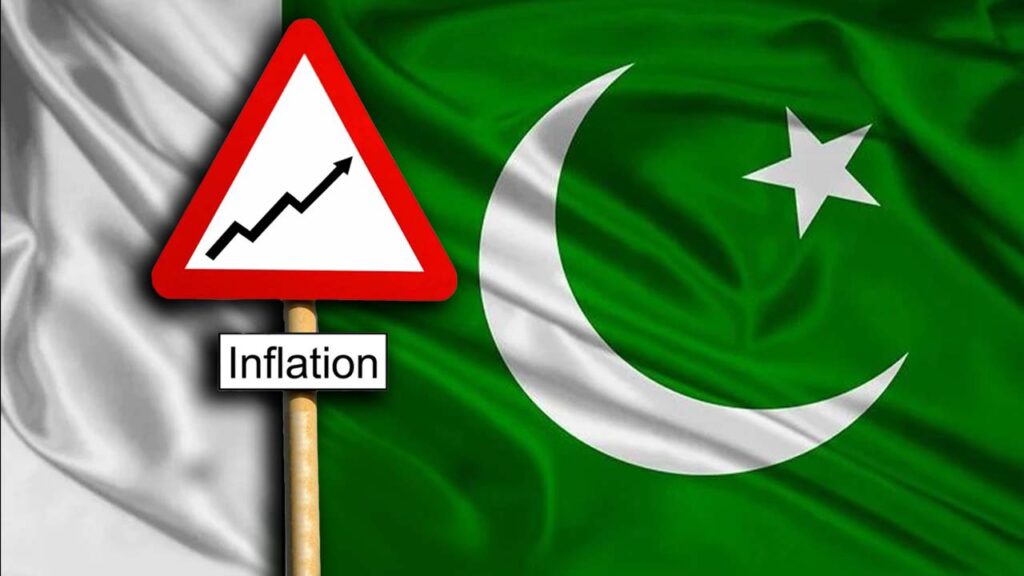
November 2023 saw an increase in Pakistan’s inflation rate from 26.9% to 29.2%, disrupting market hopes for a rate reduction at this month’s policy decision meeting.
While the State Bank of Pakistan (SBP) is probably going to maintain the current discount rate.

Spike in Inflation Rate
The sharp spike in inflation was linked to the International Monetary Fund’s (IMF) requirement that gas tariffs be raised significantly in November in order for the nation to be eligible for the bailout program.
Housing and energy prices increased sharply as a result of the higher gas tariffs, jumping from October’s 20.5% to 33%.
The Consumer Price Index (CPI) gives housing and utilities almost a quarter of its weight, which adds to the total increase in inflation as a whole.
After peaking at 31.4% in September for four months, CPI inflation had slowed to 26.9% in October.
The government’s aim of 21% and the SBP’s range of 20 to 22% for the current fiscal year were surpassed by the average inflation for the first five months of FY2023–24, which was 28.6%.
Inflation Rate in Different Sectors
In addition, food inflation in November climbed to 28% from a 16-month low of 26.8% the previous month.
In September, the percentage was 33.1%.
Alcohol and tobacco saw notable drops in inflation, with the former falling to 82.8% from 84.6% in October.
Additionally, the category of culture and recreation dropped, from 56.34% in October to 53.56%.
November saw a 31.5% increase in hotel and restaurant expenses, which is just less than the 33.1% increase in October.
Additionally, transportation costs dropped from 31.3% to 26.5% in the preceding month.
Furnishings saw a decrease from 37.1% to 34.5% in the preceding month.
Additionally, there was a minor drop in health costs, from 25.2% to 24.87%.
In November, however, price growth indicated a minor rise in communication, going from 7.37% to 7.41%.
Comparably, the rate for apparel and footwear went risen from 20.6% to 20.9%.
While the rate for educational costs went up from 12.8% to 13.6% in the previous month.
Notably, the rate of inflation reached a record high of 38% in May 2023.
Inflation has been consistently high—in the double digits—since November 2021.
Annual Increase Figures
Prices for condiments and spices rose 67.6% year over year, while those for wheat flour increased by 63.5%, rice by 68%, beans by 55%, tea by 52%, gur by 50%, sugar by 50%, beverages by 46%, potatoes by 42%, mash pulse by 42%, wheat products by 41%, and wheat saw an increase in price of 38% compared to the same month the previous year.
Onions, however, saw a 31% price reduction; mustard oil, tomatoes, and pulse gram saw a 3.6%, 3.5%, and 2% price reduction.
Comparably, among non-food items, the annual increase was 520% for gas, 95% for textbooks, 46% for stationery, 44% for washing soap, detergents, and matchboxes, 40% for communication devices, 36% for household equipment, 35% for electricity, 35% for drugs and medicines, and 34% for marriage hall fees.
To read our blog on “Weekly inflation still floating at 30%, stats of 27 Oct,” click here.