
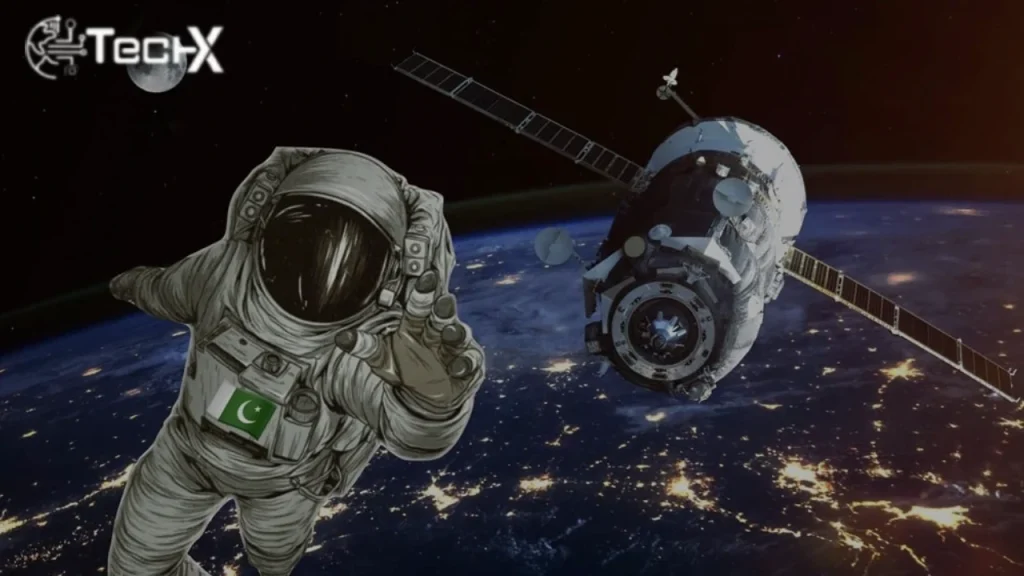
Pakistan is set to achieve a historic milestone as its first astronaut prepares for a space mission in 2026. Planning Minister Ahsan Iqbal confirmed this groundbreaking development, highlighting the nation’s commitment to space exploration. This mission marks Pakistan’s entry into human spaceflight, positioning it among a select group of countries with such capabilities. The initiative reflects years of strategic planning and international collaboration.
Collaboration Between SUPARCO and China
The mission is a joint effort between Pakistan’s Space and Upper Atmosphere Research Commission (SUPARCO) and China’s manned space agency. Under a bilateral human spaceflight program, China will facilitate Pakistan’s astronaut training and mission execution. This partnership underscores deepening ties between the two nations in space technology. China’s advanced space infrastructure will play a pivotal role in ensuring the mission’s success, benefiting Pakistan’s space ambitions.
Selection and Training of Pakistani Astronauts
Two Pakistani candidates have been shortlisted to undergo rigorous training at China’s astronaut center. The selection process emphasizes scientific expertise and physical endurance. By 2026, one candidate will be chosen as a scientific payload specialist for the mission. Training includes simulations, survival exercises, and scientific experiments. This preparation ensures the astronaut is fully equipped to contribute meaningfully to the mission aboard the Chinese space station.
Also Read: Meta Just Pulled the Plug on a Key Facebook Tool Without Warning
Scientific Contributions of the Mission
Pakistan’s astronaut will conduct experiments in biology, medicine, fluid mechanics, and materials science. Additionally, research in environmental studies and astronomy will enhance global scientific knowledge. These experiments aim to address key challenges in space and on Earth. The mission’s findings could lead to advancements in technology and healthcare. Pakistan’s participation signifies its growing role in international space research and innovation.
Strengthening International Partnerships
Minister Ahsan Iqbal emphasized that this mission strengthens Pakistan’s global partnerships, particularly with China. Collaborative space ventures foster technological exchange and diplomatic relations. By joining China’s space station program, Pakistan gains access to cutting-edge research opportunities. This cooperation also paves the way for future joint missions, enhancing Pakistan’s space capabilities and scientific expertise on the world stage.
A Leap Forward for Science and Technology
Sending an astronaut to space demonstrates Pakistan’s determination to advance in science and technology. The mission inspires young Pakistanis to pursue careers in STEM fields. It also showcases the nation’s potential in space research and innovation. By investing in space exploration, Pakistan aims to drive economic and technological growth, positioning itself as a key player in the global space community.
Conclusion: A New Era for Pakistan
The 2026 space mission marks a new era for Pakistan, symbolizing progress and ambition. As the nation prepares to send its first astronaut, the world watches this historic achievement. This mission not only elevates Pakistan’s scientific standing but also reinforces the importance of international collaboration in space exploration. The journey to space is a testament to Pakistan’s resilience and vision for the future.