
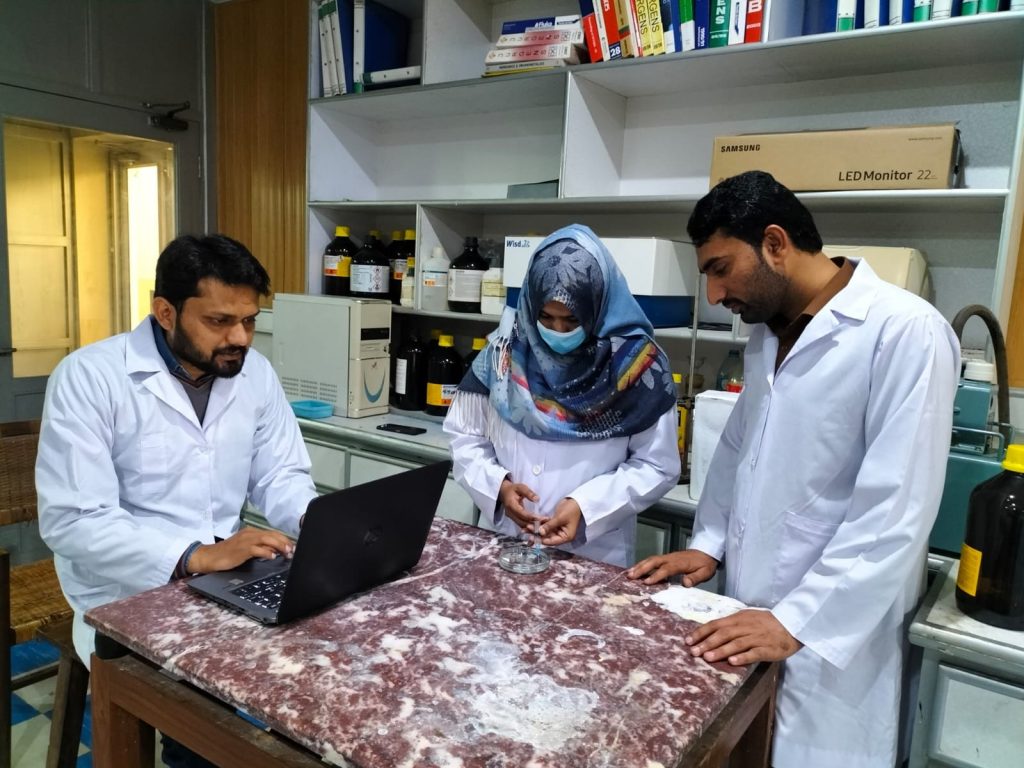
A group of scientists from Pakistan has created a low-cost antibacterial fabric that may be used for packaging, lab coats, masks, and wound care.
The eco-friendly Chitosan and silver nanoparticles modified cloth was tested for four common types of bacteria by the team at Bahauddin Zakariya University in Multan under the direction of Saadat Majeed, Associate Professor-Division of Analytical Chemistry.
Infectious disorders are most frequently brought on by bacteria worldwide.
In terms of preventing microbiological contamination, the fabric proved quite effective. The study was published in the esteemed science magazine Nature.
The study team produced active spots in the cloth for alteration by treating the regular fabric with alkali.
The fabric was then covered with an additional invisible layer after being soaked in silver nanoparticles and chitosan, a form of sugar derived from crabs and lobsters.
“This coating has active antimicrobial properties and kills the bacterial strains immediately upon contact,” the lead researcher told The Express Tribune, adding that many other methods involve toxic chemicals or expensive equipment, but this method is relatively easy and affordable. “All we need is a beaker and cost-effective material for modifications,” she added.


A biomaterial called chitosan is employed in various biological processes, including antibacterial ones. It is very biodegradable and biocompatible.
The locations for further alterations and immobilization are efficiently provided by the positively ionic charges generated on the chitosan’s backbone during treatment.
On the other hand, one of the newest components in scientific research and development is silver nanoparticles.
These nanomaterials have a huge surface area and adjustable particle size, making them useful against bacteria.
With little cytotoxicity and in a synergistic manner, the layering of these two compounds in the fabric can provide protection against microorganisms.
In order to assess how well the layer spread equally, the item was studied using various approaches.
Both X-ray crystallography and electron microscopy were used to confirm the fabric’s integrity.
The team loaded the fabric with four common types of microbes, including Micrococcus luteus, Staphylococcus aureus, Enterobacter aerogenes, and E. coli, which cause pneumonia, infections, hospital contamination, and diarrhea, respectively, with other diseases, in order to test its antimicrobial properties.
In hospital settings, these microorganisms can also result in serious infections that can even turn a wound into an infected ulcer that cannot be cured.
To read our blog on “Pakistani inventions and discoveries,” click here.