
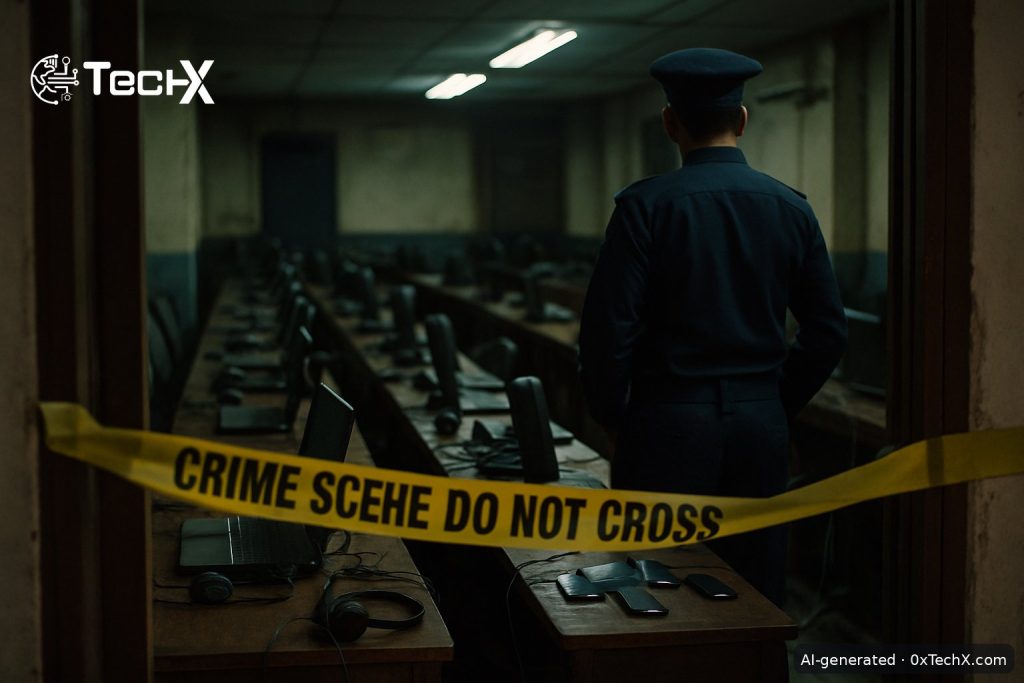
Pakistan’s illegal call centre Ponzi scheme crackdown reached a landmark moment on August 28, 2026, when a Karachi court handed down prison sentences to suspects, both Pakistani and Chinese nationals, who had been running a coordinated operation mixing fraudulent investment fraud with illegal call centre activity. The verdict signals that Pakistan’s courts are now following through on the enforcement actions that began over a year ago.
What the Karachi Court Decided
A Karachi court sentenced several suspects in cases involving an illegal call centre and a Ponzi scheme after finding them guilty of financial fraud and unlawful activities. Judicial Magistrate East-I announced the verdict in FIR No. 137/2025 and FIR No. 138/2025. The court sentenced the convicted suspects to 18 months in prison and imposed a fine of Rs. 100,000. The cases involved both Chinese and Pakistani nationals. Authorities had accused the suspects of operating or participating in illegal call centre activities, and they were also charged with carrying out financial fraud through a Ponzi scheme.
The verdict is being seen as an important development in efforts to tackle illegal financial operations, fraud, and Ponzi schemes, and it highlights growing enforcement against individuals involved in organised financial scams and other unlawful business activities.
The Raids That Led Here: A Chain of Crackdowns
This conviction did not happen in isolation. It is the legal outcome of a chain of operations that started in mid-2025 and accelerated sharply through August 2026.
Faisalabad, July 2025
Pakistan police arrested 149 people, including 71 foreigners mostly Chinese, in a raid on a scam call centre, the National Cyber Crime Investigation Agency (NCCIA) announced. All those arrested were in custody, including 78 Pakistanis and 48 Chinese, as well as citizens from Nigeria, the Philippines, Sri Lanka, Bangladesh, Zimbabwe and Myanmar. During the raid, a large call centre was uncovered which was involved in Ponzi schemes and investment fraud.
Islamabad, August 11, 2026
Pakistan’s Federal Investigation Agency (FIA) detained 258 foreign nationals accused of operating an illegal call centre allegedly involved in a fake investment scam in Islamabad’s Gulberg Greens area. According to an FIA official, the suspects were operating from Sparco Plaza, where investigators found what they described as a large call-centre setup. The detainees include 184 Vietnamese nationals, 41 Chinese nationals, 32 Indonesians and one Malaysian national, according to the FIA. The FIR, numbered FIR/AHTC-GL-581/28, was dated August 11, 2026.
Following the arrests, the Chief Commissioner of Islamabad Capital Territory issued an order on August 11 designating Sparco Plaza as a temporary “Sub-Jail/Lock-Up” for the detained foreign nationals. The detainees reportedly entered Pakistan on tourist or visit visas, prompting Pakistani authorities to initiate deportation proceedings and implement blacklisting measures.
How the Illegal Call Centre Ponzi Scheme Actually Worked
Understanding how this fraud operated helps explain why it spread so widely and why ordinary Pakistanis were at risk.
Scammers targeted retail investors across multiple continents through structured social media campaigns, initially building trust on platforms like TikTok and WhatsApp before funneling victims to private Telegram channels for high-value financial extraction. Once inside these private channels, victims were shown fake investment dashboards with returns that looked too good to be true, because they were.
FIA Director General Usman Anwar indicated that many of those arrested were involved in sextortion schemes, posing online as women to extract money, and in fraudulent investment offers promising unusually high returns. Devices, accounts and cryptocurrency transfer trails are under examination by the cybercrime side of the investigation.
Officials describe organised call-centre operations linked to investment fraud, high-return schemes and, in related probes, online blackmail or sextortion. This mix of fraud types shows these were not small opportunistic operations. They were structured criminal businesses.
If you are curious about how digital fraud intersects with Pakistan’s financial crime landscape, the risks go beyond call centres. Crypto-linked financial crime is also a growing concern that Pakistani regulators are actively addressing.
A Nationwide Task Force Is Now in Place
A new task force has been formed, comprising officers from sensitive agencies, the FIA Cyber Crime Wing and the National Forensic Agency. The task force will function under FIA headquarters and will also include the federal police and district administration. The Ministry of Interior will receive daily reports on the action being taken against call centres. Sources said authorities have also prepared a list of suspected illegal call centres operating in Karachi for further action.
The NCCIA registered cases under the Prevention of Electronic Crimes Act (PECA), while the FIA initiated cases against the detained foreign nationals under the Foreigners Act. Using both laws together gives prosecutors more tools to pursue different aspects of the crime.
The Corruption Problem Inside the Agencies
One angle that rarely gets enough attention is how these illegal call centre Ponzi scheme networks managed to run for so long inside Pakistan. In late 2025, it was discovered that senior NCCIA officers were accused of taking bribes, running extortion and “protection” schemes, and working with foreign nationals who ran fake call centres. NCCIA officers that were aware of these illegal activities protected them in exchange for about Rs 15 million each month. This is a critical detail: without insider protection, operations of this scale would have been far harder to sustain.
Officials have also stated that local facilitators and possible links to individuals connected with government departments are being looked at.
What Comes Next for Pakistan’s Cybercrime Regulation
The FIA has indicated that it is intensifying scrutiny and tightening registration requirements for businesses to curb organised cybercrime. Beijing is also preparing to formalise an international alliance dedicated to combating online fraud, with plans to launch the initiative at the Global Public Security Cooperation Forum in September 2026. Pakistan and China cooperating on this front could speed up the identification of suspects operating across both countries.
The August 28 court verdict matters beyond the headline. It shows that Pakistan’s legal system can take an illegal call centre Ponzi scheme case all the way to a conviction in a reasonable timeframe. That credibility is exactly what enforcement agencies need to deter the next wave of operators.
Frequently Asked Questions
What sentence did the Karachi court give in the illegal call centre Ponzi scheme case?
The court sentenced the convicted suspects to 18 months in prison and imposed a fine of Rs. 100,000. Both Pakistani and Chinese nationals were convicted.
How many people have been arrested in Pakistan’s 2026 call centre crackdowns overall?
Combined figures from the two agencies pushed the total number of foreign nationals taken into custody in the related operations well above 370. This does not include Pakistani nationals arrested alongside them, or those held in earlier 2025 raids.
What laws did Pakistan use to charge the suspects?
The NCCIA registered cases under the Prevention of Electronic Crimes Act (PECA), while the FIA initiated cases against the detained foreign nationals under the Foreigners Act. The Karachi court cases were brought under those earlier FIRs filed in 2025.
How were victims tricked into these Ponzi investment scams?
Scammers built trust through structured social media campaigns on platforms like TikTok and WhatsApp before funneling victims to private Telegram channels for high-value financial extraction. Victims were shown fake high-return investment dashboards before their money was taken.