
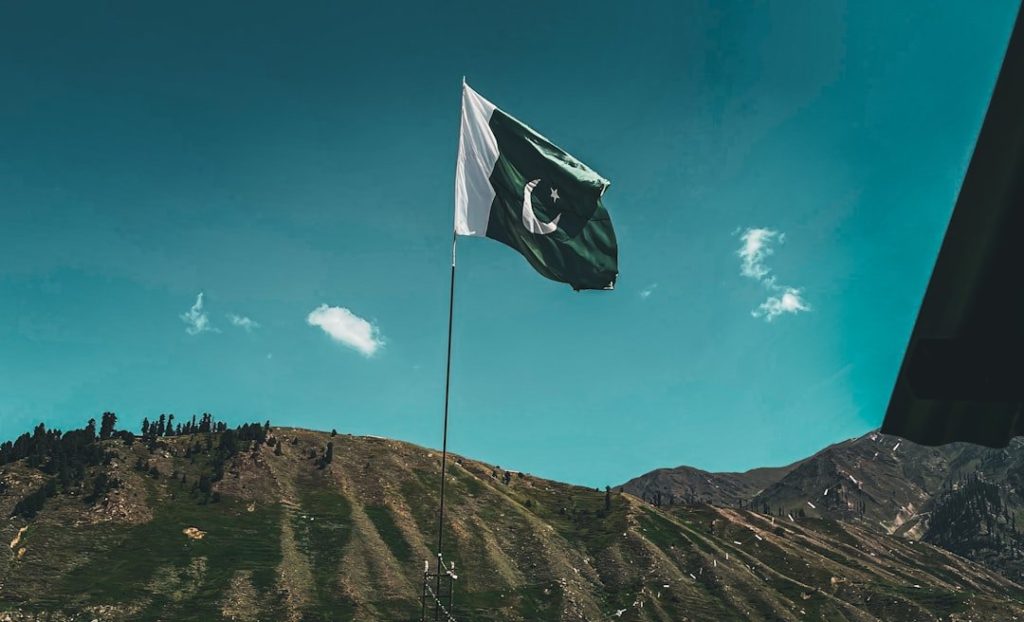
Pakistan took a firm stand on the global AI divide at the United Nations Youth and AI Summit in New York on 12 August 2026, calling for a world where developing nations help write the rules of artificial intelligence, not simply follow them. The message was direct: technology without inclusion is not progress.
Pakistan Speaks Up on the Global AI Divide at the UN
Pakistan underscored the need to bridge the artificial intelligence divide between developed and developing countries and to translate technological advances into tangible development gains at the global summit held at UN Headquarters in New York.
Balochistan Governor Sheikh Jaffar Khan Mandokhail, who represented Pakistan at the Youth and AI Summit held in connection with International Youth Day, emphasised empowering young people, not merely as users of AI, but as active creators and key participants in shaping its governance. “Our task, therefore, is to ensure that the AI revolution is both innovative and inclusive,” he said at the forum that brought together some 186 countries.
With ambassadors from the Bahamas and Dominica helping to organise the summit, and with participation from Pakistan and Tonga, delegates also discussed how to ensure that developing countries are not left behind in the AI transition.
The timing was deliberate. Young people will live longest with the opportunities and risks of artificial intelligence, and the summit put them at the centre of the conversation at United Nations Headquarters in New York on the day the world recognises youth.
Why the AI Divide Is Such a Serious Problem
“Technological progress will not automatically translate into human progress if developing countries lack access to the infrastructure, computing capacity, skills, finance and knowledge,” said Sheikh Jaffar Khan Mandokhail.
This is not just a talking point. Advanced semiconductors, computing infrastructure, and AI capabilities remain concentrated primarily in the United States and China, leaving many countries dependent on technologies they neither develop nor fully control. For nations like Pakistan, this means a real risk: AI could make rich countries richer while leaving others further behind.
UN Assistant Secretary-General for Youth Affairs Felipe Paullier said it was ‘unfortunate’ that AI development is controlled primarily by a few large companies based in higher-income countries, and stressed that AI governance must be inclusive.
Pakistan’s Ambassador to the UN, Asim Iftikhar Ahmad, warned that without equitable access, AI could deepen the digital divide between developed and developing countries. He called for greater coherence in global AI governance and outlined four priorities: bridging the AI divide, ensuring equitable development outcomes, empowering youth as leaders of technological change, and promoting ethical, transparent, safe and accountable AI systems.
What Pakistan Is Doing Back Home
Pakistan did not come to New York empty-handed. The country presented real numbers to back its AI ambitions.
- The government has allocated Rs 40.58 billion to the Prime Minister’s Youth Programme for 2026-27, reflecting its commitment to building a skilled and digitally empowered generation.
- More than 600,000 laptops have been distributed, while 73,000 young people have received training in artificial intelligence, blockchain, and data science.
- More than 217,000 technical skills scholarships have also been awarded across 8,000 courses.
- The Digital Youth Hub has registered over 804,000 users, created access to 114,000 employment opportunities, and partnered with more than 3,180 organisations.
Pakistan’s National Artificial Intelligence Policy aims to train one million AI professionals and 10,000 AI trainers by 2030 while expanding AI education, research, and innovation across the country. Under the National AI Policy 2025, the target also includes 20,000 annual internships and 3,000 advanced research scholarships each year.
Pakistan has also launched a nationwide upskilling programme called ‘AI Seekho 2026’ in partnership with Google for Developers, Telenor Pakistan and IT company Innovista, aimed at training young Pakistanis in artificial intelligence and providing them with economic opportunities. The goal is to upskill over 100,000 developers through this programme alone.
For readers who want to know how Pakistan’s government body for AI is being set up on the ground, see our earlier piece on how MoITT is getting the national AI authority operational.
A Youth-Led Declaration Sent into the UN System
The summit was not just speeches. It produced a youth-led Declaration on AI Policy and Governance, capturing shared youth perspectives, key principles, and concrete recommendations, to be carried forward into the United Nations system. This matters because young delegates from developing nations, including Pakistan, got to contribute to a document that will influence how global AI rules are written.
The UN Youth Office stressed that future-ready skills spanning digital and AI literacy, as well as human-centric competencies like critical thinking, empathy, and resilience, are vital, calling for equitable skill development and recognising young people as co-creators, not just recipients, of education and policy.
The Hard Reality Pakistan Must Also Face
Ambition is one thing. Execution is another. Pakistan’s AI goals face real hurdles at home. AI development relies on constant connectivity to global repositories, and Pakistan’s history of internet disruptions and throttling, along with expanded firewall enforcement, undermines the uninterrupted access required for global collaboration and tools.
About 64% of Pakistanis are under 30, which is a huge advantage if that energy can be channelled into real AI skills. But cheap laptops and course enrollments are just the start. Access to fast, open internet, affordable compute, and quality mentorship are the missing links. Pakistan’s voice at the UN carries more weight when its domestic policies match its global message.
The broader UN framework is also moving. The Global Dialogue on AI Governance exists to ensure that governance reflects the priorities of all nations, not just the most technologically advanced, and was established by the UN General Assembly to give all governments and stakeholders a platform to discuss international cooperation and share best practices.
Pakistan’s participation in forums like the Youth and AI Summit is how the country earns a seat at that table, and makes sure the global AI divide does not quietly widen while the world talks about closing it. If you want to see how AI is changing local earning power right now, our look at Pakistan’s freelance earnings growth hiding a shrinking middle is worth reading.
Frequently Asked Questions
What is the global AI divide?
The global AI divide is the growing gap between rich countries that build and control AI technology and poorer countries that mostly use it without a say in how it works or who governs it. Developing nations often lack the computing power, data infrastructure, funding, and skilled workers that advanced economies take for granted.
Who represented Pakistan at the UN Youth and AI Summit?
Balochistan Governor Sheikh Jaffar Khan Mandokhail represented Pakistan at the Youth and AI Summit held in connection with International Youth Day. Pakistan’s UN Ambassador Asim Iftikhar Ahmad also delivered closing remarks at the event.
What does Pakistan’s National AI Policy say about youth training?
Under the National AI Policy 2025, Pakistan aims to train one million people in AI-related skills by 2030, including 10,000 trainers, 20,000 annual internships and 3,000 advanced research scholarships each year.
What came out of the Youth and AI Summit?
The summit produced a youth-led Declaration on AI Policy and Governance, capturing shared youth perspectives, key principles, and concrete recommendations, to be carried forward into the United Nations system. This declaration is meant to feed directly into global AI governance discussions at the UN level.