
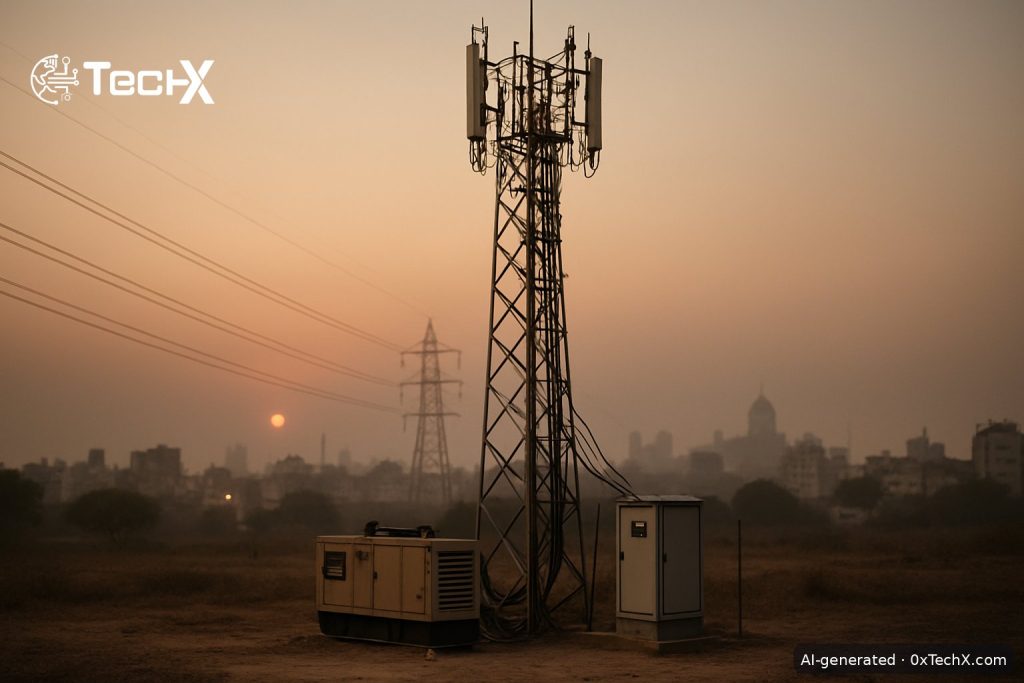
Pakistan’s telecom electricity tariff debate reached a critical point on September 1, 2026, when mobile operators formally handed detailed power cost and consumption data to a government task force, pushing hard for cheaper industrial electricity rates. Right now, telecom companies pay commercial electricity rates, which can reach up to Rs 45 per unit. They want to pay the industrial rate, which averages around Rs 25 per unit. That gap of roughly Rs 20 per unit adds up to billions of rupees a year across tens of thousands of tower sites nationwide.
Why Telcos Are Fighting for a Lower Telecom Electricity Tariff
Running a mobile network is power-hungry work. Every cell tower, base station, and data node needs a steady, reliable supply of electricity around the clock. Pakistan’s telecom industry has stepped up its push for lower electricity costs and greater protection from load-shedding, submitting detailed operational and financial data to a government task force considering industrial power tariffs for the sector. Operators provided the task force with nationwide data on the number of telecom sites, their electricity consumption, and overall power expenses.
The companies also submitted details on the financial impact of the difference between commercial and industrial electricity rates, arguing that high power costs have become a major component of their operating expenses. In plain terms, the gap between what factories pay and what telcos currently pay is enormous, and operators say it is squeezing their ability to invest in better coverage.
Telecom operators said that commercial electricity tariffs have significantly increased operating costs and placed financial pressure on the industry. They argued that the telecom sector contributes substantial tax revenues to the national economy and should receive industrial electricity rates, particularly as telecommunications have become an essential public service.
What Data Did Telcos Submit to the Task Force?
The data submitted includes operators’ total power expenses, electricity consumption, number of telecom sites, current commercial tariffs and estimated savings under industrial rates. Operators have also shared information on grid-connected sites, power requirements and the financial impact of lower electricity tariffs.
The submission goes beyond simple billing figures. The submissions also cover load-shedding, network disruptions, diesel expenses and backup power arrangements. Operators provided details of sites using generators and other backup systems, along with outage duration and its impact on network services.
This is the part that most reporting has glossed over. When the grid fails and load-shedding kicks in, towers switch to diesel generators. Operators have shared data on the duration of load-shedding across different regions and the resulting disruption to mobile and digital networks. Diesel is expensive. Every hour of grid outage adds to the operating cost. The task force now has a complete picture of just how large those costs are.
How Did This Task Force Come Together?
This push did not start on September 1. The groundwork was laid in early August. The government began work on a plan to provide cheaper electricity to Pakistan’s telecom operators by extending industrial power tariffs to the sector. The move follows the decision to grant the telecom industry industrial status and is aimed at developing a framework for implementing the new tariff structure. A joint task force held its first consultative meeting to examine the implementation of industrial electricity tariffs for telecom companies.
The task force was formed under the policy directive for the IMT Spectrum Auction and includes representatives from the Ministry of Information Technology and Telecommunication (MoITT), the Power Division, the National Electric Power Regulatory Authority (NEPRA), the Pakistan Telecommunication Authority (PTA), telecom operators, and electricity distribution companies. That lineup means the group has the right people in the room to actually move the needle.
The government formed a task force to work out a mechanism for extending industrial electricity tariffs to telecom companies after granting the sector industrial status. Further consultations with telecom companies and power distribution firms are expected before the government finalizes the framework.
The Numbers That Actually Matter
Here is the rate gap that explains why telcos are fighting so hard. Commercial tariffs range from Rs 37.44 to Rs 39.76 per kWh. Industrial tariff averages Rs 24.82 per kWh. That means telecom companies currently pay roughly 50 to 60 percent more per unit than a factory would. Multiply that across thousands of sites running 24 hours a day, and the savings on offer are very large indeed.
Earlier this year, the government had already moved to cut industrial electricity rates for manufacturers. The federal government announced a significant reduction in electricity tariffs for industrial consumers, slashing rates by up to Rs 4.58 per unit. The cut moved tariffs from Rs 30.80 to Rs 26.23 for small industries in the B1 category, and from Rs 30.73 to Rs 26.16 for medium-sized industries in the B2 category. Telecom operators argue they deserve the same treatment, now that they officially hold industrial status.
What This Means for Pakistan’s 5G Plans and Your Mobile Signal
The stakes here stretch far beyond a company’s profit sheet. Pakistan has ambitious plans to roll out 5G services, but 5G is far more power-intensive than 4G. More towers, smaller cells, and higher data throughput all demand more electricity. If operators continue to pay commercial rates for power, the cost of building and running a 5G network becomes far steeper. That cost does not stay with the company. It either slows down the rollout or gets passed on to subscribers through higher data prices.
The telecom electricity tariff issue also affects the quality of your current 4G signal today. When operators spend more on electricity bills, they have less to spend on upgrades, maintenance, and new sites in underserved areas. Load-shedding that forces towers onto diesel backup means slower, more congested connections during outages. Cheaper, stable electricity could translate directly into better uptime and faster speeds.
The task force is expected to prepare recommendations on industrial electricity tariffs, smart grid solutions, and dedicated power feeders to improve network resilience and service continuity across the country. Dedicated power feeders would mean telecom towers get protected grid access, similar to hospitals and water utilities. That alone would be a major step forward for Pakistan’s connectivity.
What Happens Next
The government has not yet committed to a final rate or timeline. The task force still needs to work through the mechanics of how industrial tariffs would be billed to telecoms, how distribution companies would be compensated, and whether the IMF’s conditions on Pakistan’s power sector reform allow for sector-specific rate changes. Pakistan has been told it should not set different rates of electricity for specific industries, as all industries are expected to pay one uniform rate. That IMF condition could complicate things, since extending a special rate specifically to telecom may conflict with the uniform tariff principle.
Still, the industry has made its case in hard numbers. The ball is now in the government’s court. For Pakistan’s 190-plus million mobile subscribers, the outcome of this task force will quietly shape whether their calls drop during load-shedding, how fast their 5G arrives, and what they pay for data in the years ahead.
Frequently Asked Questions
What is the difference between commercial and industrial electricity tariffs in Pakistan?
Commercial electricity tariffs in Pakistan currently range from roughly Rs 37 to Rs 45 per unit, while the industrial tariff averages around Rs 25 per unit. Industrial consumers benefit from lower rates because the government wants to encourage manufacturing and economic output. Telecom operators are currently billed at commercial rates even though they now hold official industrial status.
Why did Pakistan grant the telecom sector industrial status?
The government granted telecom companies industrial status to recognise their role as critical infrastructure for the economy and digital services. Industrial status opens the door to benefits like lower electricity tariffs, which are typically available only to factories and manufacturing units. The IMT Spectrum Auction policy directive also pushed for this change as part of a plan to lower telecom operating costs.
How does high electricity cost affect mobile network quality in Pakistan?
High power costs eat into the budget that operators would otherwise spend on tower maintenance, new sites, and technology upgrades. During load-shedding, towers fall back on diesel generators, which are expensive and sometimes unreliable. Operators that spend more on electricity have less left over to improve coverage or roll out faster technologies like 5G.
When will the government decide on industrial electricity tariffs for telecom companies?
No final date has been set yet. The joint task force, which includes NEPRA, PTA, the Power Division, and the Ministry of IT, is still developing its framework and conducting consultations with telecom operators and distribution companies. A decision is expected after these consultations conclude, but the IMF’s uniform tariff conditions add a layer of complexity that could slow things down.