
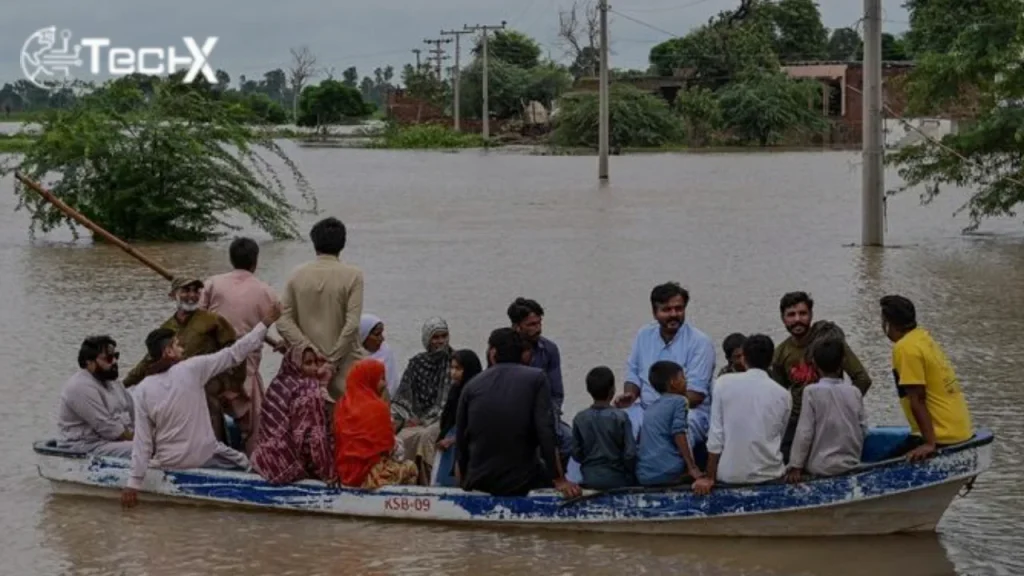
Pakistan’s monsoon catastrophe has intensified, with the official death toll reaching 802. The National Disaster Management Authority confirmed over 1,088 injuries and nearly 7,465 houses damaged. This devastating natural disaster has impacted millions, highlighting the country’s extreme vulnerability to climate-induced weather patterns and the urgent need for comprehensive disaster management strategies.
Provincial Breakdown of Fatalities
The human cost is unevenly distributed across the country. Khyber Pakhtunkhwa (KP) province bears the heaviest burden, reporting 479 fatalities. Punjab follows with 165 deaths, while Sindh and Gilgit-Baltistan report 57 and 45, respectively. A gender-wise breakdown reveals 480 men, 119 women, and 203 children are among the deceased, underscoring the widespread impact on all demographics.
Widespread Damage and Injuries
The destruction extends far beyond loss of life. Infrastructure has been critically damaged, with KP also reporting 4,243 destroyed houses. Punjab recorded the highest number of injuries at 584, followed by KP with 347. The cumulative damage to homes and livelihoods paints a picture of a nation grappling with a large-scale humanitarian crisis that requires immediate and sustained aid.
Flood Emergency and Rescue Operations
Prime Minister Shehbaz Sharif is overseeing the response, chairing high-level meetings. He was informed that over 174,000 people have been successfully evacuated from flooded districts in Punjab. The Premier directed authorities to accelerate rescue efforts and ensure the timely provision of essential supplies like food, medicine, and tents to all affected communities.
Coordination and Advance Warnings
Close coordination between national and provincial disaster authorities is underway. Officials reported that warnings enabled preemptive evacuations in some areas, preventing higher casualties. This was crucial despite record water levels in major rivers like the Sutlej, Ravi, and Chenab, as well as severe flooding in tributaries such as Nullah Dek.
Also Read: FBR Issues New Tax Rules for Online Marketplaces & Couriers
Infrastructure in Peril
The monsoon rains have crippled critical infrastructure. In Gilgit-Baltistan, a two-kilometre stretch of the vital National Highway remains submerged, halting repair work. Power restoration efforts are ongoing in parts of KP. Forecasts predict heavier rains, raising fears of further damage and complicating ongoing rescue and relief operations across multiple regions.
Cross-Border Water Intensifies Crisis
The flooding crisis was exacerbated by India releasing additional water into rivers that flow into Pakistan. This surge swelled the Ravi, Chenab, and Sutlej rivers, causing dangerous breaches in districts like Narowal, Sialkot, and Shakargarh. The cross-border water release has significantly heightened the flood threat for downstream communities.
Record-Breaking Rainfall
Sialkot received a staggering 335 millimetres of rain within a single 24-hour period, breaking an 11-year record. This unprecedented downpour inundated homes and paralysed daily life. The immense volume of water overwhelmed drainage systems and natural waterways, leading to widespread urban and rural flooding that trapped countless residents.
Rescue Efforts Amidst Danger
Rescue teams are working tirelessly, using boats to evacuate stranded citizens from river-adjacent areas. However, their efforts are perilous. In Shakargarh, overflowing nullahs submerged connecting roads and isolated several villages. Tragically, a roof collapse in the area killed one woman and injured two children, highlighting the ongoing dangers.
Heartbreaking Personal Tragedies
Beyond the statistics are profound human tragedies. In Chagharzai tehsil, 18 members of a single family were buried in a mass funeral after being swept away. In Shangla, nine members of another family perished. For survivors like Rafiullah, who lost two sons and a daughter, the emotional scars are deep and lasting.
Cultural and Economic Losses
The damage extends to cultural heritage and local economies. In Buner district, the Sikh community’s only cremation ground was washed away. Numerous businesses and shops were destroyed, dealing a crippling blow to local livelihoods and prompting desperate calls for government assistance to rebuild what was lost.
Government’s Climate Plea
Prime Minister Shehbaz Sharif reiterated that Pakistan is a top victim of climate change despite its minimal contribution. He recalled the 2022 floods that caused $30 billion in losses, displacing millions. “We cannot tackle this challenge alone,” he urged, calling for coordinated global action and support to build resilience against such disasters.
NDMA’s Glacial Warning
The NDMA chairman issued a grave long-term warning, stating that Pakistan hosts 7,500 glaciers. A two-degree temperature rise could melt 65% of them over the next five decades. This looming threat signifies that monsoon crises and glacial lake outburst floods could become more frequent and severe, demanding urgent climate adaptation strategies.
Criticism of Preparedness
Lawmakers heavily criticised the NDMA’s preparedness. Public Accounts Committee member Junaid Akbar stated the authority seemed only equipped to retrieve bodies and repair roads. This criticism points to systemic failures in proactive disaster risk reduction and the need for a fundamental overhaul of national emergency response frameworks.
Allegations of Misdirected Funds
Further controversy emerged with allegations of misallocated resources. Committee member Sanaullah Masti Khel alleged funds for early warning systems were diverted to a social support programme. He threatened to file an FIR, highlighting concerns about financial mismanagement that may have weakened the country’s preparedness for such a predictable disaster.
The Threat of More Rain
With the eighth spell of monsoon rains expected imminently, the crisis is far from over. The NDMA chief warned of new incoming weather systems, threatening already inundated communities. This forecast places further strain on rescue services and underscores the critical need for robust, permanent solutions to Pakistan’s flood vulnerability.