
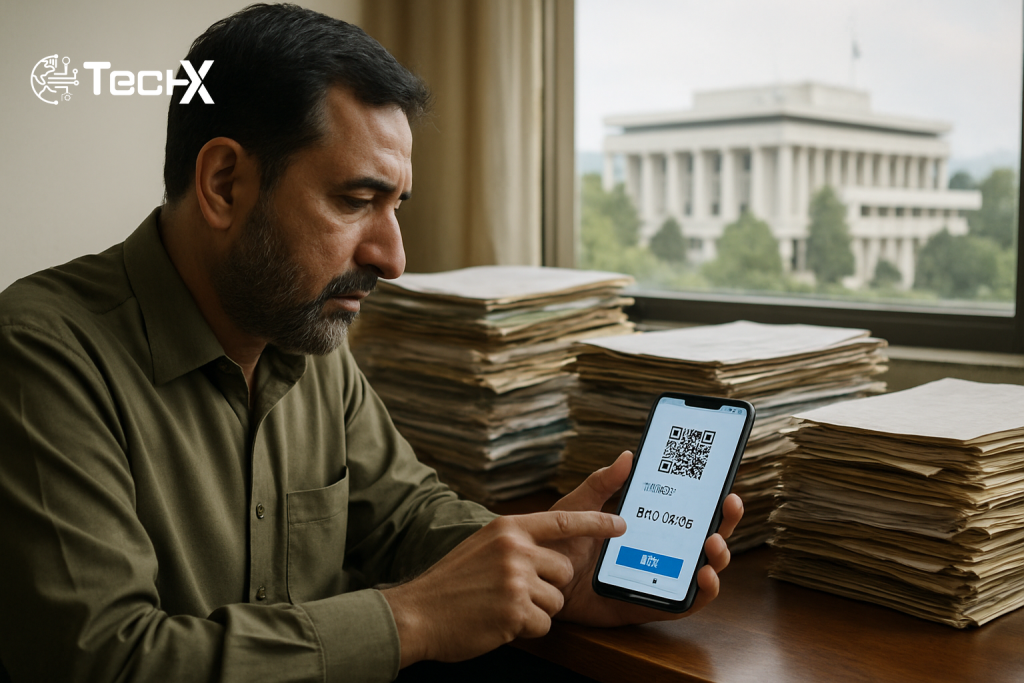
Pakistan’s government payments digitalisation deadline just crossed on June 30, 2026. The State Bank of Pakistan (SBP) had set an ambitious target: move every federal and provincial government payment onto digital rails by end of fiscal year 2025-26. So how close did the country actually get, and what happens now?
What was the government payments digitalisation plan?
The SBP’s plan called for all federal and provincial government payments to be digitised by June 2026, while state-owned enterprise (SOE) payments would follow by December 2026. The central bank’s chosen platform for all of this is Raast, Pakistan’s official instant payment system.
The SBP announced plans to route all government payments through Raast by the end of fiscal year 2025-26, covering everything from salaries and pensions to tax collections and social transfers.
As part of the shift toward a cashless public finance system, the government established the Government Payments and Receipts Transformation Unit (GPRTU) under the Ministry of Finance. The unit coordinates the digital enablement of government entities and oversees integration with Raast.
What progress was made before the deadline?
The numbers tell a broadly positive story. The SBP’s Payment Systems Report for October to December 2025 showed that digital channels now account for 92 percent of all retail payment transactions. Raast processed 645.7 million transactions worth Rs18.5 trillion in that quarter alone.
Raast’s person-to-person payment facility saw remarkable adoption. The first trillion rupees in transactions once took 360 days to process, but today the same volume is transacted every nine days.
On the government disbursement side, key departments moved quickly. The Benazir Income Support Programme, the Pakistan Military Accounts Department, and the Central Directorate of National Savings each set deadlines between March and June 2026 for achieving full digitisation of their payment flows.
Several other federal entities, including the Power Division, Petroleum Division, Pakistan Railways, NADRA, and Pakistan Post, are at various stages of transition, with full Raast-based integration planned by 2026.
A striking real-world test came during Eid ul-Adha 2026. Digital transactions under the SBP’s nationwide Go Cashless campaign surged sevenfold across 123 cattle markets, recording over 480,000 transactions worth more than Rs34 billion. That is a strong signal that ordinary Pakistanis are warming to digital payments when the infrastructure is in place.
At the provincial level, Punjab, Sindh, Khyber Pakhtunkhwa, Balochistan, and Gilgit-Baltistan are digitising education, healthcare, and revenue departments and moving salary, pension, and vendor payments onto digital rails.
Where do the gaps still remain?
Despite the progress, the picture is not fully complete. Over Rs11.2 to 11.3 trillion in cash remains in circulation outside Pakistan’s banking system, showing how deep the cash habit runs.
Despite Raast processing more than a trillion rupees in P2P payments every nine days, merchant usage accounts for only a fraction of the volume. Micro and small businesses remain hesitant to adopt digital payments due to transaction fees, limited awareness, and fear of tax exposure.
Limited digital infrastructure in remote regions, high setup costs for small businesses, and resistance from those accustomed to cash-based systems pose significant hurdles.
The legal framework is also still catching up. The Finance Division drafted amendments to the Payment Systems and Electronic Fund Transfers Act, 2007, to mandate at least one digital payment option at points of sale, with the finance secretary sending the proposal to the Prime Minister’s Office for in-principle approval. As of the deadline, that amendment had not yet cleared the full legislative process.
SOE payments, meanwhile, were always on a separate timeline. The SBP strategy sets December 2026 as the target for fully digitising state-owned enterprise payments, so that front is still six months away from its own finish line.
What comes next for banks and citizens?
The SBP is not slowing down. Its Vision 2028 for Digital Payments sets out hard targets for December 2026. Under the Cashless Pakistan initiative, the government has set targets for December 2026: active digital merchants to reach 2 million, digital banking users to expand to 120 million, and annual digital transactions to scale to 15 billion.
For banks, the enforcement pressure will grow. The SBP outlined consumer protection measures, including a two-hour cooling-off period for digital transactions and a new liability framework for banks to safeguard customers from fraud. Banks that fail to integrate with Raast or meet merchant onboarding targets can expect regulatory scrutiny.
For everyday citizens, the changes are practical. Salaries, pensions, taxes, and utility bill payments will gradually shift to digital channels, which means workers and pensioners who still collect cash will need to open or activate digital accounts.
Financial inclusion stood at 67 percent, with a roadmap to reach 70 percent by 2026 and a narrowing gender gap in access. Closing that remaining gap is the real challenge for the months ahead.
The government also wants to bring young people into the system. The goal is to bring 75 percent of young people into digital financial services by 2028.
The bigger picture
Pakistan’s government payments digitalisation push is real and has moved faster than many expected. The retail digital share sitting at 92 percent is a genuine achievement. But full government payments digitalisation across every SOE, every provincial department, and every small merchant in rural areas is a multi-year project, not a single deadline event.
The June 2026 date was always a staging post, not a finish line. The December 2026 SOE deadline and the broader Vision 2028 targets now define the road ahead. For banks, fintechs, and Pakistani citizens, the direction is clear: cash is on its way out, but the transition will take more time and more work to reach every corner of the country.
Frequently Asked Questions
What was Pakistan’s government payments digitalisation deadline?
The SBP set June 2026 as the deadline to digitise all federal and provincial government payments through Raast. SOE payments had a separate December 2026 deadline. The broader Vision 2028 plan extends targets further to 2028.
What is Raast and why does it matter?
Raast is Pakistan’s official instant payment system, run by the SBP. It handles government-to-person (G2P) transfers like salaries and BISP payments, as well as person-to-government (P2G) collections like taxes and fees. It is the central platform for the government’s cashless push.
How much of Pakistan is still cash-dependent?
Cash still accounts for more than 85 percent of all transactions in Pakistan and imposes an annual economic burden of trillions of rupees in tax losses, cash-handling expenses, and idle liquidity. This is the core problem the digitalisation drive is trying to solve.
What happens to small merchants who have not gone digital yet?
Proposed amendments to the Payment Systems and Electronic Fund Transfers Act would mandate at least one digital payment option at all points of sale. Once that law passes, non-compliant businesses could face penalties. The government has also offered a Rs3.5 billion merchant subsidy to ease the transition.