
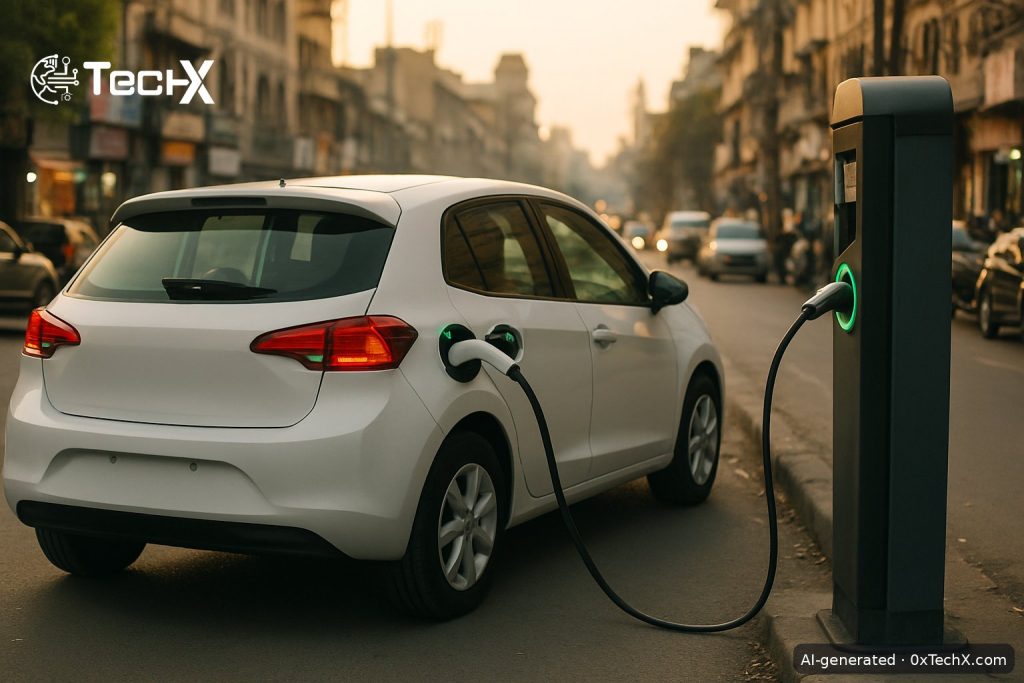
A proposed cut in EV import duty in Pakistan could change the way ordinary buyers think about going electric. The draft Auto Policy 2026-31, presented by the Ministry of Industries and Production on October 20, proposes just 5% customs duty on imported battery electric vehicles (BEVs) with a CIF value of up to $15,000. If approved, this could put affordable Chinese models like the BYD Seagull and Wuling Binguo within reach of buyers who currently shop for petrol hatchbacks.
The policy has already received in-principle approval from Prime Minister Shehbaz Sharif, but it still needs to clear the IMF, the Economic Coordination Committee (ECC), and the federal cabinet before it becomes law. Nothing has been finalised yet.
How the 5% EV Import Duty in Pakistan Would Work
The reduced EV import duty in Pakistan applies only to Completely Built Units (CBUs), meaning fully assembled cars shipped from abroad, not parts for local assembly. The key threshold is the CIF value, that stands for Cost, Insurance, and Freight. This is the price of the car plus the cost of shipping and insurance to reach Pakistan.
This is an important detail that many headlines miss. For importers, the relevant figure is the CIF value, which includes the vehicle’s cost, shipping, and insurance. An electric car purchased overseas for $14,500 might actually exceed the $15,000 threshold once freight and insurance are added on top. So a buyer cannot simply look at a car’s factory price in China and assume it will qualify.
As a rough example, a vehicle assessed at $14,000 CIF would attract $700 in customs duty under the proposed 5% rate. Other applicable charges would still affect its final landed and retail cost.
Alongside the 5% customs duty, the policy also proposes a 1% sales tax on BEVs. However, the 5% customs duty and the 1% sales tax are separate charges, and neither figure represents the vehicle’s total landed tax burden. Buyers should expect additional levies to apply before a car reaches a showroom.
The Duty Window Is Short: Only Two Years
One critical fact buried in the policy document is that the 5% EV import duty in Pakistan is not permanent. The duty schedule shows 5% in FY 2026-27 and FY 2027-28, rising sharply to 25% in FY 2028-29 and FY 2029-30, before settling back to 15% in FY 2030-31.
This means the affordable window lasts just two financial years. If you want to benefit from the lowest possible import cost, the clock starts the moment the policy is formally enacted, which has not happened yet. After two years, the duty jumps to 25%, making imported EVs significantly more expensive again.
This escalating structure is designed to give local assembly a chance to grow. The idea is to use cheap imports as a short-term bridge while factories inside Pakistan ramp up production.
Could the BYD Seagull and Wuling Binguo Beat Petrol Car Prices?
Under illustrative calculations shared in the Ministry’s October 20 presentation, the Wuling Binguo becomes approximately Rs 1.68 lakh cheaper than the Suzuki Alto, while the BYD Seagull comes in roughly Rs 2.15 lakh below the Cultus.
However, these are modelled outcomes based on policy assumptions. They do not confirm that either EV will be sold at those prices in Pakistan. Actual prices will depend on import costs, applicable taxes, exchange rates, and importer margins.
At the moment, used petrol prices in Pakistan remain high, which already makes EVs appealing on running costs. The real barrier has always been the upfront purchase price. If the new duty structure holds, it could finally crack that barrier open for middle-income buyers.
BYD also has a broader Pakistan story unfolding in parallel. BYD Vice President Liu Xueliang confirmed that assembly operations in Pakistan will begin in the second half of 2026. The facility starts at 25,000 vehicles per year, scalable to 50,000, and will create over 1,100 direct jobs, making it BYD’s sixth manufacturing site outside China. Local assembly, once it begins, could reduce prices further by cutting shipping costs entirely.
What the IMF Has to Do With This
Here is where it gets complicated. The sales tax rates proposed in the new policy are actually lower than what the IMF had recommended. The IMF had suggested an 18% sales tax rate on electric vehicles. The government has pushed back on that, proposing just 1% for BEVs, a big difference.
The Prime Minister has approved the policy for further processing. It is expected to proceed to the IMF, followed by the Economic Coordination Committee (ECC), the Federal Cabinet, and then the parliamentary process where legislation is required.
This means the policy could still change. The IMF may push back on the low EV sales tax, and the final approved version of the policy could look different from what was presented on October 20. Buyers and importers should track developments carefully before making any decisions based on these numbers.
Bigger Picture: Pakistan’s Auto Policy 2026-31
The EV duty proposal is just one piece of a larger policy. The proposed policy sets an ambitious target of increasing vehicle exports to $6 billion and auto-parts exports to $1.2 billion by FY 2030-31. It also aims to improve the competitiveness of Pakistan’s automotive industry by reducing import duties, encouraging local production, and introducing incentives for manufacturers.
By FY 2030-31, the policy proposes bringing basic customs duty on fully built conventional vehicle imports to a uniform 15%, covering all engine sizes from small 850cc cars to large SUVs above 1800cc.
The new rules also give manufacturers export targets. If a company misses its export target for two years in a row, the government can cancel its manufacturing certificate. That is a strong incentive for local assemblers to grow beyond the domestic market.
For the EV import duty Pakistan story specifically, the next few months will be decisive. Once the IMF and ECC have their say, the true shape of the policy will become clear.
Frequently Asked Questions
What is the proposed EV import duty in Pakistan under the new auto policy?
The draft Auto Policy 2026-31 proposes a 5% customs duty on fully built electric vehicles with a CIF (Cost, Insurance, and Freight) value of up to $15,000. This rate applies for the first two financial years, FY 2026-27 and FY 2027-28, after which the duty rises to 25% before settling at 15% in FY 2030-31.
Are the BYD Seagull and Wuling Binguo officially coming to Pakistan?
No official launch has been confirmed for either model in Pakistan. The Ministry’s presentation included illustrative price estimates for both cars to show the potential impact of the new duty, but these are not confirmed prices. BYD is, however, setting up a local assembly plant in Pakistan that is expected to begin operations in the second half of 2026.
What is the CIF value and why does it matter for the $15,000 threshold?
CIF stands for Cost, Insurance, and Freight. It is the combined value of the car’s price plus the cost of shipping and insuring it to Pakistan. The $15,000 threshold in the policy refers to this CIF value, not just the factory price of the car. A vehicle that costs $14,000 in China could exceed the threshold once shipping and insurance are added, making it ineligible for the 5% duty rate.
Is this policy already in effect?
No. The policy has received in-principle approval from the Prime Minister but still needs clearance from the IMF, the Economic Coordination Committee, the Federal Cabinet, and Parliament before it becomes law. The proposed EV import duty has not yet been implemented, and the final policy may differ from the current draft.