
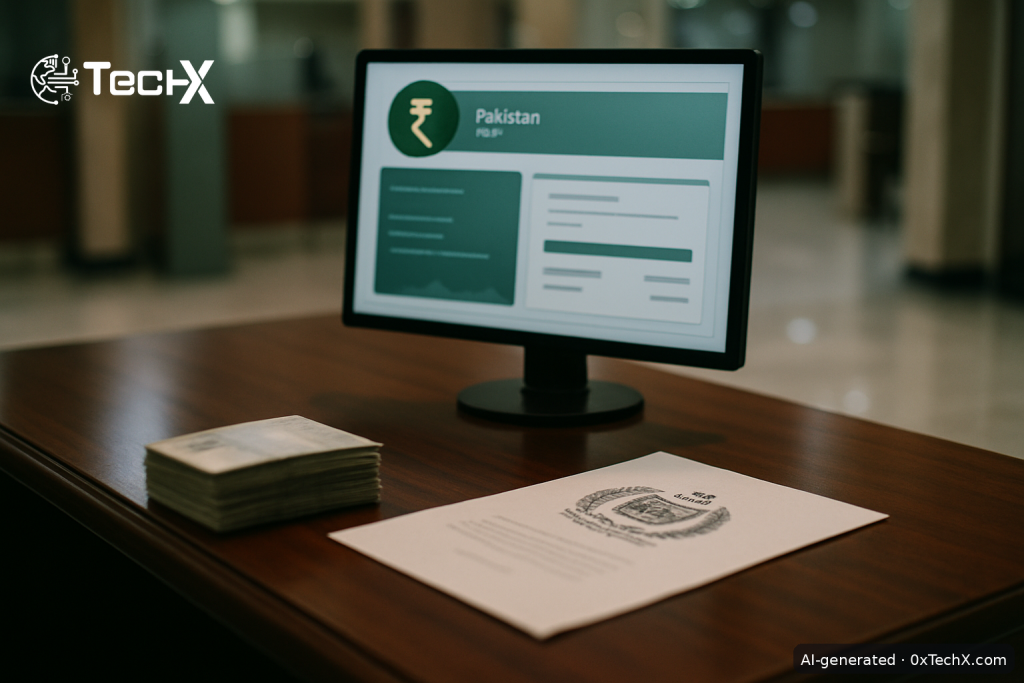
Crypto bank accounts in Pakistan are now a legal reality for licensed firms after the State Bank of Pakistan (SBP) issued a landmark circular under the Virtual Assets Act 2026. For the first time, commercial banks can open accounts for companies licensed as Virtual Asset Service Providers (VASPs) by the newly created Pakistan Virtual Assets Regulatory Authority (PVARA). This ends an eight-year banking ban on the crypto sector and puts Pakistan on the map as a country with a real, structured digital asset regime.
Why Crypto Bank Accounts in Pakistan Were Blocked Before
Back in 2018, the State Bank of Pakistan barred all financial institutions from dealing with crypto firms. Banks could not open accounts for exchanges, wallets, or any virtual asset business. This left Pakistan’s crypto sector in a legal grey zone even as millions of Pakistanis were actively trading digital assets.
The result was that legitimate businesses were forced to use informal channels. Crypto transactions flowed through personal accounts, overseas companies, and unregulated platforms. There was no consumer protection, no tax trail, and no way for regulators to monitor the sector properly.
The Virtual Assets Act 2026 changes all of that. The act was passed by the National Assembly and came into force immediately, replacing the Virtual Assets Ordinance of 2025. It creates PVARA as Pakistan’s permanent crypto regulator and gives the SBP a clear legal path to let banks serve licensed firms.
How the New Crypto Bank Account Rules Work
The SBP’s rules are specific and strict. Here is what the framework looks like in practice:
- Only PVARA-licensed firms qualify. Banks must verify a valid PVARA licence before opening any account. Firms that hold a No-Objection Certificate (NOC) but are still working toward full licensing can open limited accounts, but cannot carry out full transactions until they receive their final licence.
- Client Money Accounts (CMAs) are rupee-only. All transactions happen in Pakistani rupees. No foreign currency accounts are allowed under this framework.
- No cash in or out. The SBP has barred cash deposits and cash withdrawals from these accounts. Everything must go through digital channels.
- No mixing of funds. A VASP cannot put its own company money into the same account as client funds. The two must stay completely separate.
- No collateral use. Money held in a Client Money Account cannot be pledged as collateral or used to secure any loan or credit facility for the VASP.
- Banks cannot trade crypto. Financial institutions are not allowed to invest in, trade, or hold virtual assets using their own money or customer deposits. Their role is to provide banking infrastructure, not to take crypto positions.
What PVARA Does and Why It Matters
PVARA is the body at the centre of this new system. It is responsible for licensing, supervising, and regulating all virtual asset businesses operating in or from Pakistan. The authority covers a wide range of activities, including crypto exchanges, wallet providers, custodians, token issuers, and even mining services.
Licensing is a two-stage process. A company first gets a No-Objection Certificate, then applies for a full PVARA licence after incorporation. The act also has extraterritorial reach, meaning foreign firms that serve Pakistani users may need to comply even if they are based abroad.
PVARA chairman Bilal bin Saqib described the framework as ‘a foundational step in bringing virtual assets into the formal financial system of Pakistan.’ The authority has already granted initial clearances to global exchanges Binance and HTX to begin their licensing processes. Pakistan also signed an agreement with Binance in late 2025 to explore tokenizing up to $2 billion in state assets.
What This Means for Existing Crypto Businesses
The clock is now ticking for any crypto firm currently operating in Pakistan. Under Section 70 of the Virtual Assets Act 2026, existing operators have six months to apply for a PVARA licence or they must stop operations. This affects local exchanges, peer-to-peer platforms, and international platforms with Pakistani user bases.
The compliance requirements are serious. Banks must carry out customer due diligence specific to VASPs, on top of standard anti-money laundering checks. They must monitor transactions continuously, build risk profiles for each VASP, and report any suspicious activity. These rules align Pakistan’s crypto sector with FATF standards, which is important for removing pressure from international financial watchdogs.
Pakistan’s startup funding ecosystem has been growing, and regulated crypto banking could open a new lane for fintech investment. If you want to understand how broader digital finance is evolving in the country, our piece on SBP’s push to regulate BNPL and digital credit gives useful context on how Pakistan’s regulators are thinking about new financial products.
What It Means for Ordinary Pakistani Crypto Users
For everyday users, the immediate change is indirect but significant. As more exchanges get PVARA licences and gain banking access, they will be able to offer proper rupee deposit and withdrawal rails. Right now, many users send money to exchanges through informal means or use third-party payment apps. Regulated banking access means faster, safer, and more transparent transactions.
It also means better consumer protection. Licensed VASPs are required to keep client funds separate and cannot use them for their own business. If a platform gets into financial trouble, your funds are in a ring-fenced account, not mixed with company money.
Pakistan is already one of the largest retail crypto markets in the world by grassroots adoption. This regulatory shift brings that real-world activity into the open, creating a foundation for legitimate crypto businesses to grow and for users to trade with fewer risks.
Frequently Asked Questions
Can any crypto company now open a bank account in Pakistan?
No. Only companies that hold a valid licence or No-Objection Certificate from PVARA can open accounts at SBP-regulated banks. Unlicensed firms are not eligible and must either get licensed within six months or stop operating.
What is PVARA and who set it up?
PVARA stands for Pakistan Virtual Assets Regulatory Authority. It was created by the Virtual Assets Act 2026, passed by Pakistan’s National Assembly. It is the dedicated regulator for licensing and supervising all crypto and virtual asset businesses in the country.
Can banks in Pakistan now invest in Bitcoin or other cryptocurrencies?
No. The SBP has made it clear that banks cannot invest in, trade, or hold any virtual assets using their own funds or customer deposits. Their role is limited to providing banking services to licensed VASP clients.
Are crypto bank accounts in Pakistan in rupees or dollars?
All Client Money Accounts under this framework must be in Pakistani rupees. Foreign currency accounts are not part of this framework, and all transactions must happen digitally, with no cash deposits or withdrawals allowed.