
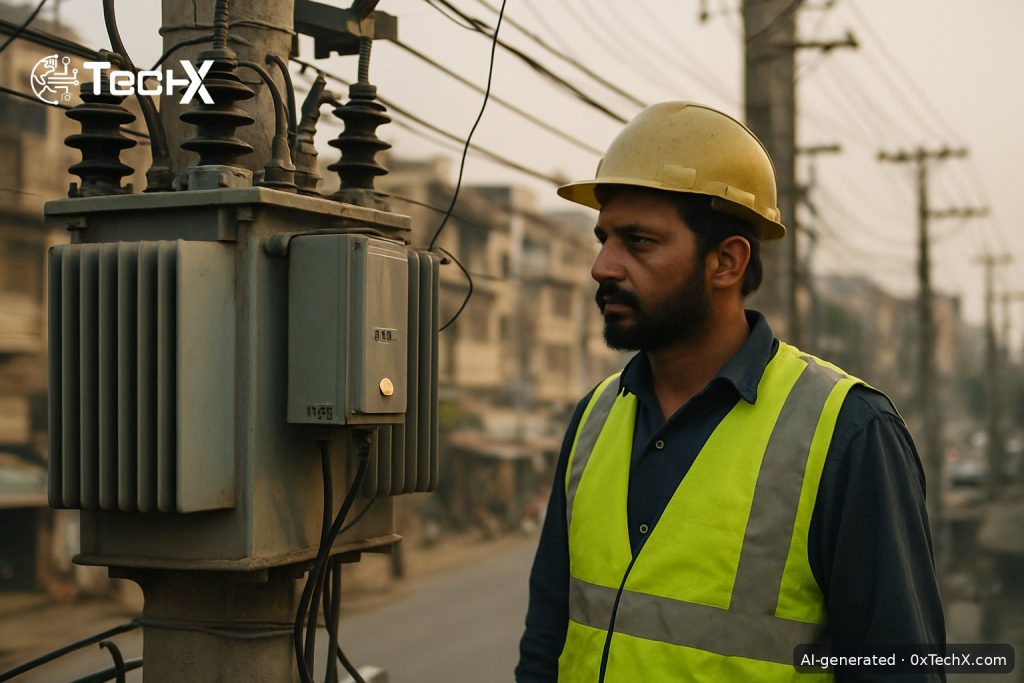
Pakistan’s new loadshedding management system, called the Asset Performance Management System (APMS), is set to change how the country handles power outages. Instead of blacking out entire feeders, the system will target individual transformers, so honest electricity consumers no longer suffer for the actions of thieves and defaulters.
What Is the Loadshedding Management System?
The government is introducing the Asset Performance Management System (APMS), also known as the Advanced Power Management System, to control power theft and load management across the country in a phased manner. Energy Minister Awais Leghari revealed the plan at a ceremony in Dera Ghazi Khan.
Power experts say the APMS will enable more targeted identification of high-loss consumers, improve energy accounting, enhance operational visibility, and support equitable load management through data-driven decision-making.
This is not just a policy promise. A procurement contract for the APMS was signed on September 7, 2026, with Accurate (Pvt.) Limited as the winning bidder, at a contract price of over Rs392 million. The money is already committed.
How the APMS Actually Works
The APMS works alongside Advanced Metering Infrastructure (AMI) and Automated Meter Reading (AMR) rollouts, enabling two-way communication and remote cutoff capabilities.
Under the new arrangement, the APMS will be installed on transformers currently placed on poles. After installation, existing conventional meters will be replaced by AMI smart meters. The APMS will then sync with those smart meters and monitor real-time electricity consumption.
One of the more striking features is self-reporting tamper detection. If someone touches the AMI meter with the intention to tamper with it and steal electricity, the meter itself will report to officials, enabling them to respond quickly.
The APMS will identify specific transformers in high-theft areas, enabling targeted disconnections so that thousands of paying consumers on an entire feeder are not penalised for the actions of electricity thieves.
Loadshedding Management System Pilot Starts in Lahore and Kasur
The APMS pilot project is all set to be launched in Lahore and Kasur soon, with LESCO carrying out the necessary groundwork. Prime Minister Shehbaz Sharif is expected to inaugurate this pilot project.
LESCO is not starting from scratch. Lahore Electric Supply Company had already carried out a proof of concept for the APMS as early as February 2026, adding features like oil temperature and oil level monitoring on distribution transformers.
Elsewhere in Punjab, the Multan Electric Power Company (MEPCO) formally launched its own APMS pilot implementation in line with directions from the Ministry of Energy. In the first phase, the APMS is being rolled out on 15 selected feeders, enabling effective monitoring of transformer-level energy flow, billing, recovery, and line losses.
The project includes transformer coding, consumer-to-transformer tagging, GIS mapping, installation of scanning meters, transformer-level energy accounting, and integration with the Pakistan Information Technology Company’s advanced systems and dashboards.
The Scale of the Smart Meter Rollout
Officials have put forward a proposal to install 16.2 million single-phase AMI meters in the Multan, Lahore, Peshawar, Hazara, and Quetta regions. That would be one of the largest smart metering programmes in South Asia.
Around 1.5 million AMI smart meters are already installed, about 1 million in Islamabad and Rawalpindi and 500,000 in other areas.
LESCO has also launched a phased replacement of conventional single-phase meters with AMI smart meters across Punjab government departments, aimed at improving transparency, operational efficiency, and real-time data management.
Why This Matters for Ordinary Pakistanis
For years, Pakistan’s power sector has relied on feeder-based load management, where electricity outages are imposed according to recovery rates and line losses in specific areas. That means a whole street or neighbourhood goes dark even if only a few people in it are stealing power or not paying bills.
The APMS changes that. Under the current system, all consumers, including those paying their bills regularly, bear the brunt of those stealing electricity. The new system will gradually protect the rights of law-abiding consumers.
The minister has made it clear that loadshedding will continue on feeders reporting 30 percent or higher losses, and no leniency will be shown toward electricity thieves or chronic defaulters.
Pakistan plans to shift electricity loadshedding from high-loss feeders to individual transformers starting in June 2027, according to Energy Minister Leghari. That gives distribution companies about eight months to complete the technical groundwork.
The broader energy reform effort is also gaining political pressure. Prime Minister Shehbaz Sharif has already ordered that there should be no loadshedding for more than two hours in any area of the country, issuing the directive while chairing a meeting on electricity load management.
For those following Pakistan’s broader shift toward digital governance, this loadshedding management system is part of a wider pattern. You can read more about another major government AI deployment in the article on Pakistan’s bid rigging detection AI going after tender fraud.
Frequently Asked Questions
What is the APMS loadshedding management system?
APMS stands for Asset Performance Management System. It is a technology platform installed on pole-mounted electricity transformers. It connects with smart AMI meters to track power usage in real time, find where losses or theft are happening, and allow targeted disconnections at the transformer level rather than cutting off an entire feeder.
Where will the APMS pilot launch first?
The Asset Performance Management System pilot project will be launched from Lahore and Kasur first. LESCO is doing the groundwork, and the Prime Minister is expected to formally inaugurate it.
Will honest consumers still face loadshedding under this system?
The aim of the new loadshedding management system is to protect bill-paying consumers. Once APMS is running, outages should only apply to transformers in areas where theft or non-payment is confirmed, not to entire feeders where most people pay their bills properly.
How many smart meters will Pakistan install?
A proposal is under consideration to install 16.2 million single-phase AMI meters across the Multan, Lahore, Peshawar, Hazara, and Quetta regions. About 1.5 million AMI smart meters are already in place. The government has set NEPRA approvals as a key step before wider deployment can continue. You can follow official updates via the Power Planning and Monitoring Company (PPMC).