
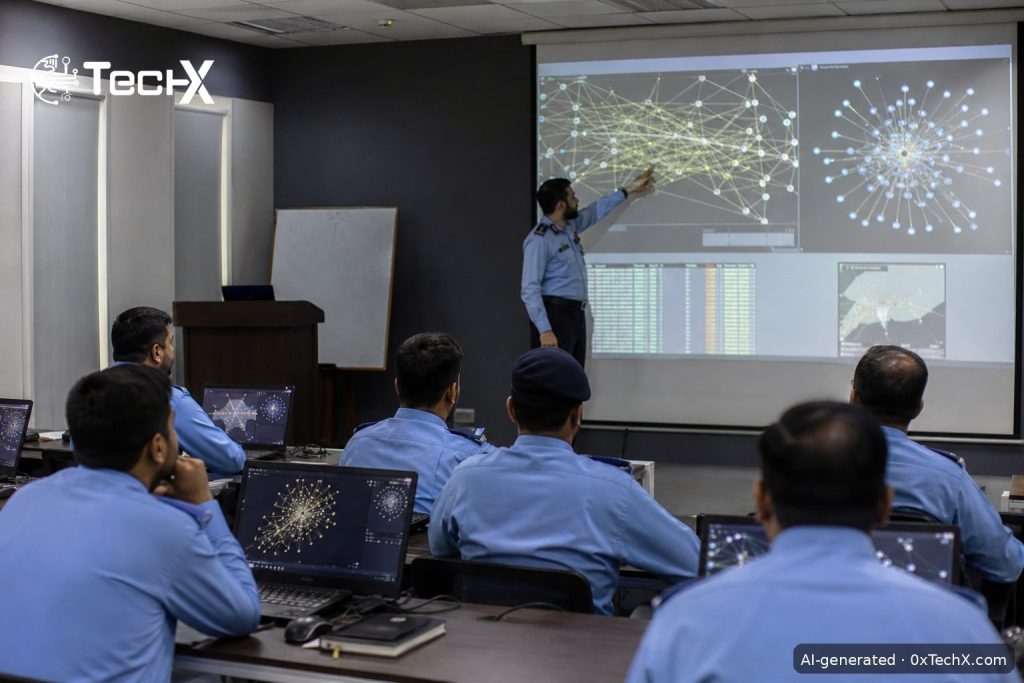
Pakistan’s crypto tracking training capability took a concrete step forward this week when the Pakistan Anti-Corruption Academy (PACA) completed a two-day course designed to give law enforcement officers the skills to follow digital money trails. The November 16-17 session, known as Capacity Building Course III (CBC-III), is the latest sign that the country is moving from broad crypto policy to hands-on enforcement readiness.
What the Crypto Tracking Training Covered
PACA conducted the two-day Capacity Building Course (CBC-III) focusing on the use of digital and crypto currencies, tools, and techniques for tracking and tracing in money laundering cases.
Held from November 16 to 17, 2026, at the PACA campus in Islamabad, the specialised training brought together officers from the National Accountability Bureau (NAB) and other Law Enforcement Agencies through both physical and online participation.
The course was inaugurated by PACA Director General Ghulam Safdar Shah, who highlighted the critical need to elevate the professional capabilities of law enforcement personnel to effectively counter the complex challenges posed by virtual currencies and their potential misuse in financial crimes.
The curriculum went well beyond theory. It examined global regulatory frameworks, FATF recommendations, Pakistan’s regulatory evolution including the establishment of PVARA and the Virtual Assets Act of 2026, banking channel oversight, and practical case studies involving multi-wallet USDT tracing. That last point matters: tracing USDT (Tether) across multiple wallets is one of the most common challenges investigators face in real money-laundering cases, and hands-on practice with that skill is something most prior training programmes in Pakistan have skipped.


Why This Crypto Tracking Training Matters Now
Pakistan’s crypto landscape shifted dramatically in early 2026. The Virtual Assets Act, 2026 is the country’s principal law regulating blockchain technology and virtual assets. The Virtual Assets Act 2026 established PVARA as the federal authority responsible for supervising virtual asset service providers, including exchanges, custodians, brokers and token issuers.
But a law without trained investigators is only half the picture. The FIA also launched a dedicated Cryptocurrency Investigation Unit in July 2026, with its Counter-Terrorism Wing emphasising that PVARA remains responsible for digital asset regulation while the FIA focuses on possible criminal activity, creating separate roles for market regulation and law enforcement as Pakistan develops its formal crypto framework.
PACA’s training complements that FIA unit by giving NAB investigators and other agency officers their own crypto literacy. The Virtual Assets Act, 2026 requires PVARA to cooperate closely with the FMU and relevant law enforcement agencies to support effective supervision and enforcement. Training officers across multiple agencies helps make that cooperation real rather than just a line in a law.
There is also a broader global push behind this. Earlier PACA programmes focused on aligning Pakistan’s investigative practices with international standards, particularly the Financial Action Task Force (FATF) recommendations and the United Nations Convention Against Corruption (UNCAC). Pakistan spent years on FATF grey lists, so building the skills that international reviewers look for is a clear priority for Islamabad. You can read more about Pakistan’s fintech regulatory direction in this piece on the Pakistan SME fintech agenda at the Singapore festival.
PACA’s Role in Pakistan’s Anti-Corruption System
Pakistan has focused on institutional strengthening, notably through the creation of the Pakistan Anti-Corruption Academy (PACA), which trains law enforcement and investigators on anti-corruption strategies, conducts forensic examinations, and accredits financial crime investigators. The academy operates under NAB (National Accountability Bureau) and extends its training to federal and provincial law enforcement agencies.
PACA’s first Capacity Building Course (CBC-I) earlier in 2026 was designed to help investigators and prosecutors better understand modern money laundering trends and laws, aiming to give professionals the tools and legal techniques they need to fight financial crimes effectively. The November session, CBC-III, is the third and most technically advanced course in that series, specifically targeting digital assets.
What Officers Actually Learned to Do
The practical focus of this crypto tracking training sets it apart from policy workshops. Here is what the curriculum included, based on PACA’s public training plan and reports from the session:
- Wallet tracing: Following funds across multiple crypto wallets, with specific practice on USDT (Tether) transactions, the stablecoin most commonly used in Pakistan-linked laundering cases.
- Blockchain basics: Understanding how blockchain records work so officers can read on-chain data as evidence.
- FATF alignment: Applying Financial Action Task Force (FATF) travel rule and reporting standards to virtual asset cases.
- Legal framework: Understanding what the Virtual Assets Act 2026 and PVARA regulations allow agencies to do, and where jurisdiction lines fall.
- Case studies: Real-world examples of crypto-linked money laundering in Pakistan, so officers can recognise the patterns.
The initiative marks a major milestone in strengthening Pakistan’s institutional framework and investigative readiness against modern digital financial crimes.
The Gap That Still Exists
Crypto tracking training is a good start, but most coverage of this topic stops short of asking the harder question: will officers be able to act on what they learn? A two-day course builds awareness. Real investigative capacity needs follow-up tools: licensed blockchain analytics software, court-admissible evidence standards for digital assets, and coordination protocols between PACA, PVARA, the FIA and the Financial Monitoring Unit (FMU).
The Virtual Assets Act, 2026 now gives PVARA extensive enforcement powers, and the notification of the Pakistan Virtual Asset Services Regulations has operationalised the regulatory framework for blockchain-based activities. That framework gives trained officers a legal path to act. The next step is making sure those officers have the tools and budgets to follow through.
For Pakistani crypto users and businesses, the message is straightforward: enforcement is becoming more capable, not less. Agencies that once lacked the technical knowledge to trace digital wallets are now actively building that skill. Anyone operating in this space should assume that investigators will keep getting better at this.
Frequently Asked Questions
What is PACA and who does it train?
PACA stands for the Pakistan Anti-Corruption Academy. It is the specialised training wing of the National Accountability Bureau (NAB). It trains investigators, prosecutors and law enforcement officers from NAB and other federal and provincial agencies in anti-corruption, financial crime and now digital asset investigation skills.
What did the November 2026 crypto tracking training cover?
The two-day CBC-III course covered how to trace digital currency and cryptocurrency transactions, including multi-wallet USDT tracing. It also covered FATF rules, Pakistan’s Virtual Assets Act 2026, the role of PVARA, banking channel oversight and real case studies of crypto-linked money laundering.
Is cryptocurrency legal in Pakistan now?
The Virtual Assets Act, 2026 is the country’s principal law regulating blockchain technology and virtual assets, though it expressly provides that virtual assets are not legal tender in Pakistan. PVARA is now the official regulator for licensed virtual asset service providers operating in the country.
How does this training fit into Pakistan’s broader crypto enforcement push?
It is one part of a wider effort. The FIA launched a dedicated Cryptocurrency Investigation Unit in mid-2026. PVARA is licensing virtual asset businesses. And PACA is now training investigators to trace digital funds. By assigning market regulation to PVARA and criminal enforcement to the FIA, Pakistan is establishing distinct responsibilities for supervising licensed businesses while investigating unlawful activity involving digital assets. PACA’s training equips the people who will do that investigative work.