
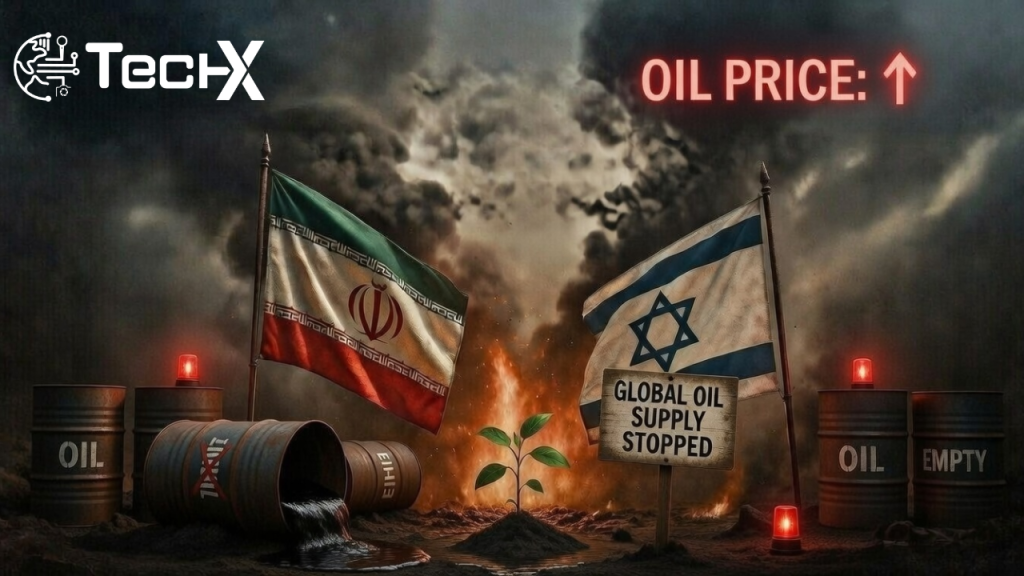
Global oil prices surged sharply after recent U.S. and Israeli military strikes on Iran and growing tensions in the region. Major benchmarks such as Brent crude rose above $80 per barrel, reaching levels not seen in months, while U.S. West Texas Intermediate also climbed significantly. The price jump was driven by fears that supply from the region could be disrupted if fighting escalates further.
Strait of Hormuz Supply Fears
One major reason for the price increase is concern over the Strait of Hormuz, a narrow sea route through which a large portion of the world’s oil supply travels. Disruptions or threats to navigation in the strait alarm global traders because nearly 20 % of all seaborne oil passes through this chokepoint. When tanker traffic slows or halts, markets react quickly by pricing in potential shortages.
Shipping Routes and Tanker Delays
Many oil tankers have been paused or rerouted due to the risk of attacks or instability in Gulf waters. This slowdown in shipments exacerbates supply concerns because even a temporary reduction in flow can tighten the oil market. Traders and energy analysts warn that continued disruptions could push prices even higher if recovery in shipping does not happen soon.
OPEC+ Responds With Production Boost
In response to market stress, the OPEC+ group of oil‑producing countries agreed to increase oil output slightly by about 206,000 barrels per day starting in April. However, analysts note this is a relatively small increase compared to the potential impact of reduced Gulf shipments, meaning supplies may remain tight in the short term.
Impact on Fuel and Economy
Higher global oil prices tend to affect everyday consumers and businesses. When crude costs rise, fuel prices often increase too, leading to higher transportation and energy expenses for individuals and companies. This can contribute to inflation meaning prices for other goods and services may also climb as energy costs rise.
Market Outlook and Future Risks
Analysts warn that if tensions continue and the Strait of Hormuz remains disrupted, oil prices could stay elevated or even climb above $90 or $100 per barrel. Governments and markets are closely watching developments, as prolonged conflict could have lasting effects on the global energy supply and economic stability in oil‑importing countries.