
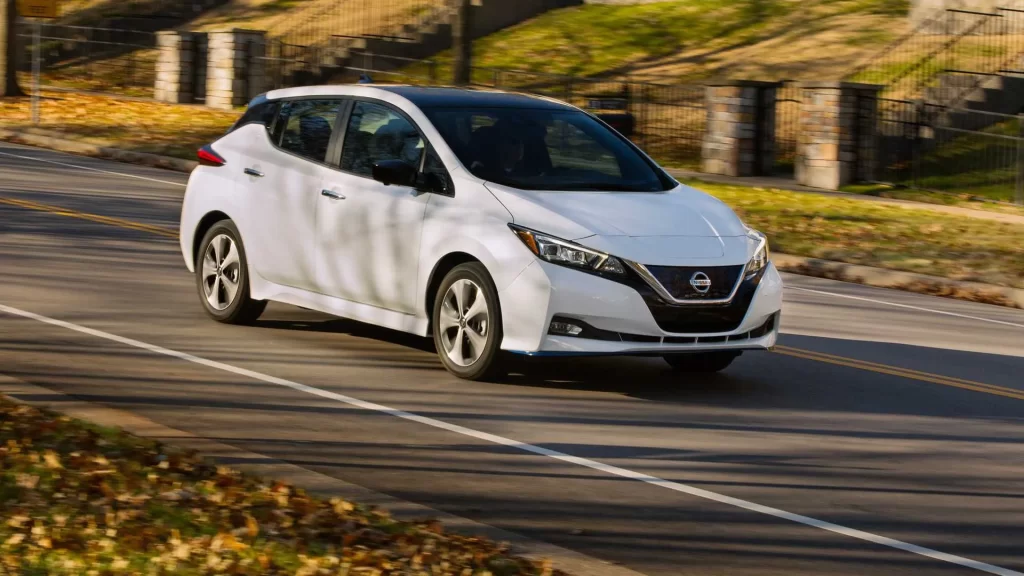
Nissan saw it already that the world was ready for an electric car in 2010, but the Leaf never took off as expected. And now, as the industry converts to EVs, Nissan is planning to phase it out. And now, as the industry converts to EVs, Nissan is planning to phase it out.
The Leaf, a pioneering electric vehicle and one of the most affordable mass-produced EVs, is nearing the end of its life cycle. Nissan has no plans to introduce a next-generation Leaf and may even discontinue the nameplate entirely.
production of the current Leaf will end by the middle of the decade. A company official declined to speculate on the future of the Leaf, but did say that Nissan has noticed a “renewed” interest in the Leaf amid high demand for EVs.
According to Nissan spokesperson Stephen Oldham: “We are seeing renewed interest in Leaf with the increased demand for EVs and its overall value proposition. Since its launch, Leaf has consistently delivered strong customer satisfaction and new buyers to Nissan.”
Despite the fact that the Leaf has been in Nissan’s lineup in the United States for a decade, fewer than 175,000 units have been sold.
Despite the fact that the United States was one of the largest markets for the Leaf EV, its annual sales averaged around 14,500 units. In comparison, the total number of Tesla vehicles sold in the United States in 2022 is 564,743 units.
The Leaf’s dull driving experience and limited range have dampened enthusiasm for the vehicle, likely preventing it from benefiting from rising consumer interest in EVs.
While high-end electric vehicles now have ranges of up to 500 miles (800 km), the 2022 Leaf has only 226 estimated miles (363 km) in its larger battery and only 149 miles (239 km) in the base model.
While Nissan does not appear to be interested in launching a newer generation Leaf, it is eager to be at the forefront of the EV revolution.
The Japanese automaker has already stated that it intends to spend 2 trillion yen (approximately $17.6 billion USD) over the next five years to accelerate the adoption of electric vehicles. By 2030, the plan will include 23 new electrified models (including hybrids and plug-in hybrids), 15 of which will be fully electric. By the end of the decade, the company hopes to have electrified 50 percent of its Nissan and Infiniti brands.
To read our blog on “Renault to consider selling a stake in Nissan to fund an electric vehicle shift,” click here