
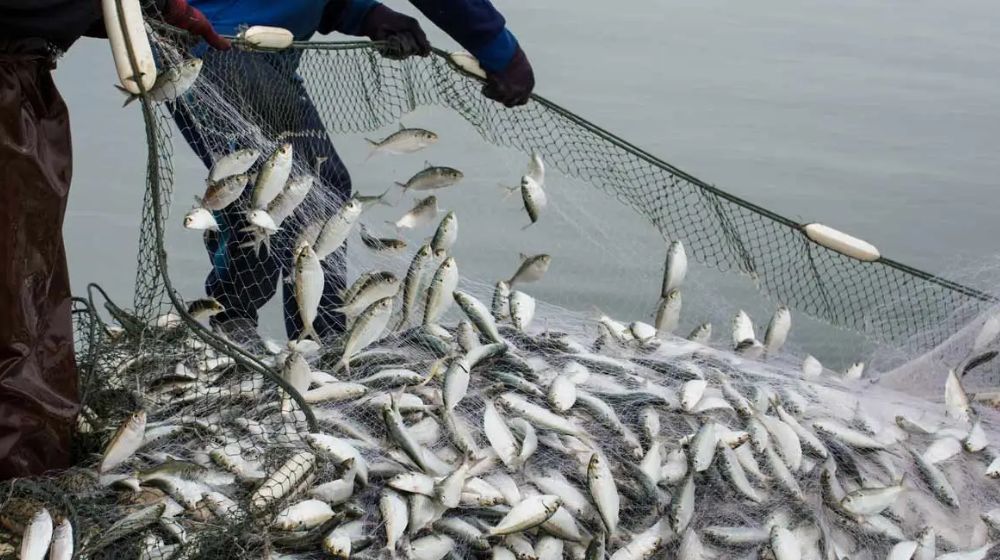
Students at NED University created eco-friendly biodiesel from fish waste and internal components. Biodiesel made from fish waste will reduce air and marine pollution while saving foreign exchange spent on refinery diesel.
A group of NED University final-year Mechanical Engineering students successfully completed a 2-month research project on fish waste and discarded viscera under the supervision of Dr. Mehmood Ali, Head of the Department of Environmental Engineering.
Muhammad Absar Ahmed, Zaki Ahmed, Talha Ahmed, and Huzaifa Iftikhar are among the research students.
According to Mohammad Absar Ahmed, a student on the research team, previously biodiesel was produced from various plant materials, but his group chose fish waste, which was abundant, and thus increased its availability can go.
He stated that one million tons of fish and sea food are obtained annually in Pakistan, from which 3.5 million tons of waste are produced annually, the majority of which is thrown into the sea, increasing pollution and affecting aquatic life.
According to the research students, if biodiesel is produced from the three and a half million tons of fish waste available in Pakistan, one and a half million tons of oil or one million tons of biodiesel can be produced, with up to 20% of the diesel produced in the refinery.
Blending will not only help to protect the environment, but will also save foreign exchange on diesel and crude oil imports.
The production of biodiesel from fish waste will save $1.73 billion per year
The use of up to 20% fish waste biodiesel in regular diesel can save $1.73 billion in foreign exchange spent on diesel imports each year.
According to statistics, 0.77 million tons of diesel were imported into Pakistan last year, for a total cost of 17.3 billion dollars.
If Pakistan processes 3.5 million tons of fish waste and produces 1 million tons of biodiesel, diesel imports will increase. There will be a 100,000-tonne reduction, saving $1.73 billion.
Glycerine produced during the biodiesel production process from fish waste can be used in industrial applications.
The private sector is willing to offer technical assistance, such as plant design
According to Dr. Mehmood Ali, who oversaw the project to produce biodiesel from fish waste and ingredients, the production of biodiesel from fish waste can be a profitable commercial project.
If the private sector invests in the NED University plant. Ready to provide technical assistance, including design.
He stated that the plant, which has a limited capacity of 10 litres, converts one litre of oil into biodiesel for 180 to 190 rupees after accounting for all costs, including chemicals for running it on electricity. It is feasible, and the cost of producing biodiesel can be significantly reduced.
Solarsey will operate a biodiesel coprocessing plant, according to Dr. Mahmood
The production of biodiesel from fish waste and viscera was tested using a batch-scale biodiesel production unit developed at NED’s Environmental Department.
The Environmental Department designed and built this plant, which can convert 10 litres of oil into biodiesel in three hours. This machine was built in two months for a cost of one lakh rupees.
According to Dr. Mahmood Ali, this machine was developed in the NED’s Environmental Department to process 10 litres of oil and convert it into biodiesel. The production of gas and biodiesel can also be made more environmentally friendly.
To read our blog on “Chinese scientists make robot fish to ‘eat’ microplastics in polluted oceans,” click here