
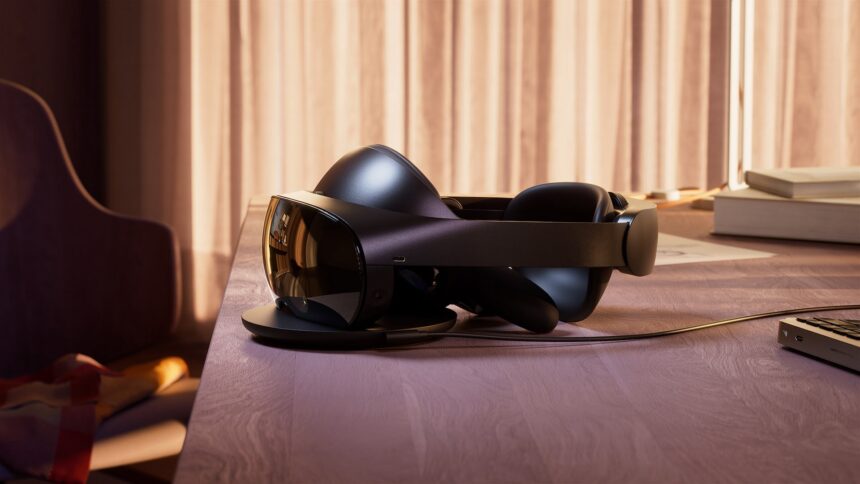
The first thing I notice about the Meta Quest Pro is how well it fits. Even after eight years, Meta’s (formerly Facebook’s) virtual reality headsets remain large and front-heavy.
But the Quest Pro fits easily around my head, with the battery moved to a back mount and the electronics reduced to a lighter layer over my face.
Though it’s larger than your average pair of glasses or even a ski mask, it’s a significant step forward for the world’s largest VR headset manufacturer.
It’s clear where that step is going, but I’m not sure where it’s landed just yet.
The Quest Pro is a $1,499 upgrade over the $399 Meta Quest 2, with improvements ranging from improved ergonomics to an upgraded processor.
It includes eye tracking and a high-resolution color video feed, blurring the traditional distinction between virtual and augmented reality.
In theory, the Quest Pro positions Meta to enter a professional-oriented VR market that has previously been overlooked by the Quest.
“This is the highest-end VR device — for enthusiasts, the prosumer, the sort of people who are trying to get work done,” Meta CEO Mark Zuckerberg told The Verge and a small group of reporters during a recent demo at the company’s research division in Redmond, Washington.
Meta will continue to sell the Quest 2, while the Quest Pro will be sold in a separate high-end category.
In practice, the Meta Quest Pro appears to be a highly sophisticated development kit, geared more toward testing next-generation technology than meeting specific needs.
Maybe I’ll change my mind when the headset arrives on October 25th. But it’s unclear how strong a case Meta will make for a $1,500 device with questionable practical benefits for many businesses.
And there is one significant difference between the Quest 2 and the Quest Pro: a reduction in battery life, which may make the Quest Pro less appealing to some of the customers it is aimed at.
The high end of VR has long been dominated by companies like HTC, Varjo, and Valve, but the Quest Pro changes that.
The headset improves on the internal specifications of the Meta Quest 2: it has a Snapdragon XR2-Plus processor instead of the Quest 2’s XR2, 12GB of memory instead of 6GB, and 256GB of storage instead of 128GB and 256GB models. It weighs 722 grammes versus 503 grammes for the Quest 2, but it is far more balanced.
To read our blog on “Most important announcements VR made at the Meta Quest games show,” click here