
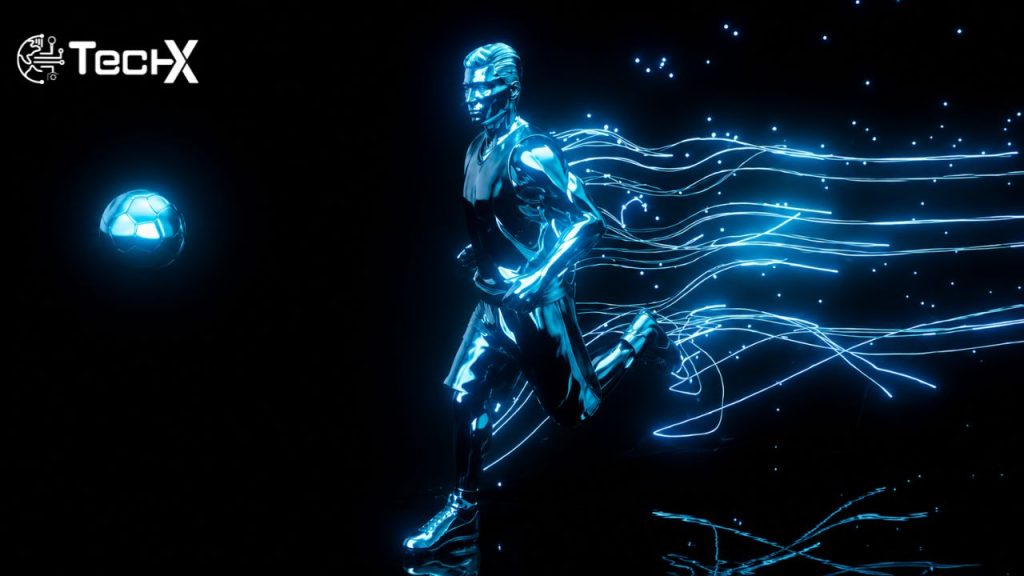
Media development has transformed the global sports industry over the past twenty years. The rapid advancement of telecommunications technology, combined with the rise of digital media platforms, has changed the economic and social aspects of professional athletics worldwide.


Digital Transformation and Mobile Accessibility in Modern Sport
In addition to altering where individuals watch their favorite sports—now that the majority of sports consumption occurs via portable device rather than a television—the way in which consumers engage with content is also changing. As a result, to maximize the amount of interaction with content from both current and potential fans during peak viewing hours (when there are the most users accessing online platforms), the reliability of digital environments needs to be extremely high. In other words, it was demonstrated in its ability to support heavy user loads that the Melbet registration process optimized the initial entry point of users to digital environments by giving fans immediate access to real-time statistical information and streaming. Consequently, the reduced barriers to entering digital environments for fans of teams across different regions have allowed the growth in the sizes of fan bases to occur exponentially.
Analytical Enhancements and the Role of Data in Broadcasting
In today’s modern era of sports broadcasting, there is a wide variety of data visualization tools available for fans to see beyond the action on the field. Augmented Reality (AR) overlays can be applied directly to players and the ball in order for live match commentators to visually show where players are positioned relative to one another and the trajectory of the ball. Football has led the way in using advanced metrics to analyze how well teams play, with expected goals (xG) and heat maps being used in live broadcasts.
- Real-time player tracking using GPS technology.
- Automated highlights generation through artificial intelligence.
- Interactive polling and fan sentiment analysis during broadcasts.
- Integration of betting odds within the digital interface.
- Multi-camera angle selection for personalized viewing experiences.
Security remains a primary concern for developers managing large-scale sports information platforms. Robust encryption protocols are now mandatory to prevent unauthorized access to sensitive financial and personal records. The implementation of a secure Melbet login protocol ensures that user data remains protected while facilitating access to real-time betting markets and analytical tools. Such security measures are vital for maintaining consumer trust in a digital environment where personal information and financial transactions are increasingly integrated into the sports viewing experience.
Regional Development: The Case of Qatar as a Global Sports Hub
Qatar is increasingly becoming a key player in global sports media. As such, it has invested significantly into the development of international sports event host venue infrastructure. Not only has it constructed top-quality venues for international sports events (i.e. the Lusail Stadium and Al Bayt Stadium), but Qatar has also committed substantial amounts of capital towards developing digital media technologies for broadcasting at those venues. Thus, Qatar was able to successfully demonstrate its ability to combine its physical infrastructure development capabilities with its digital media capabilities during both the 2022 FIFA World Cup and the 2023 AFC Asian Cup.
In addition to demonstrating Qatar’s ability to host international sporting events, the national football team’s success with coach Tintin Marquez has also demonstrated how increased media exposure for Qatari athletes on the world stage has contributed to their success. Additionally, local regional media companies, which include beIN Sports, were instrumental in securing digital broadcast rights for sports and providing high-quality sports content to the entire world.
Economic Implications of Media Rights and Audience Growth
The cost associated with obtaining media rights is increasing at a rate that is directly proportional to the number of bidders for each team’s respective media rights. As media rights transitioned from being broadcast primarily through television (traditional) to primarily through the Internet (digital), so too did the costs of securing media rights. Teams can use the incremental increases in revenue generated by the rising cost of acquiring media rights to enhance their stadium infrastructure, attract the best players possible, and expand upon their support for youth development programs.

Historical Correlation Between Technological Milestones and Global Media Reach
| Period | Primary Technology | Average Global Reach (Billions) | Key Market Driver |
| 2010–2014 | Satellite/HD TV | 3.2 | Digital TV Transition |
| 2015–2019 | 4G/Early OTT | 3.8 | Mobile App Proliferation |
| 2020–2024 | 5G/UHD Streaming | 4.5 | Social Media Integration |
| 2025–Present | AI/AR Enhanced | 5.0+ | Personalized Data Feeds |
The Shift Toward Interactive Fan Engagement and Community Building
The way in which we consume media has progressed from a traditional model of broadcast media, such as television or radio, to a more interactive environment in which fans are able to participate at their own will. With digital platforms available for the consumption of all types of media, including sports, fans are now able to interact with each other on an international basis through social media groups that function 24/7.
- Gamification of the Viewing Experience: The integration of fantasy leagues and rewards systems directly into streaming apps.
- Direct-to-Consumer (DTC) Interaction: Athletes and clubs bypassing traditional media to communicate directly with fans via platforms like Instagram, TikTok, or Twitch.
- User-Generated Content (UGC): The rise of fan cams and independent sports creators who provide alternative commentary, often reaching younger demographics more effectively than legacy broadcasters.
- Virtual Fan Zones: The use of digital “watch parties” that allow friends in different continents to synchronize their streams and interact in real-time.
This democratization of content creation means that the “narrative” of a sports season is no longer controlled solely by major networks. Instead, it is shaped by a global conversation, further driving the popularity of both major leagues and niche disciplines that previously struggled to find airtime.
Future Projections for Synchronized Media and Athletic Competition
In recent years, new developments in media technology have been a key driver for greater public interest in sports. There are three reasons why we see this greater public interest. First, with advances in digital communications, we now see greater access and availability of sports-related media. Second, sports-related media have better data integration capabilities than previous generations. Third, greater investment in sports-related media by media companies worldwide. It would be reasonable to assume that, as newer technologies such as artificial intelligence (AI), virtual reality (VR), etc., are increasingly used in our lives, we will find ourselves connected to both the sports and media worlds in ways never seen before. And while consumers want faster and more convenient access to information related to events they are interested in viewing, and while they desire clear communication regarding what is happening during an event, and while they want high-quality video and audio production, the evolving nature of media technologies provides a way to satisfy consumer needs in a global marketplace.
As spatial computing continues to evolve, along with the metaverse, we expect to see the separation between the physical environment of the stadium where an event takes place and the virtual environment where those outside of the venue watch that same event diminish. In fact, many believe that future broadcast models will include volumetric video capabilities, allowing fans using VR headsets to be standing behind their favorite players on the playing field, or alternatively, watching the action unfold from any vantage point within the venue in real-time. Beyond utilizing VR headsets to create immersive experiences, fans will also be able to utilize haptic technology to recreate the atmosphere found at live sporting events. Ultimately, this shift will dramatically change how people all over the globe consume their favorite teams and leagues, as millions of fans who currently have little or no interest in attending an event in person will now be able to enjoy a premium “first row” experience.