
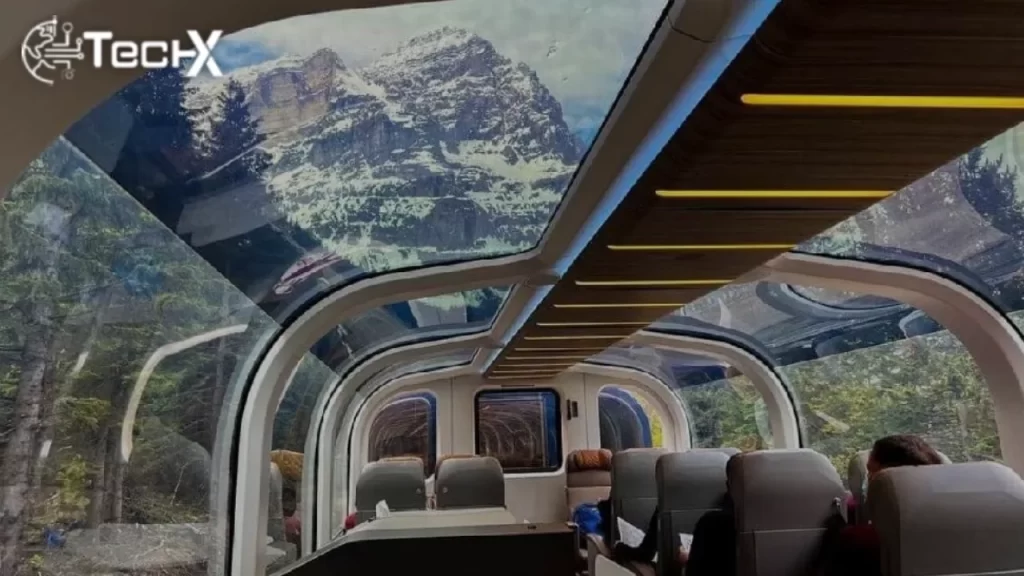
The Punjab government has taken a significant step toward launching the much-anticipated Islamabad to Murree glass train project. With a focus on boosting tourism and providing a unique travel experience, the project aims to connect Rawalpindi to Murree via a state-of-the-art glass train. The initiative is expected to be completed by 30 April 2025, marking a new era in Pakistan’s tourism and transportation sectors.
Feasibility Study to Be Completed by April 30
During a recent meeting at Islamabad’s Nespak House, Punjab Transport Minister Bilal Akbar emphasized the importance of a comprehensive feasibility study. The study will assess critical aspects such as railway tracks, station locations, geological surveys, and environmental protection. International consultants are being approached to ensure the project meets global standards. The study is expected to be finalized by 30 April.
Addressing Ground Realities and Challenges
Minister Akbar highlighted the need to review ground realities to avoid potential obstacles. The project, initially planned in 2015, has faced delays due to new constructions, the Covid-19 pandemic, and climate change. The old feasibility study will also be revisited to align with current conditions. This thorough approach ensures the project’s success while addressing modern challenges.
Promoting Tourism and Reducing Traffic
The glass train will not only provide a unique travel experience but also promote tourism in Murree, a popular hill station. By offering a scenic route from Rawalpindi to Murree, the train will attract both tourists and locals. Additionally, it is expected to reduce traffic congestion in Murree, making the area more accessible and enjoyable for visitors.
Also Read: Cristiano Ronaldo Leads 2024 Highest-Paid Athletes with $260M
Comprehensive Study of Murree’s Terrain
A senior transport department official revealed that the project requires a detailed study of Murree’s terrain. The railway track will pass through key locations like Kashmir Point and Pindi Point, offering breathtaking views. The study will determine land availability for tracks and stations, ensuring minimal disruption to the natural environment. This careful planning underscores the government’s commitment to preserving Murree’s beauty.
Learning from Historical Precedents
The official also referenced the Shimla railway link, established during the British Raj in 1906, as a successful example of hill station rail connectivity. Murree, situated at a similar altitude of over 2,200 meters, presents a feasible opportunity for such a project. This historical precedent provides confidence in the project’s viability and potential to replicate past successes.
Reviving the Project After Delays
The glass train project was initially launched during Nawaz Sharif’s tenure as prime minister in 2014-15. However, it was halted after the PML-N government completed its term in 2018. With the PML-N’s return to power in 2024, the project has been revived. The Punjab government formed an 18-member working group in October to oversee its implementation.
Ensuring Environmental Sustainability
One of the key priorities of the project is to maintain Murree’s natural beauty. The government has pledged to utilize resources responsibly, ensuring minimal environmental impact. By incorporating eco-friendly practices, the project aims to balance development with sustainability, setting a benchmark for future initiatives.
A Vision for the Future
The Islamabad to Murree glass train project represents a bold vision for Pakistan’s tourism and transportation sectors. By combining modern technology with scenic beauty, it promises to offer an unparalleled travel experience. As the feasibility study nears completion, the project is poised to become a landmark achievement, enhancing connectivity and boosting the local economy.
Conclusion
The Islamabad to Murree glass train project is a testament to the Punjab government’s commitment to innovation and development. With its completion slated for 30 April 2025, the project is set to transform travel and tourism in the region. By addressing challenges and prioritizing sustainability, it promises to be a shining example of progress and preservation.