
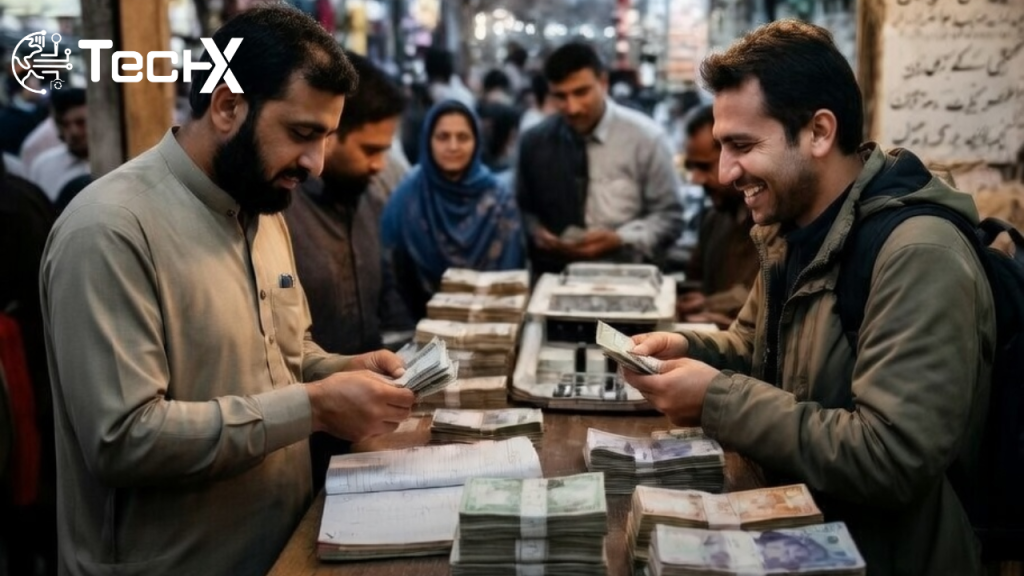
The Pakistani currency market has recently witnessed a historic and unexpected spike in the demand for the Iranian Rial (IRR). In a matter of weeks, the Rial’s value in Pakistan’s open market has jumped nearly fourfold. Previously, a bundle of 10 million Iranian Rials was traded for approximately PKR 2,500; however, due to the sudden “Rial rush,” that same amount is now being quoted as high as PKR 10,000. This rapid appreciation has caught many financial analysts and traditional investors by surprise.
Impact of Geopolitical Diplomacy
The primary driver behind this trend is the shifting geopolitical landscape in the region. With high-level diplomatic talks occurring in Islamabad and rumors of a potential breakthrough regarding international sanctions on Iran, market sentiment has turned bullish. Investors are operating under the assumption that if Iran successfully re-integrates into the global banking system and sanctions are eased, the Rial will undergo a massive correction upward, offering huge returns to those who bought it at its lowest point.
Rising Demand in Cross Border Trade
Beyond speculation, there is a practical, trade-based demand fueling this rise. Pakistan and Iran share a significant informal trade network, particularly for petroleum products, diesel, and raw materials like sulfur. Reports suggest that due to tightening regulations and shifting payment dynamics at the border, there is a higher requirement for Iranian Rials to settle trade balances. As Pakistani traders scramble to acquire the currency to sustain their supply chains, the localized scarcity has driven the price to record highs.
The Shift Toward Speculative Investment
In Pakistan, where the US Dollar and Gold are the traditional safe havens, the Iranian Rial has emerged as a high-risk, high-reward alternative. Because the unit price of the Rial is so low, even small-scale retail investors are buying millions of Rials with relatively small amounts of Pakistani Rupees. This “penny stock” mentality has turned the Rial into a speculative asset, with many citizens betting their savings on the hope that the currency will stabilize and gain official international value in 2026.
Economic Pressures on Local Industries
While the surge is profitable for speculators, it poses a challenge for industries reliant on Iranian imports. Sectors such as agriculture (fertilizers) and chemicals, which depend on Iranian sulfur, are facing increased input costs. Since the “street price” of the Rial in Pakistan is currently much higher than its official global exchange rate, these businesses are forced to pay a premium to acquire the currency needed for trade, which could eventually lead to a slight increase in the prices of finished goods domestically.
A High Risk Outlook for the Future
Financial experts warn that the current Rial boom is largely “sentiment-driven” rather than based on a fundamental shift in Iran’s national economy. The market remains extremely volatile; any breakdown in diplomatic negotiations or a renewal of regional tensions could cause the Rial’s value to crash back to previous levels. Consequently, while the current trend shows a massive upward trajectory, it remains a “bubble” that depends entirely on the success of ongoing political developments in the coming months.