
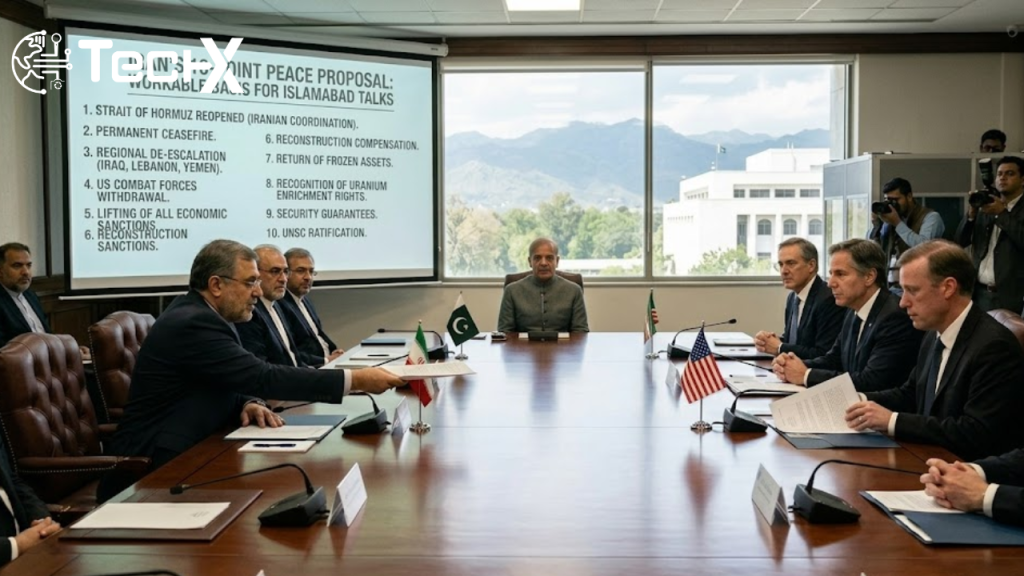
Iran has presented a comprehensive 10-point peace plan aimed at stabilizing the region, reducing tensions with the United States, and asserting its geopolitical influence. The plan highlights Iran’s priorities in security, economic rights, and nuclear sovereignty, signaling a strategic approach to long-term regional peace.
Key Provisions of the Plan
The peace plan lays out clear measures addressing military actions, economic interests, and nuclear development. It reflects Iran’s intent to protect its regional allies, secure strategic waterways, and regain control over assets and sanctions relief.
The 10 points of Iran peace plan
- Strait of Hormuz Control: Controlled passage through the Strait of Hormuz in coordination with Iranian armed forces, granting Iran a significant economic and geopolitical role.
- End of Military Action: An end to military action against all members of the “axis of resistance,” including Lebanon.
- US Withdrawal: Withdrawal of US combat forces from all bases and deployment points across the region.
- Transit Protocol: Establishment of a secure transit protocol in the Strait of Hormuz that ensures Iran’s authority under agreed terms.
- Full Compensation: Full compensation to Iran for damages, based on assessed estimates.
- Sanctions Relief: Lifting of all primary and secondary sanctions imposed on Iran.
- IAEA Resolutions: Termination of all resolutions against Iran by the International Atomic Energy Agency’s Board of Governors.
- Frozen Assets: Release of all Iranian assets and properties frozen abroad.
- UN Ratification: Ratification of all agreed measures through a binding United Nations Security Council resolution.
- Nuclear Rights: Recognition of Iran’s right to uranium enrichment for its nuclear programme – a clause included in the Farsi version of the plan but reportedly omitted from English versions shared with journalists.
Strategic Implications
The plan underlines Iran’s ambition to assert its influence in the Strait of Hormuz, a critical global oil passage, and safeguard the “axis of resistance” allies. By demanding US troop withdrawal and sanctions relief, Iran seeks to strengthen its geopolitical position and regain economic leverage.
Nuclear and Economic Dimensions
Recognition of nuclear rights and the lifting of sanctions are core to Iran’s approach. Full compensation for damages and release of frozen assets further aim to restore Iran’s economic stability and provide resources for domestic and regional development.
Regional and International Reactions
Experts suggest that if implemented, the plan could reshape Middle Eastern geopolitics, affecting energy markets, security alliances, and nuclear negotiations. The UN ratification point signals Iran’s intent to pursue legitimacy through international institutions, while the differing versions of the nuclear clause hint at potential diplomatic negotiations ahead.