
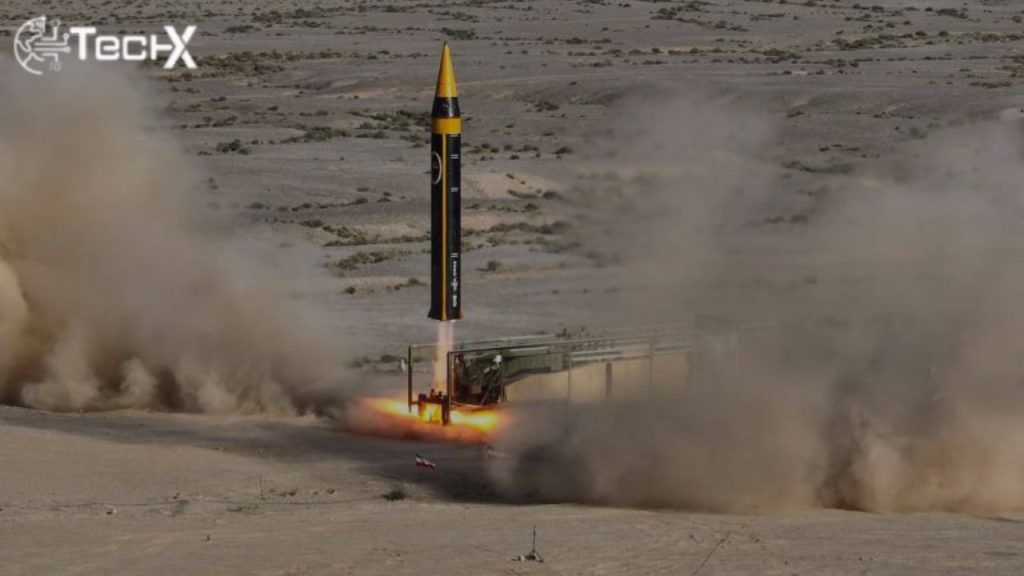
Iran recently launched a ballistic missile with an unfamiliar design, sparking global speculation. Analysts suggest it could be a new variant, possibly the Khorramshahr-4, also known as Khyber. The launch demonstrates Iran’s advancing missile capabilities, raising concerns among international observers. The missile’s range and payload capacity indicate significant technological progress in Iran’s defense sector.
Speculations on the Missile’s Identity
Experts believe the missile could be the Khorramshahr-4, a medium-range ballistic missile. Its design differs from previous models, suggesting upgrades in propulsion and guidance systems. The missile’s reported range of 2,000 km places several regional targets within reach. This development aligns with Iran’s efforts to enhance its strategic deterrence amid geopolitical tensions.
Technical Capabilities of the Khyber Missile
The Khyber missile can reportedly carry a warhead weighing up to 1,800 kg. With a range of 2,000 km, it poses a significant threat to neighboring regions. Such capabilities highlight Iran’s focus on improving strike accuracy and payload capacity. The missile’s launch reinforces Iran’s position as a key player in regional military dynamics.
Regional and Global Reactions
The missile launch has drawn attention from global powers, with concerns over escalating tensions. Neighboring countries view the development as a potential security threat. Western nations may push for stricter sanctions in response. Iran, however, maintains that its missile program is for defensive purposes. The launch underscores ongoing friction between Iran and its adversaries.
Implications for Regional Security
The Khyber missile’s range covers parts of Europe, the Middle East, and South Asia. This advancement could shift regional power balances, prompting countermeasures from rival nations. Increased missile capabilities may lead to heightened arms race dynamics. The situation calls for diplomatic engagement to prevent further instability in an already volatile region.
Conclusion
Iran’s latest missile launch signals a major step in its military advancements. The Khyber’s extended range and payload capacity intensify regional security concerns. As global powers assess the implications, the focus remains on whether diplomatic efforts can mitigate rising tensions. Iran’s missile program continues to be a critical factor in international geopolitics.