
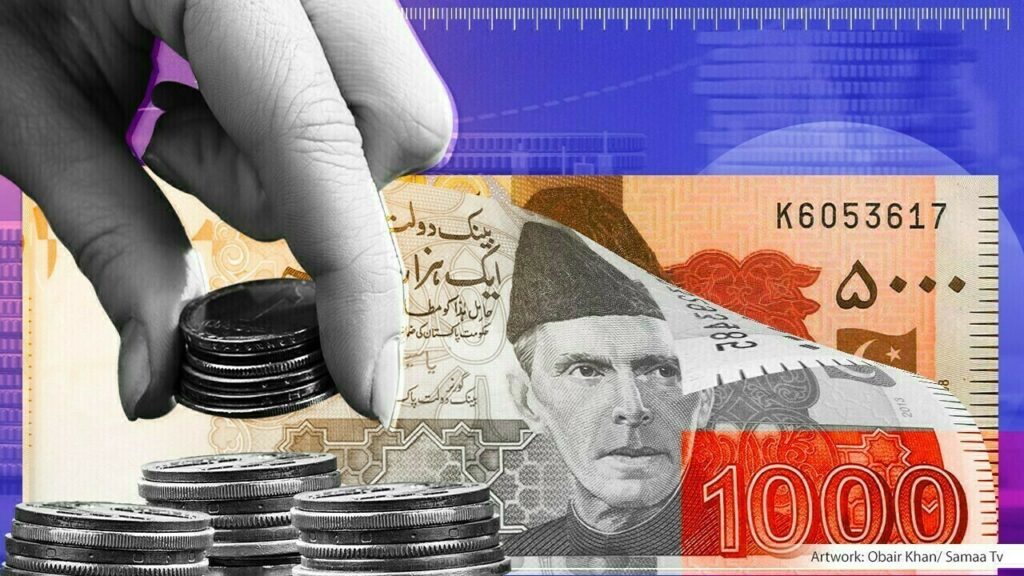
During a meeting with the Senate Standing Committee on Finance, officials from the Ministry of Finance stated that the federal government was unable to address the issue of phantom pensioners.
As a result, the pension bill has risen to Rs. 609 billion as of Wednesday.
According to the government, approximately 949,000 seniors out of a total of 3.23 million are still collecting their pensions manually. Surprisingly, this estimate includes over 6,600 “ghost pensioners.”
The government claims that over 2.2 million pensioners have moved to the Direct Credit System. (DCS).
They also revealed that 90% of civil pensioners and 41% of military retirees now have their pensions deposited directly into their bank accounts.


Transfer of Pension
Furthermore, all pensions in Punjab, Sindh, and Khyber Pakhtunkhwa are being deposited into bank accounts, while 93 percent of pensioners in Balochistan have been transferred to the DCS.
Despite these efforts, Finance Ministry officials admitted that it will take another year to transition all pension payments to the DCS system.
The worst political, social, economic and financial problems are being faced by a nation with one of the largest populations in the world.
These problems include political unpredictability, macroeconomic instability, social problems and security threats, rising poverty and unemployment, low growth and high inflation, and the emergence of problems with internal security.
It is experiencing a severe balance of payments (BOP) crisis as significant repayments on its foreign debt become due while the kitty is nearly drained.
Even worse, a war has broken out, disrupting the world’s oil supply and driving prices to all-time highs, significantly harming the nation’s already precarious external, monetary, and fiscal circumstances.
The political alliance in charge is concerned that making any unpopular decision will burn through their political capital and drastically reduce their chances of remaining in power.
The crisis started when the nation witnessed an uncertain political environment before a feeble coalition constituted the government.
All of this has resulted in a decline in corporate confidence in the nation. Due to this and a sharp reduction in the country’s credit ratings by all credit rating agencies, institutional investors, expatriates, and other investors withdrew their capital from the nation.
Actually, India in the years 1990 to 1993 are the focus of this story, not Pakistan.
Nearly identical internal and external threats existed in India in 1991 as they do in Pakistan today. In actuality, India faced much more serious dangers to its internal security, including those posed by religion, ethnicity, politics, financial and the economy.
For instance, the Gulf War in the early 1990s had a significant impact on India’s BOP and caused oil prices to reach record highs (in just 5 months, they increased by a staggering 133% from $15 per barrel to $35 per barrel).
Due to the Middle East crisis, remittances to India decreased, which resulted in critically low foreign exchange reserves (just two weeks’ worth of import coverage), sending the nation into a severe BOP crisis and raising concerns about an impending financial and economic collapse.
Under the G-20 Debt Service Suspension Initiative (DSSI) Framework, the Economic Affairs Division of the Government of Pakistan and the Saudi Fund for Development (SFD) signed two Debt Service Suspension Agreements totaling US$ 846 million.
Nawaf bin Saeed Al-Malkiy, the Kingdom of Saudi Arabia’s ambassador to Pakistan, was present at the signing ceremony in Islamabad. Dr. Saud Ayid R. Alshammari, Director-General for Asia, represented SFD at the signing ceremony.
To read our blog on “IT Ministry requests budget of Rs. 24.25 bn for FY24,” click here