
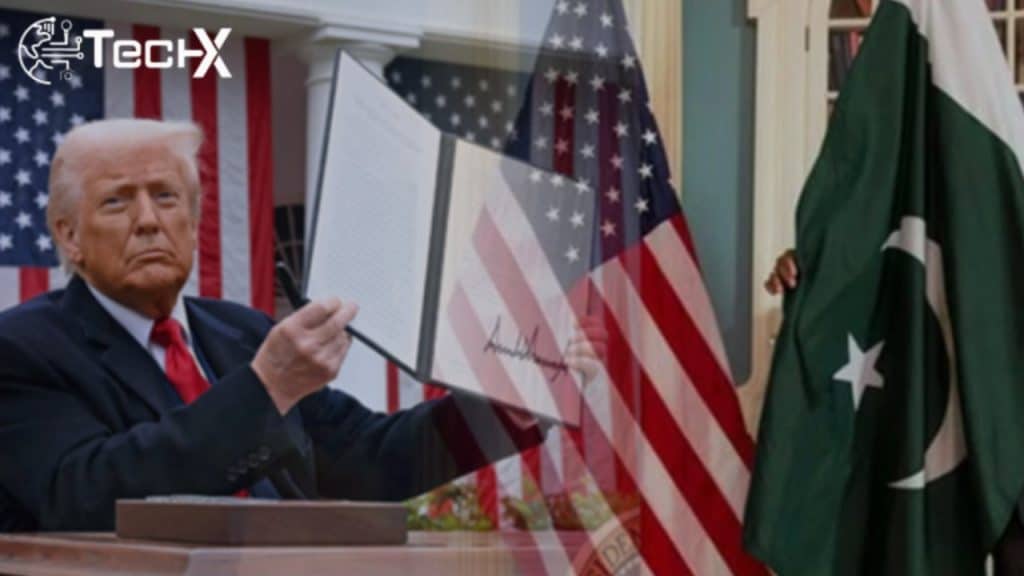
The recent tariffs announced by President Trump primarily target imported goods, with a baseline 10% tariff on all imports and higher rates for specific countries. These measures are focused on tangible products rather than services.1 Historically, U.S. tariffs have been applied to goods rather than services, and there is no indication that the current tariffs extend to services. Therefore, Pakistan’s IT services exports to the U.S. are not directly affected by these tariffs. However, it’s important to remain vigilant, as trade policies can evolve. For instance, in February 2025, President Trump indicated plans to impose retaliatory tariffs on countries implementing digital service taxes affecting U.S. technology firms.2 While this specific action targets foreign taxes on U.S. companies, it underscores the dynamic nature of trade relations and the need for ongoing monitoring.
Potential Indirect Effects
- Budget Constraints for U.S. Clients: If tariffs increase costs for U.S. businesses, particularly those reliant on imported hardware and technology components, their IT budgets may shrink. This could lead to reduced outsourcing opportunities for Pakistani firms providing software development and IT-enabled services. the export of the country shall be impacted as the US economy grapples with the new tariff regime.
- Increased Protectionism and Regulatory Barriers: While tariffs may not directly target IT services, growing protectionist sentiments in the U.S. could result in stricter visa policies and outsourcing regulations. This could make it harder for Pakistani IT professionals to secure work visas or for companies to expand their on-site operations in the U.S.
- Competitive Outsourcing Market: Pakistan competes with countries like India and the Philippines in the outsourcing space. If India’s IT sector faces cost pressures due to trade restrictions, U.S. firms might seek alternative outsourcing destinations, potentially benefiting Pakistan. However, this would depend on Pakistan’s ability to offer high-quality, cost-effective solutions.
Also Read: Impact of Trump’s Tariff Policy on Pakistan’s Economy
Impact on Pakistan’s IT Hubs
For cities like Karachi, Lahore, and Islamabad, where IT startups and established software firms are growing, any slowdown in U.S. outsourcing demand could affect hiring trends and office space expansion. However, continued investment in digital infrastructure and government incentives for IT exports could help mitigate these risks.
Strategic Responses for Pakistan’s IT Sector Amid U.S. Reciprocal Tariffs
While the direct impact of U.S. reciprocal tariffs on Pakistan’s IT industry may be minimal, indirect effects such as budget constraints for U.S. clients and increased protectionism could create challenges. To mitigate risks and capitalize on potential opportunities, Pakistan’s IT sector can adopt the following strategies:1.
Diversifying Export Markets
Relying heavily on the U.S. market makes Pakistan’s IT industry vulnerable to policy shifts. Companies should:
- Expand operations in Europe, the Middle East, and Southeast Asia to reduce dependency on U.S. clients.
- Leverage Pakistan’s growing economic ties with Gulf countries, where demand for IT services is increasing.
- Tap into emerging African markets that are investing in digital transformation.
2. Strengthening Local IT Ecosystem
A strong domestic IT ecosystem can reduce reliance on foreign clients. This can be achieved by:
- Encouraging local businesses to adopt digital solutions from Pakistani IT firms.
- Expanding fintech, e-commerce, and AI-driven innovations within Pakistan to create new revenue streams.
- Strengthening collaboration between universities and tech firms to boost R&D and develop cutting-edge solutions.
3. Promoting Remote Work and Offshore Development Centers
Since stricter visa policies may limit on-site opportunities in the U.S., Pakistani IT firms can:
- Position themselves as remote service providers by improving cybersecurity and compliance with international IT standards.
- Set up offshore development centers (ODCs) that allow U.S. companies to work with Pakistani teams without requiring physical relocation.
- Offer cost-effective software solutions with faster turnaround times to compete with global players.
4. Government Support and Policy Adjustments
- Expanding tax incentives for IT exporters to enhance competitiveness including announcing 10 year tax policy, resolution of remote worker and ensuring no taxation on international payments on digital marketing, as per P@SHA budgetary recommendations
- Seamless integration into the global financial system thereby enabling free movement of capital to & from Pakistan.
- Negotiating favorable trade agreements with the U.S. to safeguard IT services from future restrictions.
- Enhancing digital infrastructure and internet accessibility to support IT sector growth.
5. Strengthening Global Partnerships and Branding
To improve Pakistan’s reputation as a reliable IT outsourcing hub:
- Tech firms should collaborate with multinational companies and participate in global IT conferences.
- Use trade associations like P@SHA for lobbying as opposed to the government so as to limit the negotiation to business keeping it away from geo politics.
- Developing international certifications and compliance frameworks will enhance trust in Pakistani firms.
Conclusion
While U.S. reciprocal tariffs may not directly impact Pakistan’s IT sector, the broader trend of economic protectionism poses challenges. By diversifying markets, strengthening the local IT ecosystem, and leveraging remote work opportunities, Pakistan’s IT industry can mitigate risks and continue to grow. Strategic government policies and global partnerships will be key to ensuring long-term resilience