
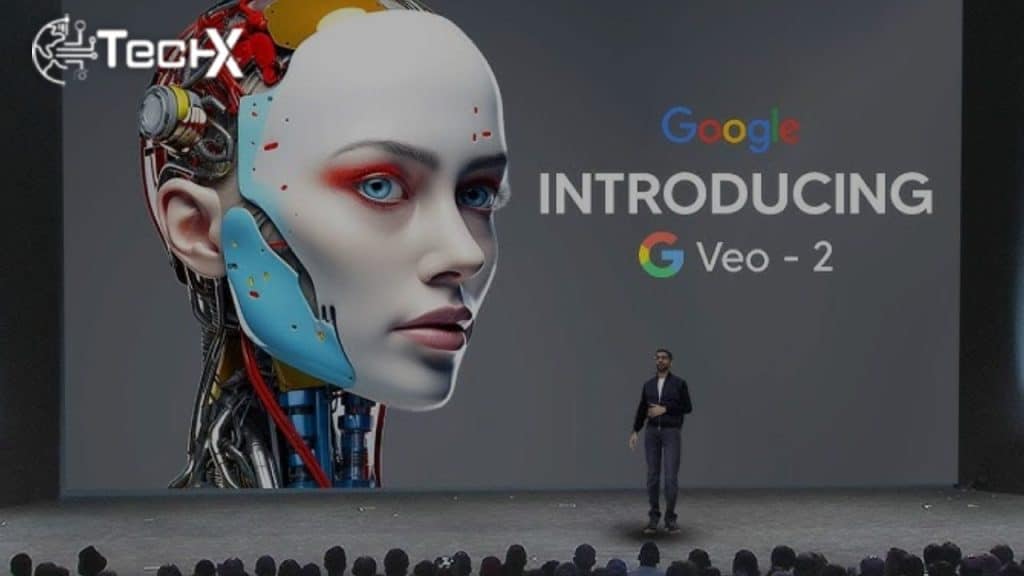
Just days after OpenAI introduced Sora, Google has responded by unveiling Veo 2.0, its most sophisticated AI video generation model to date. This new release brings substantial enhancements over its predecessor, including 4K resolution, advanced camera controls, and significantly improved video quality, establishing Veo 2.0 as a benchmark in the field of AI-driven video technology.
Veo 2.0: Enhanced Features and Realism
Veo 2.0 is not just an upgrade; it is a transformation. The model now supports cinematic-grade video production up to 4K quality, with a deep understanding of complex cinematic techniques like time-lapse and aerial shots. This version also introduces groundbreaking features such as enhanced realism and fidelity, where videos are nearly indistinguishable from real-life footage, and advanced motion capabilities that offer a better understanding of human movements and physics.
Revolutionary Control with Veo 2.0
With Veo 2.0, Google has significantly increased the user’s ability to control video outcomes. Filmmakers and content creators can now fine-tune shot styles, angles, and movements with unprecedented precision. This greater camera control empowers users to execute their creative visions exactly as intended, making Veo 2.0 a versatile tool suited for a wide array of video production needs.
Also Read: OpenAI Introduces Sora, Its Innovative Text-to-Video Model
Veo 2.0 and Google Labs: Accessibility and Integration
Veo was first introduced in May 2024 but never released to the public. With Veo 2.0, Google has made significant improvements, now offering the tool through VideoFX, ImageFX, and its innovative Google Labs initiative, Whisk. This integration ensures that Veo 2.0 is not only more accessible but also more versatile, allowing for seamless creation across different media formats.
Text and Image Prompts: Enhanced Input for Detailed Output
A notable feature of Veo 2.0 is its ability to generate videos from both text and image prompts. This dual-input capability ensures that the videos produced are closely aligned with the user’s intentions, providing a personalized video generation experience that matches the specific needs and styles preferred by the user.
Veo 2.0 vs. Sora: Leading the AI Video Generation Race
In a direct comparison with OpenAI’s Sora, Veo 2.0 demonstrates superior video accuracy and adherence to prompts, highlighting its capability to produce videos that are both longer and of higher quality. Google’s commitment to pushing the boundaries of AI video technology is clear, and while it remains to be seen if Veo 2.0 will definitively surpass Sora, it certainly sets a high standard for future developments.
Conclusion
Google’s latest innovation, Veo 2.0, marks a significant milestone in AI video generation. By providing high-quality, customizable, and realistic video content, Google not only challenges existing models like OpenAI’s Sora but also leads the way towards a future where AI-generated video is mainstream. As the technology evolves, the potential for AI in video production is boundless, promising exciting developments for creative industries worldwide.