
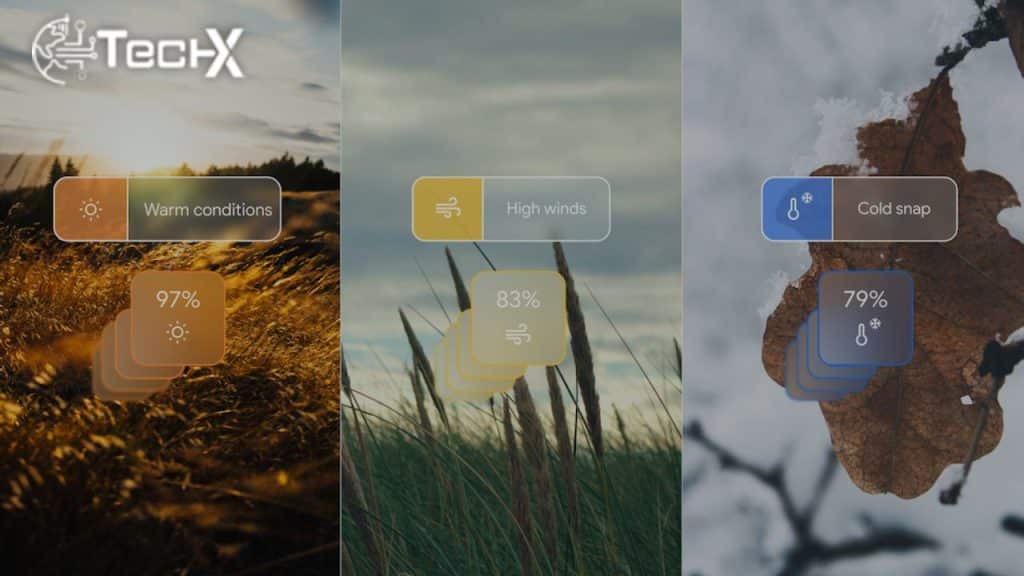
Google has unveiled GenCast, an innovative AI-powered weather forecasting model designed to improve the accuracy and efficiency of predictions. In a recent paper published in Nature, Google explained how GenCast employs a diffusion-based approach, tailored to Earth’s unique geometry, to deliver more precise forecasts. The system’s ability to analyze vast amounts of data from decades of historical weather patterns sets it apart from traditional forecasting methods, making it a groundbreaking tool in meteorology.
Diffusion-Based Approach for Accurate Predictions
GenCast utilizes a cutting-edge diffusion-based technique to make weather predictions, specifically designed to suit the intricate characteristics of Earth’s atmosphere and landforms. This approach allows GenCast to better simulate and predict the dynamics of weather systems. By training the model on 40 years of historical data from the European Centre for Medium-Range Weather Forecasts (ECMWF) archives, GenCast is able to generate forecasts that are more accurate than traditional systems, even extending up to 25 days into the future.
Surpassing Traditional Weather Models
To test the performance of GenCast, Google ran a series of 1,320 forecasts based on data from 2019, using training sets that only included information up until 2018. The results were impressive: GenCast outperformed the ECMWF’s ENS model in 97.2% of cases, with an astonishing 99.8% accuracy for forecasts exceeding 36 hours. One striking example of GenCast’s success was its ability to accurately predict the path of Typhoon Hagibis in 2019, showcasing its effectiveness in predicting the movement of severe weather systems.
Enhancing Disaster Preparedness and Response
The ability of GenCast to deliver precise and reliable forecasts has significant implications for disaster preparedness and response. For instance, by improving the accuracy of predictions related to extreme weather events, such as hurricanes and typhoons, GenCast can help communities better prepare for natural disasters. In the case of Typhoon Hagibis, GenCast’s forecast capabilities allowed for a more accurate prediction of the storm’s landfall, which is crucial for mitigating damage and saving lives in affected regions.
Supporting Renewable Energy Planning
Beyond disaster management, GenCast’s potential applications extend into the realm of renewable energy. The model can predict key weather factors such as wind speeds near wind farms and weather conditions over solar farms. These forecasts are valuable for energy companies seeking to optimize the performance and efficiency of renewable energy resources. By offering real-time weather data, GenCast helps improve the management of energy production, contributing to more reliable and sustainable energy systems.
Also Read: Apcma Reports a 21% Increase in Cement Exports for November 2024
Fast and Efficient Weather Predictions
One of the standout features of GenCast is its speed. Using the power of Google Cloud TPU v5, GenCast can generate a 15-day weather forecast in just eight minutes—remarkably faster than traditional supercomputing methods, which typically require much longer processing times. This rapid processing allows for frequent and up-to-date forecasts, offering better real-time decision-making capabilities for various industries that rely on accurate weather predictions, from agriculture to aviation.
Open Access for Global Collaboration
In an effort to foster innovation and collaboration, Google has made GenCast’s code and model weights publicly available. This open-access initiative is designed to encourage global cooperation with meteorological organizations, weather agencies, and researchers. By sharing the model’s core components, Google hopes to inspire further improvements in weather forecasting and promote the development of new techniques that can push the boundaries of the field.
Conclusion
Google’s introduction of GenCast marks a significant milestone in the evolution of weather forecasting. By harnessing advanced AI and machine learning techniques, GenCast outperforms traditional weather models in both accuracy and speed, offering highly precise predictions even for long-term forecasts. Its applications extend far beyond disaster management, touching on fields like renewable energy and agriculture, where timely and reliable weather data is crucial. With its open-access approach, GenCast is paving the way for collaborative advancements in meteorological science.