
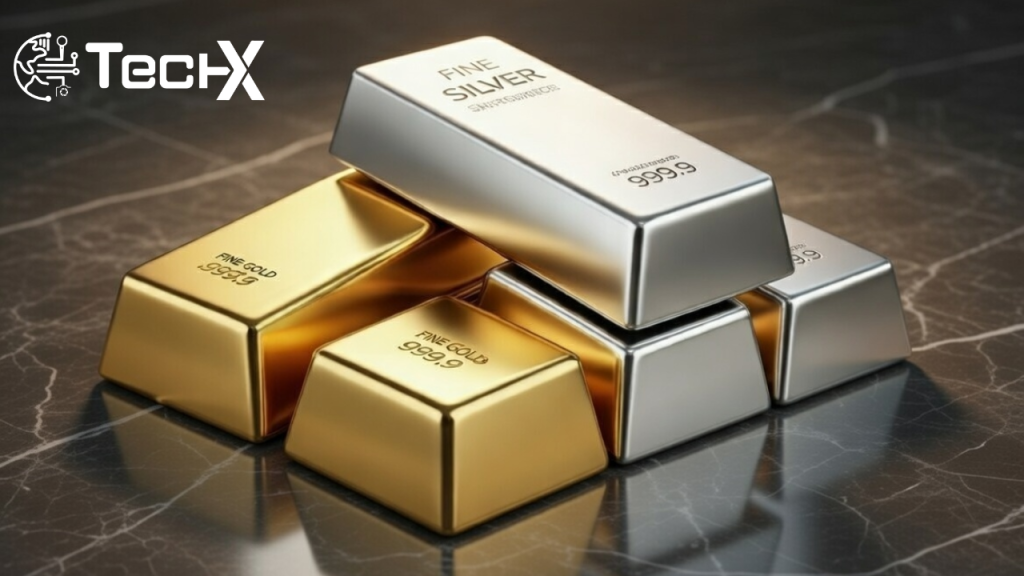
Gold prices have surged recently due to a combination of global demand and economic uncertainties. When inflation rises worldwide, currencies weaken, or stock markets become volatile, investors often turn to gold as a “safe haven.” Central bank policies, interest rate changes, and international trade tensions also have a direct impact on gold prices. Currently, global inflation and a weaker US dollar have increased demand for gold, pushing prices higher.
Gold Prices in Pakistan 02 March 2026
| Karat | Rate per Gram (PKR) | Rate per Ounce (PKR) | Rate per Tola (PKR) |
|---|---|---|---|
| 24K | 48,365 | 1,504,000 | 564,000 |
| 23K | 46,371 | 1,443,000 | 541,500 |
| 22K | 44,395 | 1,380,000 | 517,700 |
| 21K | 42,321 | 1,317,000 | 493,700 |
| 20K | 40,304 | 1,254,000 | 470,400 |
| 18K | 36,274 | 1,128,000 | 422,500 |
Silver Prices in Pakistan 02 March 2026
| Unit | PKR | USD |
|---|---|---|
| Per Tola | 13,003 PKR | 46.6 USD |
| Per Gram | 1,115 PKR | 3.99 USD |
| Per Ounce | 34,660 PKR | 124.13 USD |
Geopolitical Tensions and Local Market Effects
Another major factor behind the rise in gold prices is geopolitical tensions, particularly the recent conflict involving the USA, Israel, and Iran. Military strikes and regional instability create fear and uncertainty in global markets, prompting investors to shift funds from risky assets to safe-haven assets like gold. In addition, local factors in Pakistan, such as currency depreciation and high demand during festive seasons, have further pushed gold rates to record levels. The combined effect of global geopolitical risks and local market conditions is driving gold prices upward.