
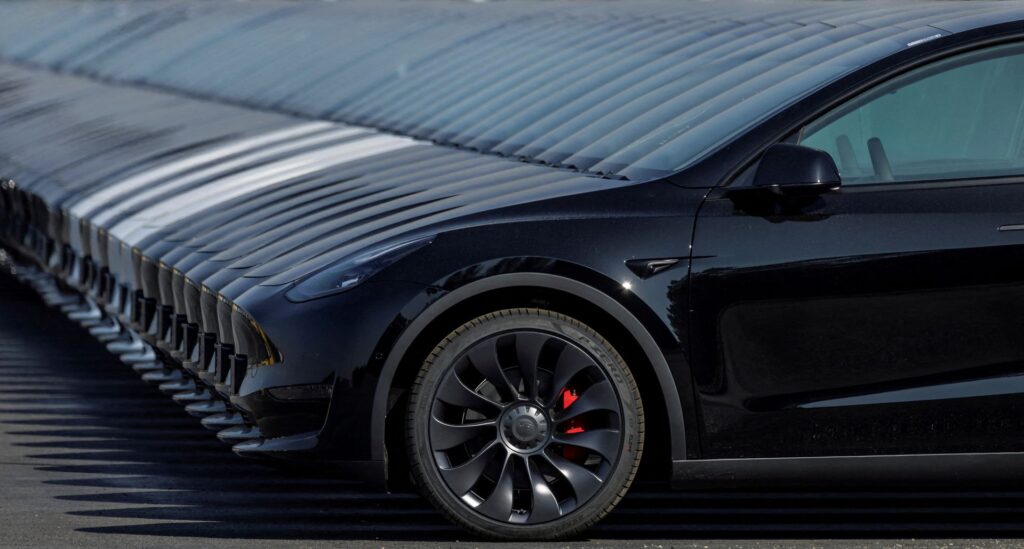
More than 100,000 electric cars subsidised by German taxpayers, including thousands of Teslas, are likely to have been exported as buyers took advantage of a multibillion euro incentive scheme designed to make battery-powered cars more affordable for everyday drivers.
According to an analysis of official data, only 756,517 of the 890,000 electric cars registered in Germany over the last decade, the vast majority of which were purchased with grants, remain in the country.
According to two leading industry figures, while a small number of the missing cars will have been taken out of service, the majority of them have been profitably sold to drivers in neighbouring countries.
“By the time the one millionth new battery electric passenger car is registered later this year, close to one-fifth of those cars would have left German roads during the last decade,” said Matthias Schmidt, a Berlin-based analyst who carried out the research.
“The loser is the German taxpayer, who is indirectly subsidizing clean air in cities outside of Germany.”
Germany implemented the subsidy scheme in 2016 and has spent at least €4.6 billion on grants to electric vehicle buyers since then. Purchasers are eligible for up to €6,000 in subsidies per car, depending on its size, initial cost, and whether it was purchased for a fleet.
However, many subsidized vehicles may have ended up in Denmark, where duties on new car purchases made electric vehicles more expensive than in neighboring states for several years, according to Schmidt.
According to data from the Danish car importers association De Danske Bilimportrer, the number of electric cars registered in Denmark was greater than the number purchased in Denmark, implying that many were imported.
Schmidt also discovered that only 76,690 of the 98,000 Teslas registered in Germany by July of this year remain on the country’s roads, implying that every fifth Tesla has left the German market. This year, the American automaker began producing vehicles near Berlin.
“There’s a pretty straightforward arbitrage going on,” a leasing industry insider said, adding that large corporate fleets in Germany benefit from the resale of subsidized electric models.
The German opposition party Die Linke, which has long opposed the subsidy scheme because they believe it benefits corporations, has always stated that the incentives are susceptible to fraud.
“The fact that there was not even a one-year holding period [before a car could be sold on] is more than a technical error and opens the door to fraud,” said MP Bernd Riexinger.
To read our blog on “McMurtry’s Electric Car sets a new speed record,” click here