
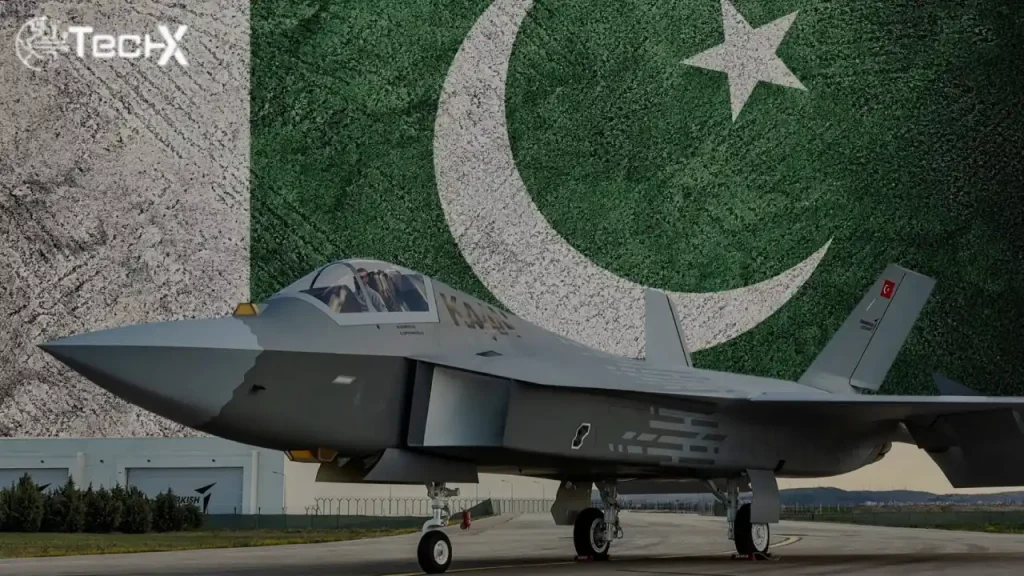
Pakistan is set to enhance its air combat capabilities by acquiring the advanced J-35 fifth-generation stealth fighter jets from China. This move marks a significant shift in Pakistan’s defense strategy, placing it among a select group of nations operating cutting-edge stealth aircraft. However, to understand the importance of this deal, it is essential to explore the evolution of fighter jet technology, from first-generation to fifth-generation jets, and how the J-35 stands out as a game-changer in modern aerial warfare.
First-Generation Fighter Jets: The Dawn of Jet-Powered Combat
The MiG-15 is a classic example of a first-generation fighter jet, introduced in the late 1940s and early 1950s. These jets were revolutionary because they replaced propeller-driven aircraft with jet engines, enabling speeds close to the speed of sound (Mach 0.9-1.0).
Key Features:
- Basic radar systems for target detection.
- Limited air-to-air missile capability (mostly guns and early missiles).
- Short operational range and minimal electronic warfare support.
Despite their limitations, first-gen jets laid the foundation for modern air combat.
Third-Generation Fighters: Multirole Capabilities Emerge
By the 1960s and 1970s, third-generation fighters like the F-4 Phantom II and MiG-23 introduced significant advancements. These jets were designed for multirole missions, capable of engaging both air and ground targets.
Key Features:
- Improved radar and avionics for better situational awareness.
- Early electronic warfare (EW) systems were used to counter enemy radar.
- Enhanced maneuverability and weapons loadout.
These jets were more versatile but still lacked the precision and stealth features of later generations.
Fourth-Generation: The Age of Advanced Avionics and BVR Combat
Fourth-generation fighters, such as the F-16, F/A-18, and Su-27, dominated the late 20th century. These jets incorporated advanced radar, beyond-visual-range (BVR) missiles, and digital flight controls.
Key Features:
- Pulse-Doppler radar for tracking multiple targets.
- High agility with fly-by-wire systems.
- Advanced electronic countermeasures (ECM) to evade enemy missiles.
Some 4.5-generation variants, like the JF-17 Block III, feature AESA radar, digital cockpits, and semi-stealth design, making them harder to detect.
Fifth-Generation: The Stealth Revolution
Fifth-generation fighters represent the pinnacle of aerial combat technology. The J-35, along with the F-35 and J-20, incorporates stealth, supercruise, and AI-driven systems for unmatched dominance.
Why the J-35 is a Game-Changer for Pakistan:
- Stealth Design – Reduced radar cross-section (RCS) makes it nearly invisible to enemy radar.
- Supercruise Capability – Can sustain supersonic speeds without afterburners, saving fuel and increasing range.
- Advanced Sensor Fusion – Integrates radar, infrared, and electronic warfare data for real-time battlefield awareness.
- Network-Centric Warfare – Shares data with other friendly forces for coordinated strikes.
- AI-Powered Systems – Enhances pilot decision-making with predictive targeting and threat analysis.
Strategic Impact on Pakistan’s Air Power
The induction of the J-35 will significantly boost the Pakistan Air Force (PAF) in several ways:
1. Countering Regional Threats
With India operating Rafale and soon AMCA stealth jets, the J-35 ensures Pakistan maintains a technological edge.
2. Enhanced Strike Capabilities
The J-35’s stealth and precision strike abilities allow deep penetration into enemy territory with minimal risk.
3. Strengthening Pakistan-China Defense Ties
This deal reinforces the strategic partnership between Pakistan and China, ensuring access to cutting-edge defense technology.
Evolution of Fighter Jets: Generations Comparison
| Generation | Time | Key Features | Examples | Advancements Over Previous Gen |
|---|---|---|---|---|
| 1st Gen | 1940s–1950s | • First jet engines • Basic radar & guns • Subsonic/supersonic (near Mach 1) |
MiG-15, F-86 Sabre | Shift from propellers to jets |
| 2nd Gen | 1950s–1960s | • Improved speed (supersonic) • Early air-to-air missiles • Limited radar tracking |
MiG-21, F-104 Starfighter | Missile-focused combat |
| 3rd Gen | 1960s–1970s | • Multirole (air/ground) • Better radar/avionics • Basic electronic warfare (EW) |
F-4 Phantom, MiG-23 | Introduction of multi-role capabilities |
| 4th Gen | 1970s–2000s | • Fly-by-wire controls • Pulse-Doppler radar • BVR missiles (Beyond Visual Range) • High agility |
F-16, Su-27, Mirage 2000 | Precision strikes, advanced maneuverability |
| 4.5 Gen | 2000s–Present | • AESA radar • Reduced RCS (semi-stealth) • Digital cockpits • Advanced EW systems |
JF-17 Block III, Rafale, Eurofighter Typhoon | Stealth enhancements, network-centric warfare |
| 5th Gen | 2010s–Present (Future) | • Full stealth (low RCS) • Supercruise (no afterburner) • Sensor fusion/AI • Internal weapons bays |
F-35, J-20, J-35 (Pakistan) | AI-driven warfare, complete stealth, next-gen situational awareness |
Conclusion
Pakistan’s acquisition of the J-35 fifth-generation fighter jet is a monumental step in modernizing its air force. From the early MiG-15 to the stealthy J-35, fighter jet technology has evolved dramatically, and Pakistan is now entering an elite league of nations with advanced stealth capabilities. This move not only enhances national security but also reshapes the balance of power in South Asia. As the PAF prepares to integrate these jets, the future of Pakistan’s aerial defense looks more formidable than ever.