
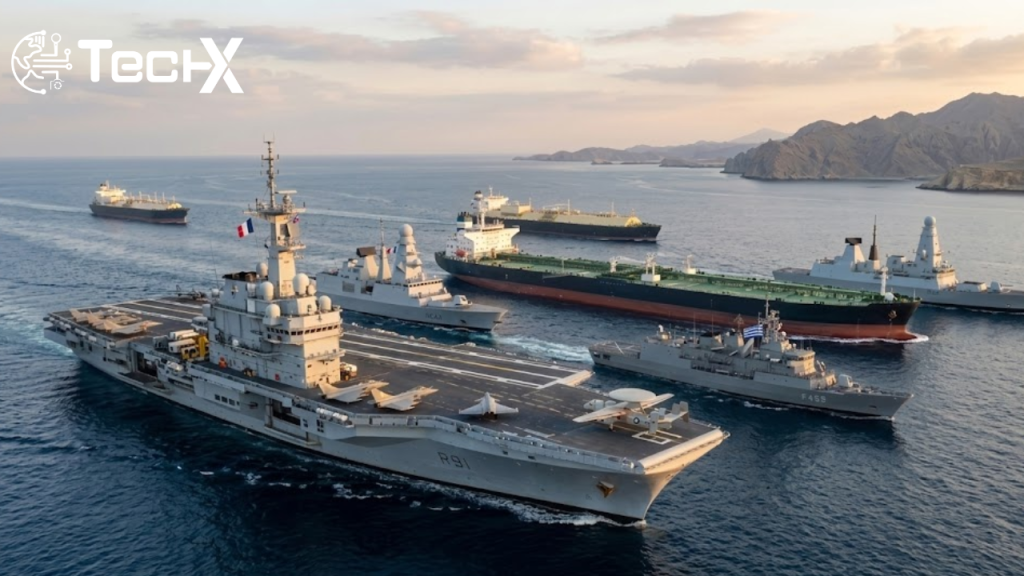
The Strait of Hormuz is one of the most critical maritime chokepoints in the world. A large portion of global oil exports passes through this narrow waterway every day. Any disruption in this strait can lead to a spike in global oil prices and create economic instability in energy-dependent countries, including Pakistan.
Rising Tensions in the Middle East
Recent conflicts in the Middle East, including tensions involving Iran and regional powers, have disrupted maritime traffic in the Strait of Hormuz. Attacks and threats against commercial vessels have raised concerns over global oil supply and the safety of shipping routes.
France Defensive Plan
French President Emmanuel Macron announced that France, along with allied countries, is preparing a defensive naval mission. The goal is to escort commercial and oil tankers safely through the strait, ensuring the free flow of trade without engaging in offensive action.
Naval Deployment
France is deploying several warships and naval assets, including an aircraft carrier strike group, in the eastern Mediterranean and Red Sea. These forces will act as escorts for commercial vessels, offering protection against potential threats and ensuring safe passage.
Global Impact on Oil Prices
The closure or disruption of the Strait of Hormuz has a direct effect on global oil prices. A prolonged blockade could cause oil prices to rise sharply, affecting energy costs in countries worldwide. By reopening and securing the strait, France and its allies aim to stabilize oil supply and prices.
Strategic and Economic Significance
This mission is crucial for both strategic and economic reasons. While it is defensive in nature, it demonstrates international commitment to keeping key trade routes open. It also highlights how regional conflicts can quickly influence energy markets and why international cooperation is necessary to maintain global stability.