
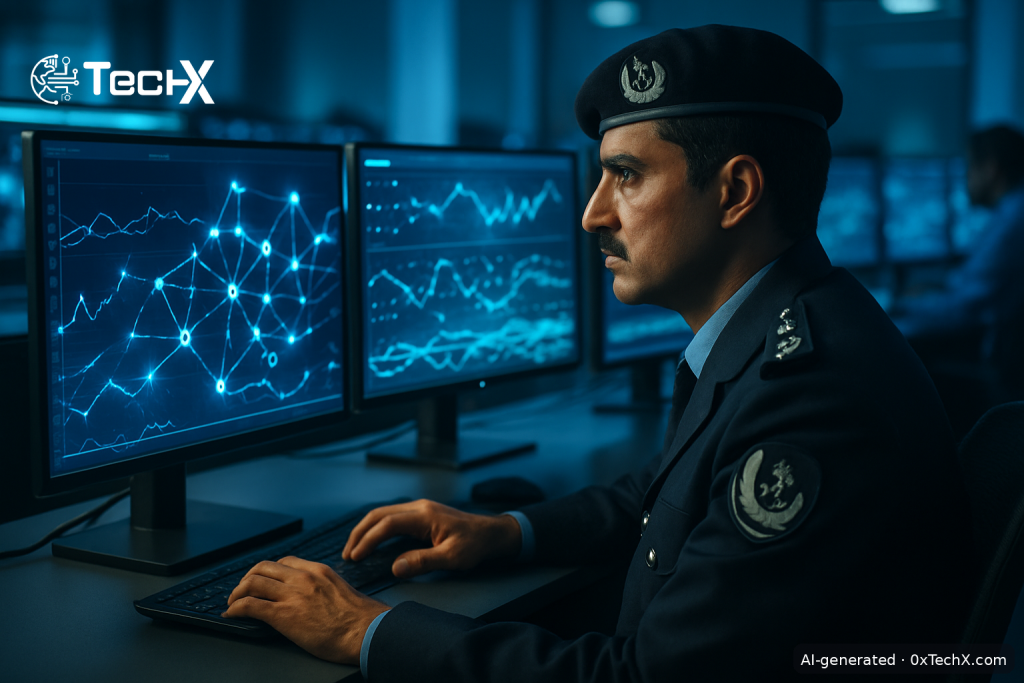
The FIA crypto investigation unit is now officially open inside Pakistan’s newly launched National Command and Control Centre (NC3), with a clear brief to track and prosecute criminals who use digital currencies for money laundering, terrorism financing, and other financial crimes. The move is one of the most concrete enforcement steps Pakistan has taken since passing the Virtual Assets Act 2026 earlier this year.
What Is the FIA Crypto Investigation Unit?
The Federal Investigation Agency has established a cryptocurrency investigation unit housed in its newly operational National Command and Control Centre (NC3) to prevent money laundering and terrorism financing through virtual currency transactions.
FIA Counter-Terrorism Wing Director Dr Muhammad Athar Waheed said the unit will investigate the criminal use of cryptocurrencies, while the newly established Pakistan Virtual Assets Regulatory Authority (PVARA) will remain responsible for regulating digital assets. In simple terms, PVARA writes the rules and gives out licences. The FIA crypto investigation unit enforces the law and chases the criminals.
The official said digital assets were increasingly being exploited for criminal activities, including cybercrime, financial fraud, and illicit trade. That threat is what pushed the FIA to create a specialist team rather than leave crypto cases to general crime branches.
Inside NC3: More Than Just a Crypto Team
According to FIA officials, NC3 serves as a centralised platform for intelligence sharing, operational coordination, and nationwide monitoring across various law enforcement functions.
To strengthen investigations into financial crimes, NC3 houses dedicated anti-money laundering (AML) and virtual currency investigation units. These sit alongside several other specialised desks under one roof. Its intelligence capabilities are further reinforced by open-source intelligence (OSINT), cellular detection, cyber patrolling, and dark web investigation units, which support intelligence gathering, lawful technical analysis, and the detection of cyber-enabled and transnational crimes.
The Interpol Desk serves as Pakistan’s national coordination platform for cooperation with international law enforcement agencies. This matters because crypto crimes rarely stop at one border. Having a direct Interpol link inside NC3 means the FIA can request foreign financial records and freeze assets abroad much faster than before.
The Virtual Assets Act 2026 Gives the Unit Its Legal Teeth
The FIA crypto investigation unit does not operate in a vacuum. It sits within a legal framework that Parliament put in place just months ago. Pakistan’s parliament officially passed the Virtual Assets Act 2026, establishing a permanent legal framework for cryptocurrency in the country. President Asif Ali Zardari signed the bill into law after it cleared the Senate on February 27 and the National Assembly on March 3.
The law introduces licensing requirements for crypto platforms, custodians, and token issuers operating in the country. Severe penalties including fines up to PKR 50 million and prison terms up to five years apply to unlicensed operations. That means anyone running an unregistered exchange or using crypto to move dirty money now faces real criminal consequences, not just a warning letter.
The legislation introduces regulatory provisions including mandatory licensing for virtual asset service providers, market surveillance mechanisms, anti-money laundering and counter-terrorism financing compliance, and coordination with Pakistani financial regulators including the State Bank of Pakistan and the Securities and Exchange Commission of Pakistan.
Pakistan’s broader push to clean up its digital finance sector also connects to the country’s data protection ambitions. The government’s work on Pakistan’s Data Governance Policy shows a wider effort to bring digital activity, from personal data to financial transactions, under clearer legal control.
Who Else Should Build a Similar Unit?
Dr Waheed did not stop at praising his own agency. He urged two other agencies, the National Cyber Crime Investigation Agency and the Anti-Narcotics Force, to build similar units to counter crypto’s use in cybercrime and the drug trade, and said new rules were being drafted to wrap up inquiries within fixed timeframes.
This is a significant detail that most coverage has glossed over. Drug traffickers have increasingly used crypto to move payments across borders without touching the regular banking system. If ANF builds its own crypto desk, it would be a major new front in Pakistan’s anti-narcotics effort.
What This Means for Pakistan’s 25-40 Million Crypto Users
Pakistan’s crypto ecosystem had long operated in a legal grey zone, despite an estimated 25-40 million users and billions of dollars in annual transaction volume. For the vast majority of those users, who simply buy, hold, or trade digital assets, this new unit should not cause alarm. PVARA handles licensing and sets the rules. The FIA team is focused on people who use crypto to hide criminal money or fund illegal activity.
What everyday users should care about is the knock-on effect on compliance. As exchanges register with PVARA and share transaction data, the bar for Know Your Customer (KYC) checks will rise. Users on unregistered platforms face the greatest risk, both of being caught up in an investigation and of losing funds if an unlicensed platform is shut down.
Meanwhile, authorities are still discussing the status of digital assets with religious leaders. In June, the seminary Jamia Darul Uloom Karachi ruled that cryptocurrency is not considered property under Islamic law and therefore cannot be used as a means of payment. PVARA head Bilal Bin Saqib called for a distinction between speculative tokens and backed digital instruments, categorising fully reserved stablecoins, tokenised gold, and blockchain-recorded Islamic bonds as the latter. The religious debate adds another layer of complexity for users trying to decide which assets are safe to hold.
Frequently Asked Questions
What will the FIA crypto investigation unit actually do?
The FIA crypto investigation unit will investigate cases where digital assets are used for money laundering, terrorism financing, cybercrime, and drug-related payments. It does not regulate crypto or issue licences, that job belongs to PVARA.
Is PVARA different from the FIA unit?
Yes. The new unit will focus on investigating the criminal use of cryptocurrencies. PVARA will remain responsible for regulating virtual assets and overseeing the country’s digital asset framework, while the FIA will investigate cases involving illegal activities. Think of PVARA as the rule-maker and the FIA team as the crime-fighter.
What penalties exist for illegal crypto activity under the new law?
Unlicensed crypto operations now face criminal penalties under the new law, including fines of up to PKR 50 million ($179,000) and imprisonment of up to five years.
Should regular Pakistani crypto users be worried?
No, if they use registered platforms and follow KYC requirements. The FIA unit targets criminals who misuse crypto, not ordinary investors or traders. However, users on unregistered or informal platforms should move to PVARA-licensed services to stay on the right side of the law.