
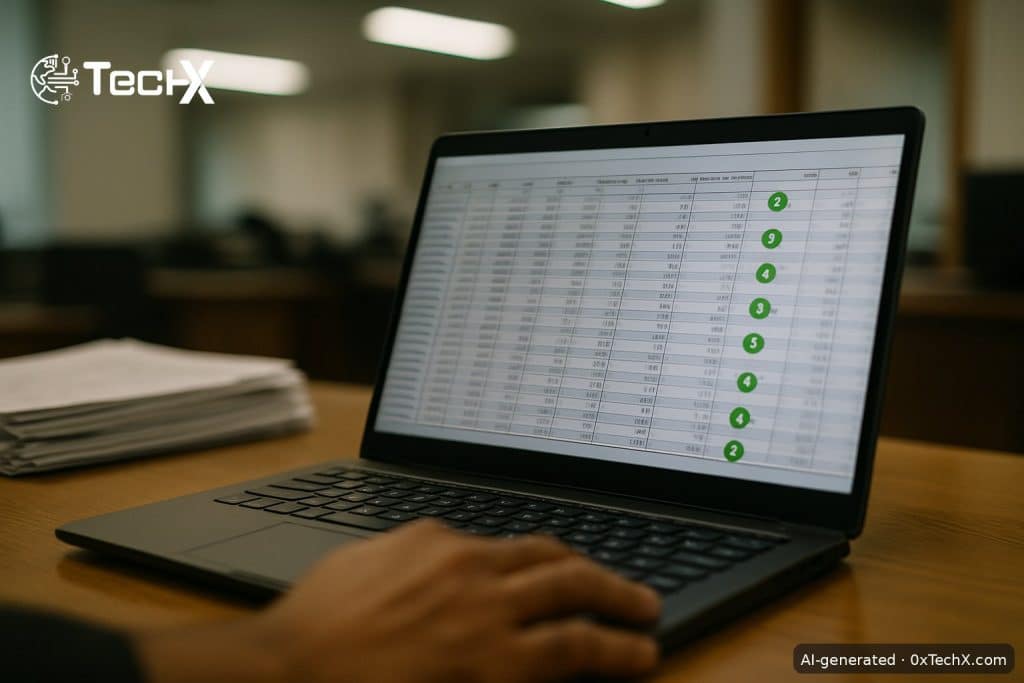
FBR electronic scrutiny has taken a major step forward. Pakistan’s Federal Board of Revenue (FBR) has proposed new rules that use artificial intelligence to scan individual income tax returns, flag mistakes, and give taxpayers a chance to fix errors before any legal action starts. This is the first time the country’s main tax authority has put AI at the centre of its routine compliance process, and it changes how millions of filers will interact with the tax system.
What the FBR Electronic Scrutiny Rules Actually Say
The FBR has begun extending the use of artificial intelligence to scrutinise individual tax returns, enabling its automated system to detect factual and legal mistakes and discrepancies. The draft rules are titled “38-B Procedure for electronic scrutiny and intimation of issues detected by the automated system” and are proposed through amendments to the Income Tax Rules 2002.
The draft rules will be finalised after three days, following feedback from stakeholders. That means the public and tax professionals have a short but real window to respond before the rules take effect.
A significant feature of the proposed arrangement is the automated analysis and cross-matching of information available with tax authorities. This will allow the system to compare information declared in income tax returns with other available data and flag potential discrepancies for clarification by taxpayers.
The FBR plans to cross-check declarations against property, banking, vehicle and other records. In plain terms, if your tax return says one thing but your bank account, car registration or property documents say something different, the AI will catch it.
How the FBR AI System Works Step by Step
The automated system will identify issues in tax returns and send online advice or advance intimation to taxpayers through the IRIS portal, pointing out factual and legal mistakes or discrepancies. The purpose is to allow taxpayers to clarify the issues, rectify errors or take corrective action before legal or penal proceedings are initiated. The detection of a discrepancy by the automated system will not itself result in enforcement action.
This is an important protection for honest filers. A flag from the AI is a warning, not a conviction. Here is the basic flow a taxpayer can expect:
- Step 1: You file your income tax return on the IRIS portal.
- Step 2: The AI cross-matches your figures with bank records, property data, vehicle registrations and other sources.
- Step 3: Taxpayers receive an online advance intimation through the IRIS portal identifying the factual or legal mistakes detected. The officer of Inland Revenue having jurisdiction over the taxpayer may also send the intimation.
- Step 4: Each intimation will specify a response period of at least seven days. If the taxpayer does not respond within that period, a reminder will be issued allowing a further period of at least seven days.
- Step 5: The jurisdictional officer will review the taxpayer’s response, or the lack of one, before taking action under the Income Tax Ordinance and rules.
FBR Electronic Scrutiny Connects to a Bigger Reform Push
This is not a standalone move. It is part of a broader plan to overhaul how Pakistan collects taxes, partly under pressure from the IMF as part of an economic reform programme.
The FBR has announced the phased implementation of an AI-based National Faceless Tax System beginning October 1, 2026. The word “faceless” means the process removes direct human contact between taxpayer and officer as much as possible, which in theory reduces room for corruption or favouritism.
The initiative will also complement the National Faceless Center (NFC) established in Islamabad, which will use computerised risk-based systems to select and allocate audit cases. FBR said the approach is intended to reduce discretionary intervention and bring greater consistency and transparency to the audit process.
A state-of-the-art data centre has also been established with support from the World Bank to manage and analyse large volumes of taxpayer information. Without a powerful data centre behind it, the AI models would not be able to handle the volume of returns filed every year.
Under the system, tax returns will be compared with information from different government and other sources, including property transactions, bank records, vehicle registrations and travel data. The AI system will also compare taxpayers with similar profiles to identify unusual patterns or inconsistencies in their declarations.
Pakistan’s Federal Board of Revenue has also already rolled out a parallel system for sales tax. The FBR notified new procedures for electronic scrutiny and intimation of discrepancies in sales tax returns through SRO1655 of 2026, inserting Chapter XII-A in the Sales Tax Rules 2006, which lays down the procedure for computerised analysis and cross-matching of data relating to registered persons. The income tax rules announced on October 7 now extend the same logic to individual filers.
Why This Matters for Ordinary Pakistani Taxpayers
Pakistan’s tax-to-GDP ratio has hovered around 10% for years, among the lowest in South Asia. A huge chunk of economic activity goes unreported. The AI-driven FBR electronic scrutiny is the government’s bet that technology can close part of that gap without adding thousands of extra tax officers.
For a regular salaried filer or small business owner, the practical impact is straightforward: file accurately, keep records of your bank statements and property, and respond quickly if you get a message on IRIS. The system is designed to help honest filers correct genuine mistakes before things escalate, not just to catch cheats.
Pakistan’s courts are also watching how AI is used in governance. As we noted earlier, Pakistan’s judiciary has said AI should stay an auxiliary tool with human oversight, which aligns with how these FBR rules are written: the AI flags, but a human officer ultimately decides.
Frequently Asked Questions
What is FBR electronic scrutiny?
FBR electronic scrutiny is an AI-powered automated process that scans your income tax return, compares it with data from banks, property records and other sources, and sends you an alert through the IRIS portal if it finds any mismatch or error.
Will I be penalised automatically if the AI flags my return?
No. An AI-generated risk flag will not automatically mean that a taxpayer has committed tax evasion or fraud. Cases flagged by the system may be selected for further examination, audit or assessment proceedings under the applicable law. You get a chance to explain or fix the issue first.
How much time do I get to respond to an FBR scrutiny notice?
The registered person will be given at least seven days to respond, rectify discrepancies or take other corrective action. In case of no response within the prescribed period, a reminder will be issued, with the response period again being not less than seven days.
Does this apply to sales tax as well as income tax?
Yes. The system will electronically analyse returns and other available data, flagging factual or legal discrepancies. Taxpayers will receive advance intimation through the IRIS system, allowing them to clarify or rectify errors before any legal or penal action is initiated, for both sales tax and now income tax under the new draft rules.