
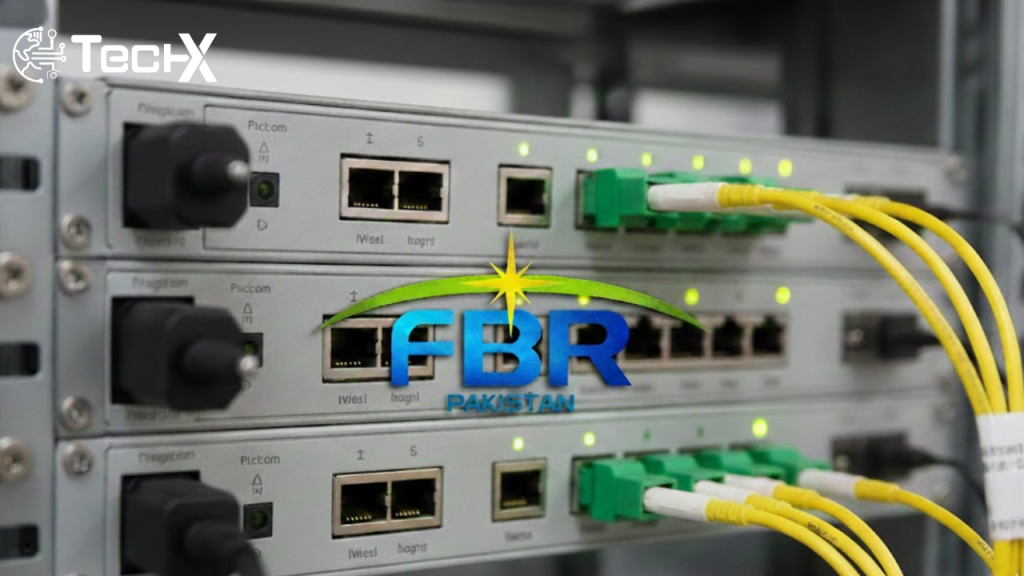
The Federal Board of Revenue (FBR) has announced a significant reduction in the customs valuation of fiber broadband Wi‑Fi terminals (ONTs). The move aims to align import values with actual global market prices, reduce costs for telecom operators, and support faster fiber broadband expansion in Pakistan.
Old vs New Valuation
Previously, the 2024‑25 valuation was set much higher than real import costs:
- RF‑ONTs (with Cable TV ports): USD 165 per unit
- Non-RF ONTs (Wi‑Fi only): USD 44 per unit
Under the new valuation (Jan 2026)
- RF‑ONTs: USD 38 per unit
- Non-RF ONTs: USD 21 per unit
This dramatic reduction brings customs valuation closer to actual international prices, easing the financial burden on importers and operators.
Why the Change Was Needed
Telecom operators had long complained that previous valuations were unrealistic, increasing import costs, which slowed the rollout of fiber broadband and raised operational expenses. The reduction ensures that imports are priced fairly, reflecting real market trends, and helps boost the digital infrastructure sector.
Impact on Telecom Operators
The revised valuation will directly benefit telecom companies importing ONTs for fiber broadband deployments. Lower customs duties and taxes mean operators can:
- Deploy fiber networks faster.
- Reduce cost per subscriber.
- Possibly offer affordable broadband packages to consumers.
This move is expected to accelerate fiber connectivity expansion across urban and rural Pakistan.
Consumer Benefits
Consumers may indirectly benefit as telecom operators pass on cost savings from reduced import duties. This could mean:
- Lower broadband installation fees.
- More competitive pricing for high-speed fiber internet.
- Wider availability of broadband services in previously underserved areas.
Industry Reaction
Industry experts and the Telecom Operators Association of Pakistan (TOAP) have welcomed the decision, calling it long-awaited relief. They praised FBR for considering actual global market prices while setting the new valuations and highlighted that this will encourage further investment in broadband infrastructure.