
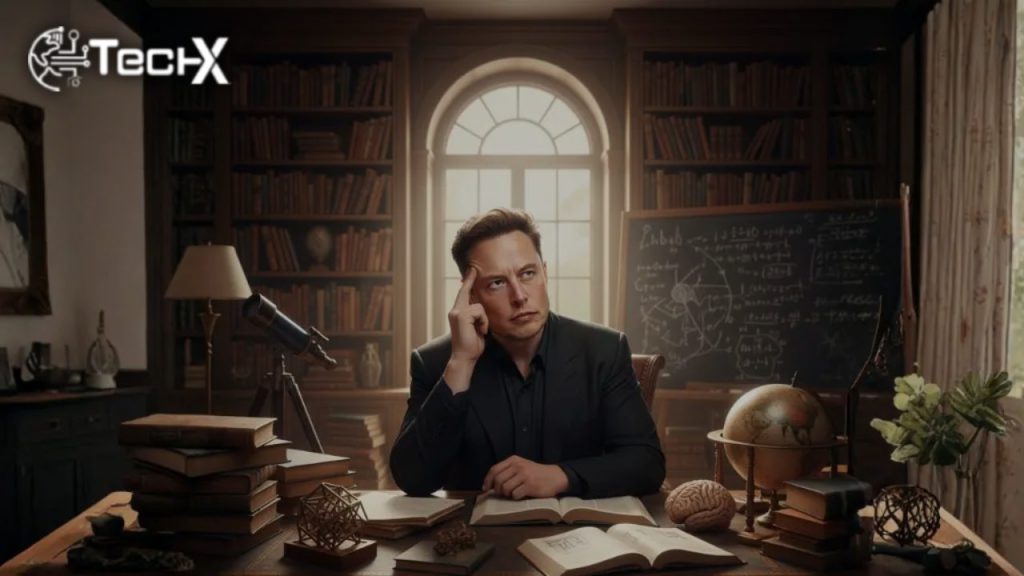
Knowing Elon Musk’s IQ number doesn’t explain why he became a tech pioneer. His genius lies in how he approaches problems, takes risks, and learns continuously. From my experience covering innovators, this is where true intelligence shows.
Intelligence Beyond Test Scores
Musk often uses first-principles thinking, breaking problems down to their fundamental truths before building solutions.
Instead of accepting conventional ideas, he asks:
- Why does something cost this much?
- Is there a simpler way to build it?
- What happens if we start from scratch?
This approach led to breakthroughs at SpaceX, Tesla, and other ventures.
Academic Background and Learning Approach
Musk studied physics and economics in university. Physics develops analytical and problem-solving skills, which he applies across industries.
I’ve noticed that many successful innovators combine formal education with self-learning. Musk exemplifies this approach perfectly.
Comparing Musk to Other Innovators
| Innovator | Estimated IQ |
|---|---|
| Albert Einstein | Around 160 |
| Stephen Hawking | Around 160 |
| Bill Gates | Around 160 |
| Elon Musk | Estimated 155–160 (unconfirmed) |
These numbers are only estimates, but they highlight why Musk is associated with exceptional thinking.
Role of Curiosity, Discipline, and Risk
Musk’s curiosity drives him to enter industries where he initially knows little:
- Electric vehicles
- Rocket engineering
- AI
- Tunnels and infrastructure
Combined with discipline and risk tolerance, this curiosity turns complex ideas into reality. His willingness to invest his fortune into risky ventures sets him apart from others with high intelligence who avoid uncertainty.
Lessons From Elon Musk
Looking at Musk’s career, several lessons stand out:
- Curiosity matters more than IQ alone
- Persistence and discipline produce results
- Leadership and vision are key for innovation
- Calculated risk-taking amplifies success
Conclusion
Elon Musk’s intelligence cannot be fully captured by an IQ score. His creativity, curiosity, and problem-solving ability have allowed him to disrupt multiple industries.
Focusing on his thinking methods and persistence provides more insight than any test score ever could. Musk’s success shows that intelligence is as much about action as it is about cognitive ability.