
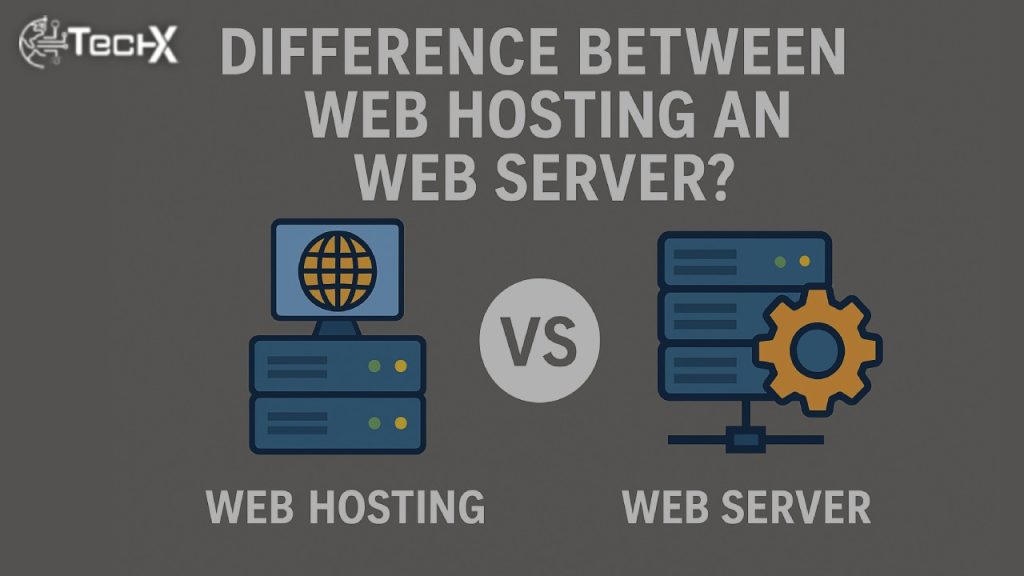
When starting with websites, you may have seen the terms web hosting and web server. Although they seem to mean the same, they each take on different responsibilities in operating a website and being accessed online.
We will cover what every term means, what kinds are offered, and what separates web hosting in Pakistan from web servers. If you are either a business person, a developer, or simply keen to find out more, this guide takes all the hassle out of understanding tech terms.
What is Web Hosting in Pakistan?
By using web hosting, sites are available to people online. It’s the place where your website is hosted. By having a web host, your site can be seen online because they give you the storage space, server support, and stable internet access needed.
Choosing a hosting plan means you are assigned space on a server where your website’s HTML, images, videos, scripts, and other files will live. When anyone types your domain into the browser, the host will deliver the files over the internet to them.
Also Read: Top Types of Web Development
Types of Web Hosting Available
There are numerous types of web hosting, each made for specific needs and costs. This is how it explains it:
1. Shared Hosting
Each website in shared hosting is placed on a server with another site, and they each get to use the same CPU, RAM, and storage. You can get it at a low price, and it’s suggested for those just starting out or websites with little traffic. Yet, traffic from other sites on the server can make it operate more slowly.
2. VPS Hosting
With VPS web hosting in Pakistan, you get a middle point between the services of shared and dedicated hosting. All websites on the server are still sharing, yet every site receives resources allotted only to it. It makes both performance and security better.
VPS Windows hosting is often selected by developers who like to run ASP.NET applications or particular Windows programs.
3. Dedicated Hosting
With dedicated hosting, you have access to your entire physical server. It is best for sites that expect many visitors or businesses needing to customize and manage their site thoroughly. You will spend more money, but you will enjoy outstanding speed and dependability.
4. Cloud Hosting
Cloud servers are all connected, which allows websites to be hosted, reaching higher scalability, more flexibility, and greater reliability. If something happens to one server, another takes its place to keep the site up.
5. Managed Hosting
Here, it is all up to the hosting provider to manage backups, server maintenance, updates, and security. Problems like this occur most often with WordPress hosting.
What is a Web Server?
A web server is a server, hardware or software, that takes care of storing, working on, and delivering web pages to people. Anytime a URL is entered into your browser, the browser seeks out the web page from the server and gets it to appear on your screen.
These are two different parts of the web server for understanding:
- The hardware Web Server refers to the machine on which website information is kept.
- Software Web Server: The program that figures out how to respond to web requests and send the right data.
Imagine a web server as the waiter in a restaurant who brings up your requested page from the server and serves it to your browser.
Various Kinds of Web Servers
Many types of web server software exist, and every kind has its benefits and special applications:
Apache HTTP Server
One of the very oldest and highest-rated web server software. It is open for everyone to use, can be moulded to your wishes, and supports both Windows and Linux.
Nginx
The tool has earned recognition for being highly efficient with the best performance. Many popular websites and applications prefer it because it works well and achieves top results.
Microsoft IIS (Internet Information Services)
Microsoft made a web server that works best for websites hosted on Windows. You can easily use it with VPS Windows hosting and host ASP.NET applications on it.
LiteSpeed
LiteSpeed is chosen for its fast and reliable performance. It has the best and most trusted security features.
Key Differences Between Web Hosting and Web Server
| Feature | Web Hosting | Web Server |
| Definition | A service that provides space and resources for websites to be accessible on the internet. | Hardware or software that processes and delivers web pages to users. |
| Purpose | Hosts and stores website files, databases, and applications. | Responds to browser requests and serves web content. |
| Functionality | Includes file storage, domain management, backups, email, and support. | Handles HTTP requests, processes scripts, and delivers content. |
| User Interaction | Managed via control panels | Typically managed by developers or server administrators. |
| Includes | Web server, storage, bandwidth, control panel, email accounts, etc. | Only the server software or hardware. |
| Examples | Shared Hosting, VPS Hosting, Dedicated Hosting, Cloud Hosting | Apache, Nginx, Microsoft IIS, LiteSpeed, Tomcat |
| Use Case | Best for website owners who need hosting services. | Best for developers or admins managing site delivery and performance. |
Conclusion
When you’re setting up or managing a website, learning the difference between web hosting in Pakistan and web servers matters a lot. Put simply:
- Web hosting takes care of saving and displaying your website to users.
- Your site can be visited by others only if you have a web server.
Moving to the end, it is also important to choose a reliable web hosting partner like Websouls in Pakistan. They have affordable hosting plans and a skilled team that helps run your website on the internet.