
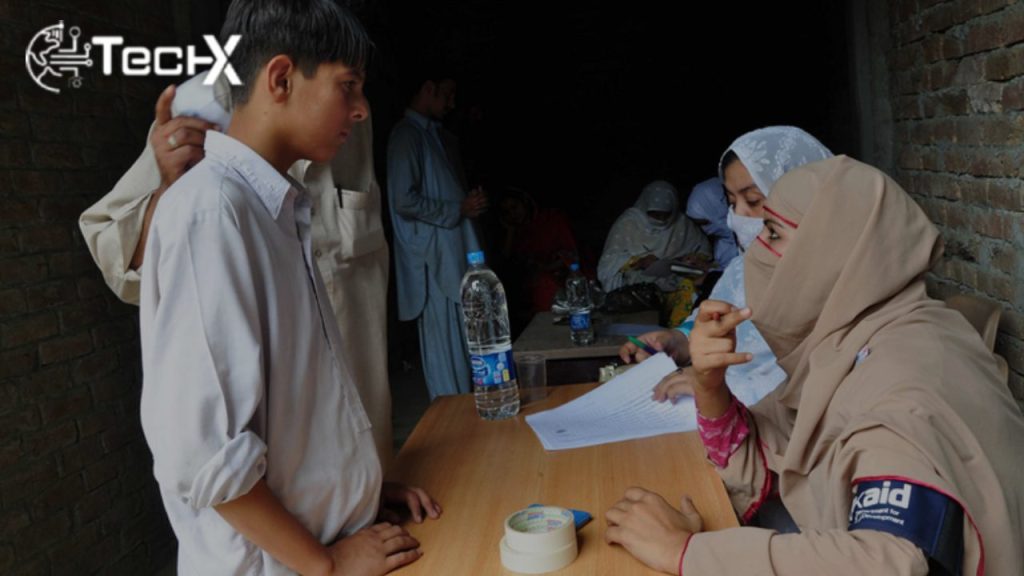
While Pakistan continues to receive support from international partners, the absence of adequate oversight in managing foreign finance poses growing challenges for the country’s economic stability. Foreign INGOs often entrust wrong local partners without due diligence or enter Pakistan with agendas to influence policy. This trend is also observed in countries like India, the Philippines, and Thailand. Without stronger controls, this risks undermining national interests, missing out on valuable revenue, and straining global stakeholders’ trust at a time when Pakistan is already grappling with rising debt and inflation.
Misused Foreign Aid Reflects Institutional Weaknesses
Misappropriated or untraceable foreign aid highlights serious institutional shortcomings. For instance, USAID invested a whopping $840 million in Pakistan’s education system to improve underprivileged areas. Reports, however, revealed that $136 million was set aside for 120 fictitious schools. Given that many intended beneficiaries lacked access, an additional $20 million was invested on educational television programs that were never successfully broadcast.
These disclosures have eroded trust and may have contributed to the freezing of $845 million in US aid to Pakistan. The damage extends beyond financial losses, harming Pakistan’s reputation and raising doubts about future assistance from bilateral and multilateral donors.
Also Read: UN Delegation Applauds Community Initiatives at Thar Block II
Unregistered INGOs and Regulatory Failures
The presence of unregistered international NGOs (INGOs) exacerbates the situation. Organizations such as Vital Strategies and the Campaign for Tobacco-Free Kids (CTFK), funded by Bloomberg Philanthropies, have operated in Pakistan without complying with local reporting and registration laws. Authorities uncovered irregularities in fund usage, despite their stated public health objectives. Consequently, the Interior Ministry ordered the State Bank to freeze their accounts.
Critics argue that these INGOs have done little to combat the illegal cigarette trade, inadvertently fueling black-market growth. Meanwhile, Pakistan’s Track and Trace system—designed to curb tax evasion—remains weakly enforced, particularly in the tobacco sector, where illicit trade now makes up 54% of the market. The IMF has flagged this as a major revenue leak during discussions for a $1 billion bailout tranche.
Illicit Trade and Revenue Losses
Pakistan’s regulatory gaps not only undermine sovereignty but also enable illicit economic activities with severe financial consequences. The Federal Board of Revenue (FBR) estimates that the illegal cigarette trade alone causes annual tax losses of PKR 300 billion. Such losses deprive the government of critical funds for infrastructure, education, and healthcare.
Donor Distrust and the Need for Reform
Mismanagement of foreign finances weakens the case for future aid. When funds fail to reach intended beneficiaries due to poor oversight, donors question whether their contributions foster development or inefficiency.
As one economist warned:
“We are in an economic crunch, and we are on our own if donors do not trust us.”
To rebuild confidence, Pakistan must:
- Strengthen institutional checks and balances,
- Ensure transparent tracking of foreign funding,
- Enforce strict registration procedures for all INGOs.
Only through accountability can Pakistan ensure that foreign aid supports economic recovery rather than becoming another missed opportunity. Without urgent reforms, the country risks marginalization by the very institutions meant to aid its development.