
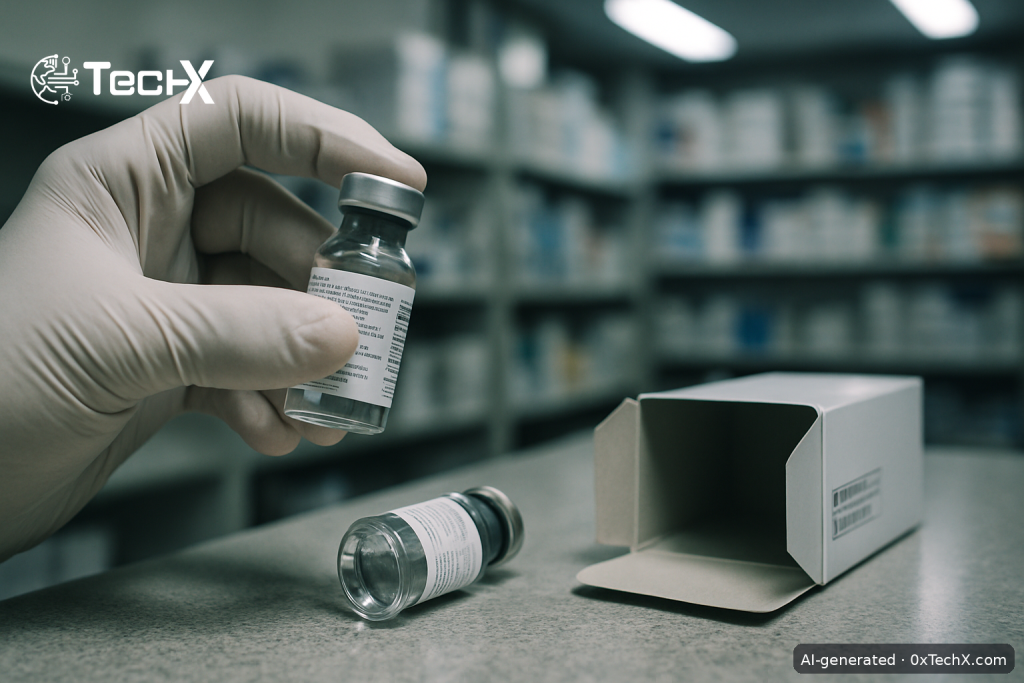
Counterfeit blood cancer medicines have triggered a formal alert from the World Health Organization (WHO) to Pakistan’s Drug Regulatory Authority (DRAP). Two widely used blood cancer drugs, Darzalex (daratumumab) injections and Jakavi (ruxolitinib) tablets, have been found to be falsified. DRAP has now banned the sale and use of the affected batches and is urging every hospital, pharmacy, and patient to act immediately.
What Are Darzalex and Jakavi?
Both drugs are used to treat serious blood cancers. Darzalex is a monoclonal antibody injection. According to the WHO’s official alert, Darzalex is used to treat multiple myeloma and AL amyloidosis, which are rare cancers and disorders that affect the bone marrow and blood proteins.
Jakavi, also known by its generic name ruxolitinib, is a tablet used to treat certain serious blood diseases and complications after stem cell transplants. These are not common, over-the-counter medicines. They are specialist oncology drugs that patients depend on for survival.
WHO Issues Back-to-Back Alerts on Counterfeit Blood Cancer Medicines
The WHO issued two separate global medical product alerts in mid-2026. The first, issued in June 2026, flagged three falsified batches of Jakavi. These fake products were first detected in Iran, Russia, and Turkey and reported to WHO in May 2026. The second alert, issued on 3 July 2026, flagged two batches of falsified Darzalex injections found in the Maldives and Mexico, with those incidents reported to WHO in May and June 2026.
Following these international alerts, WHO notified DRAP, prompting Pakistan’s regulator to issue its own rapid public warning and ban on the identified batches.
Which Specific Batches Are Banned?
DRAP has confirmed the following batches as counterfeit and banned from sale or use in Pakistan:
- Darzalex Injection 400 mg, Batch STV1K01
- Darzalex Injection 100 mg, Batch MYS7381
- Jakavi 15 mg Tablets, Batch FNR06
- Jakavi 10 mg Tablets, Batch SGL04
The genuine manufacturer of Jakavi, Novartis, confirmed these batch numbers are not valid. Similarly, Janssen, the manufacturer of Darzalex, confirmed that batches MYS7381 and STV1K01 are not authentic. The fake Darzalex packaging carries the address of Janssen-Cilag Belgium, while the fake Jakavi packs list the address of Novartis Pharma Switzerland, details designed to fool patients and pharmacists alike.
Why Are These Fakes Dangerous?
DRAP officials confirmed that the raw materials inside the fake samples could not be verified, and foreign particles were even found in one Darzalex sample. Counterfeit oncology products can have devastating effects: patients may unknowingly receive therapy with no active ingredient or with harmful contaminants, which can lead to unchecked disease progression or toxic complications.
In the case of the fake Jakavi, the falsified products were sold to patients through online platforms and, in at least one case, directly supplied from a pharmacy. For Darzalex, hospitals in at least one country received the falsified product through non-authorised distributors, which means even seemingly legitimate supply chains cannot be fully trusted without verification.
If a blood cancer patient takes a fake medicine for weeks or months, their cancer may continue to grow while they believe they are being treated. This delay can be fatal.
The Bigger Crisis Behind the Alert
This latest WHO warning did not happen in isolation. The worsening shortage of modern cancer medicines in Pakistan has led to a sharp rise in fake and substandard drugs on the market. Oncologists warn that the absence of registered immunotherapies has created a gap now being filled by smuggled, substandard, and fake medicines, many sourced through grey markets.
Around 40 newly registered life-saving medicines, including several cancer drugs, remain unavailable across Pakistan because the federal government has yet to approve their retail prices. This delay has forced many patients with cancer and other serious illnesses to buy expensive smuggled or unregistered medicines. When patients cannot find genuine drugs through authorised channels, they turn to informal markets, where the risk of encountering counterfeit blood cancer medicines is highest.
Globally, WHO estimates that at least 1 in 10 medicines in low- and middle-income countries are substandard or falsified, with cancer drugs being prime targets because of their high cost and strong patient demand. In Pakistan, where medicine shortages are a known pressure point, this risk is even higher.
What DRAP Wants You to Do Right Now
DRAP has directed all provincial drug inspectors to check pharmacy stocks immediately. Hospitals and distributors are being asked to pull the banned batches from shelves without delay. Healthcare providers are urged to verify the source of every blood cancer medicine they use and to report any suspicious product to DRAP directly.
If you or a family member is currently using Darzalex or Jakavi, check the batch number printed on the packaging against the banned list above. If your batch matches, do not use the medicine. Contact your doctor and your pharmacy right away.
Look for signs that a medicine may be fake: packaging that looks slightly different from before, a seal that does not sit properly, any visible particles inside an injection vial, or a price that seems unusually low. Criminals make these fakes look authentic, so even a convincing-looking pack is not a guarantee of safety.


Frequently Asked Questions
Which medicines are affected by the DRAP and WHO alert?
The alert covers two drugs: Darzalex (daratumumab) injection in 400 mg and 100 mg strengths, and Jakavi (ruxolitinib) tablets in 15 mg and 10 mg strengths. The specific counterfeit batch numbers are STV1K01 and MYS7381 for Darzalex, and FNR06 and SGL04 for Jakavi.
Are these fake medicines only a problem outside Pakistan?
The fakes were first detected in the Maldives, Mexico, Iran, Russia, and Turkey. However, WHO notified DRAP because of the risk that these products could enter Pakistan, especially given the known shortage of authorised cancer medicines in the country. DRAP has issued a nationwide ban as a precaution.
Can a fake cancer drug look the same as a real one?
Yes. The counterfeit Darzalex and Jakavi packs copied the real manufacturers’ addresses from Janssen-Cilag Belgium and Novartis Pharma Switzerland respectively. They are designed to appear genuine. The only reliable way to verify a medicine is to buy from an authorised distributor and check the batch number against DRAP’s published alerts.
What should I do if I think I have a fake batch?
Stop using the medicine immediately. Do not throw it away, as DRAP may need to test it. Contact your oncologist or treating doctor at once, inform your pharmacy about the suspect batch, and report the product to DRAP through their official helpline or website at dra.gov.pk. Document the batch number, expiry date, and where you bought it.