
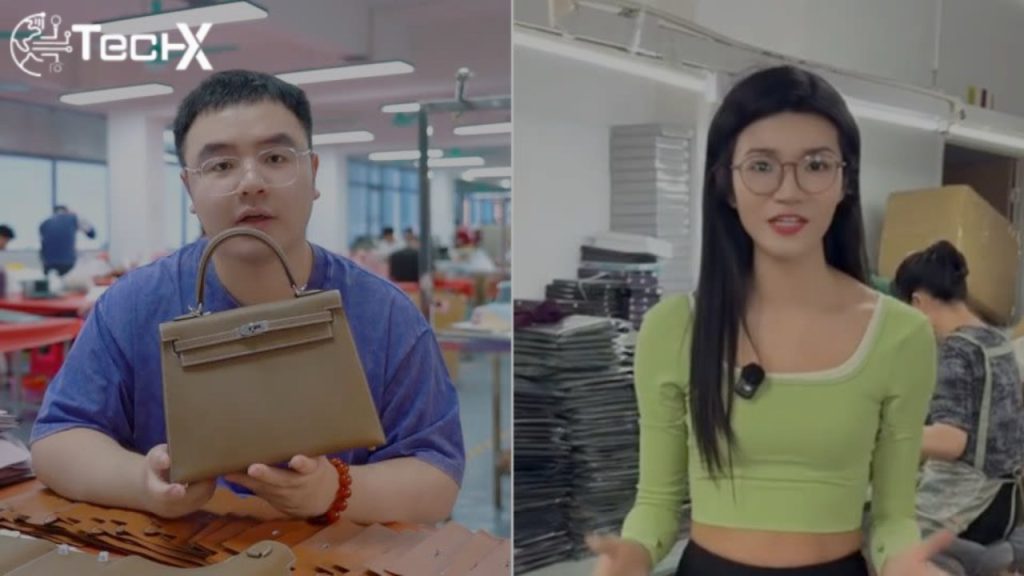
The 19th-century folktale “The Emperor’s New Clothes“ mirrors today’s luxury brands industry. Just as the emperor was fooled into wearing invisible garments, consumers are misled into believing high-end brands guarantee superior quality. Chinese manufacturers now expose this illusion, revealing that many luxury items are mass-produced in their factories yet sold at exorbitant prices solely for status signaling.
Luxury Brands and the “Made in China” Reality
Western luxury brands have long hidden their reliance on Chinese manufacturing. A viral clip featuring a Chinese consulting CEO lists 20 high-end brands:
| Luxury Brands | Industry | Country of Origin | Manufacturing Location(s) |
Avg. Markup Ratio
|
| Louis Vuitton | Fashion/Leather | France | France, Spain, Italy, China | ~10x |
| Gucci | Fashion/Leather | Italy | Italy, China, Japan | ~8-10x |
| Hermès | Fashion/Leather | France | France, China (parts) | ~12-20x |
| Chanel | Fashion/Beauty | France | France, China (components) | ~10x |
| Dior | Fashion/Beauty | France | France, China, Italy | ~10x |
| Prada | Fashion/Leather | Italy | Italy, China, Romania | ~8-10x |
| Fendi | Fashion/Leather | Italy | Italy, China | ~8-12x |
| Balenciaga | Fashion | Spain/France | Italy, China, Portugal | ~8-10x |
| Michael Kors | Fashion/Accessories | USA | China, Vietnam, Philippines | ~10x |
| Coach | Fashion/Accessories | USA | China, Vietnam, India | ~10x |
| Ralph Lauren | Fashion | USA | China, Sri Lanka, India | ~8x |
| Lululemon | Activewear | Canada | China, Bangladesh, Vietnam | ~8-10x |
| Nike | Activewear | USA | China, Vietnam, Indonesia | ~10-12x |
| Apple | Electronics/Luxury | USA | China (Foxconn) | ~3-6x |
| Burberry | Fashion | UK | UK, China, Italy | ~8-10x |
| Versace | Fashion | Italy | Italy, China, Eastern Europe | ~10x |
| Tom Ford | Fashion/Beauty | USA | China, Italy | ~10x |
| Bottega Veneta | Fashion/Leather | Italy | Italy, China, Romania | ~10x |
| Saint Laurent | Fashion | France | Italy, France, China | ~8-10x |
| Tiffany & Co. | Jewelry | USA | USA, China, Thailand | ~6-10x |
Key Takeaways:
✔ Same Factories, Different Labels – Many luxury items are made in the same Chinese factories as budget brands.
✔ Massive Markups – Production costs are often 10x lower than retail prices.
✔ Branding Over Quality – The “luxury” premium comes from marketing, not superior materials.
✔ Tariff Hypocrisy – Western Luxury brands profit from Chinese labor while lobbying for trade protections.
The Truth Behind the Labels
The assumption that “Made in China” equals poor quality is losing ground. Many luxury items are manufactured in China, then rebranded as European goods. This strategy fuels illusions of exclusivity and craftsmanship. But Chinese influencers and factory insiders are using social media to lift the veil, showing luxury items being produced under conditions no different from fast fashion cheap labor, high markups, and deceptive branding.
Luxury Without the Luxury Price
A viral TikTok video showed a Chinese CEO listing dozens of luxury brands like Dior, Coach, and Lululemon whose products are made in China. He claimed many luxury goods are sold at ten times their production cost. Consumers are now asking tough questions: Why pay $500 for a bag that costs $30 to make? With factory footage online, customers are being encouraged to buy directly from suppliers.
Birkin Bags and Brutal Markups
Even the holy grail of handbags isn’t safe from scrutiny. A Chinese supplier revealed that authentic Birkin bags, often sold for $34,000, only cost around $1,400 to produce. These revelations are shaking the foundation of luxury fashion. Craftsmen make a fraction of what the brands earn. Consumers, now more informed, are beginning to view these prices not as symbols of luxury but as signs of exploitation.
Also Read: Saudi Arabia Has Banned All Public Displays of Support for Palestine
Social Media Applauds the Unveiling
Outside China, the response has been loud and supportive. TikTok influencers worldwide are praising China’s exposure of luxury branding myths. One creator said Western luxury is a key tool of soft power, helping shape global perceptions of Western superiority. But with more people realizing the goods are made cheaply in China, the illusion is fading, and the appeal of these luxury brands is starting to wane.
Behind the Curtain of “Made in Italy”
A deeper look reveals that up to 80% of luxury items think Gucci, Chanel, Hermès are made in China. These products are later labeled as being from Italy or France. This practice mirrors the moment in “The Wizard of Oz” when the illusionist is revealed to be just a man behind a curtain. The opulence and quality once associated with these labels are being questioned like never before.
Tariff War Ignites Economic Drama
As this luxury myth crumbles, a parallel economic storm brews. In early 2025, President Trump launched his “Liberation Day” tariff policy. It started with a 10% levy on all imports, especially targeting China. By April, Chinese goods faced a staggering 145% tariff. Trump’s goal: pressure China into compliance. But instead, it fueled a trade war that showcased China’s economic confidence and adaptability.
China Strikes Back With Confidence
China wasn’t silent. They responded with a 125% tariff on US goods, refusing to be bullied. Customs spokesperson Lyu Daliang claimed, “The sky won’t fall,” reinforcing China’s resilience. During a Vietnam visit, President Xi Jinping warned that trade wars yield no victors. China also sought new alliances globally, ensuring its economic network remains strong despite rising Western tensions and tariff instability.
Electronics Exempt For Now
Interestingly, US officials excluded electronics from the harshest tariffs, despite the initial threats. But this didn’t last long. Trump quickly reclassified electronics—including smartphones to still face significant levies under a different category. These shifting policies have left many confused, with critics suggesting that Trump’s tariff plans lack coherence and appear more reactive than strategic, fueling uncertainty in both markets and leadership.
Peeling Back the Illusion
In both fashion and politics, China is exposing long-standing illusions. Just as the emperor in the folktale stood naked before his people, the West’s luxury industry and leadership are being revealed for what they truly are performances built on image, not substance. And now, with consumers and citizens more informed, the world is beginning to question the truth behind the glamor and the governance.
Western Prestige Under Scrutiny
As the veil lifts, Western prestige once upheld by luxury brands and economic dominance is being questioned. For decades, luxury labels symbolized the height of Western culture and success. Now, with China revealing the real cost and origin of these goods, the narrative is shifting. The admiration once reserved for “Made in Italy” or “Crafted in France” is eroding, replaced by skepticism and a growing demand for transparency.
A Global Consumer Awakening
Consumers, especially younger generations, are now more conscious than ever. Influenced by digital transparency and viral content, they are questioning what they buy and why. If a bag made in the same Chinese factory costs $50 online but $2,000 at a boutique, what’s the extra money really for? Status symbols are losing their magic as buyers realize they’ve been paying for branding, not better quality.
The Fall of the Luxury Brand Mirage
For luxury brands, this awakening is dangerous. Their business relies on mystique the allure of exclusivity, the romance of European craftsmanship. Once consumers recognize these are manufactured illusions, the appeal fades. Like the emperor with no clothes, brands that once stood confidently on a pedestal are now being laughed at. Without the illusion, their value proposition becomes as empty as the labels they stitch into garments.
China’s Cultural Counteroffensive
What we’re seeing isn’t just economic it’s cultural. China is redefining its global image, not just as a manufacturer, but as a truth-teller. By exposing luxury myths, it strikes at a cornerstone of Western soft power. While Western luxury brands sold identity and aspiration, China now offers reality and reason. In this battle of perceptions, China is using authenticity as its weapon and the world is watching, perhaps even cheering.
The Fragile Genius of Tariff Tactics
Trump’s tariff strategy, once hailed by supporters as tough and brilliant, is now under fire. Many Americans are questioning if there was ever a plan beyond pressure. The inconsistent policies, like exempting electronics only to tax them later, have created confusion rather than clarity. Critics argue that instead of punishing China, the tariffs have hurt American businesses and consumers, driving up prices and stoking inflation.
Illusions Collapse, Realities Emerge
Much like the final scene in the folktale, where a child boldly states the emperor is naked, China is calling out the illusions of the West. Luxury branding, political posturing, and economic superiority are no longer taken at face value. With social media as its megaphone and a global audience eager for truth, China is flipping the script exposing myths and forcing a reevaluation of value, power, and prestige.