
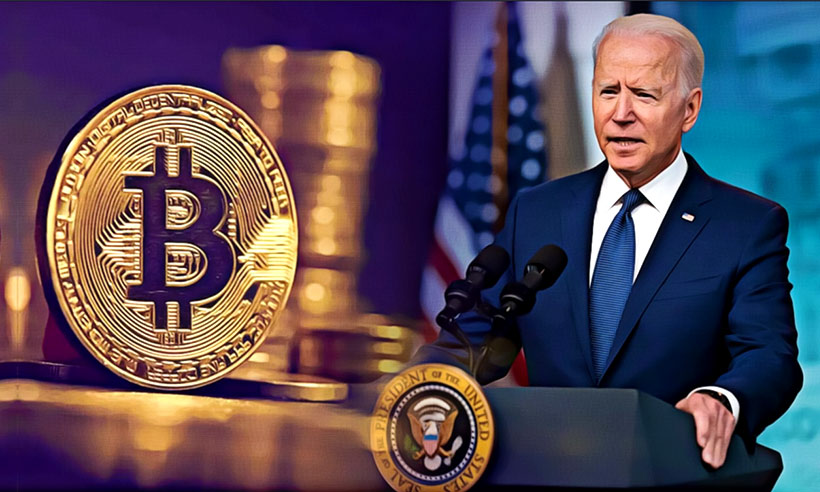
Joe Biden, Vice President of the United States, has spoken out against a debt ceiling arrangement with Republican leaders that is rumoured to be good for the cryptocurrency industry. The terms offered by the Republicans were deemed “unacceptable” by Vice President Biden during a press conference at the Group of Seven (G7) Summit in Hiroshima, Japan on May 21.
I will not support a compromise that would shield affluent tax evaders and cryptocurrency speculators at the expense of almost a million Americans who rely on food stamps.
The supposed safeguards for crypto traders are related to taking advantage of tax losses. The White House and Republican leaders are reportedly in talks about shutting down this cryptocurrency transaction system.
The term “crypto tax-loss harvesting” refers to a tactic used by investors to minimise their taxable income. To avoid tax on cryptocurrency profits, some investors sell coins at a loss. Within 30 days before or after the sale, the proceeds must be used to acquire another asset with identical characteristics. Stocks and other assets can also be traded using this approach.


Biden administration is taking this step to save tax
The White House also proposed to Republicans an idea that would prevent investors from postponing taxes on real estate exchanges, in addition to limiting tax-loss harvesting for cryptocurrencies. Together, these adjustments would boost federal tax collection by nearly $40 billion each year.
According to a post, Republican leaders have already rejected the ideas. The rising national debt is a “spending problem, not a revenue problem,” according to House Speaker Kevin McCarthy, who blames the Biden administration’s wasteful spending on the pandemic. Meanwhile, the White House attributes the debt crisis to tax cuts made by prior administrations, arguing that these changes had a major impact on revenue.
The Republican plan to reduce the deficit by cutting expenditure by $4.8 trillion would have a direct impact on the funding available to federal agencies. The United States could go into default as soon as June 1 if Congress does not raise the debt ceiling. During his journey from Hiroshima to Washington, D.C., Biden is expected to have a phone conversation with McCarthy.
Since 1917, Congress has established a limit on the amount of money the federal government can borrow to cover its obligations (known as the “debt ceiling”).
To read our article about “Important G20 members yet to commit to attend IIOJK summit” click here.