
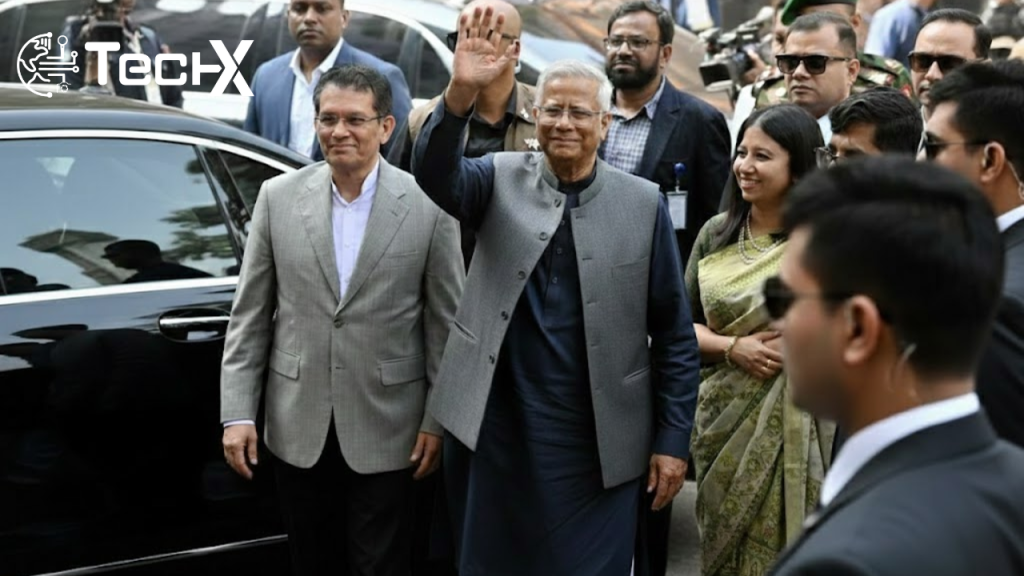
Bangladesh has held its first elections on Thursday since the deadly uprising in 2024. This comes as a major shift in the political arena of Bangladesh, as the former Prime Minister, Sheikh Hasina, has been removed from office due to her 15 year rule. People not only went to vote for their parliamentary representatives but also for a referendum on a new democratic reform charter.
Muhammad Yunus Leading as the Interim Leader
The country Nobel Peace Prize winner Muhammad Yunus, aged 85, has assumed the role of the interim leader since Hasina’s ouster in August 2024. After casting his ballot in the election in the capital, Dhaka, Yunus termed the day a day of freedom and said, “Today is a day of freedom.Today we are ending a nightmare and a new era will begin for the country of 170 million.”
Broken Systems and Reform Plans
Yunus explained that there is a completely broken down system of public administration and justice that. needed to be seriously reformed. To avoid the re-emergence of authoritarian one party rule, Yunus introduced a reform charter that sought to promote democracy.
Key Provisions of the Reform Charter
The reform charter proposes several major changes:
- Term limits for prime ministers to prevent extended single party rule.
- Creation of an upper house of parliament to ensure better representation.
- Stronger presidential powers for checks and balances.
- Greater judicial independence to safeguard the rule of law.
The charter is designed to leave a lasting legacy and create a more accountable and transparent governance system in Bangladesh.
Referendum on the Reform Charter
Along with the parliamentary elections, there is also a referendum and electors are voting to approve or reject the charter of reforms. Yunus has underlined the significance of this referendum for the future of Bangladesh. Political parties have brought people into the voting arena to vote “yes” for the referendum.
Public Reaction
As far as the responses of ordinary people are concerned, they are mixed. Some people said that they had felt thrilled to take part in the referendum. Others said that they felt confused due to the complexity of the issues. When asked about her experience, Afroza Begum, who is 46 years of age, said, “I voted without reading each and every clause.” Rehana Akhtar, who is 60 years old, works as a teacher in a school. She said that she had felt “ecstatic.”
Moving Forward for Bangladesh
Yunus, who will be stepping down after the election, said his country is embarking on a new path towards a transformed and democratic Bangladesh. The elections and referendum are expected to pave the way for strong institutions, effective governance, and the protection of democracy in the country.