
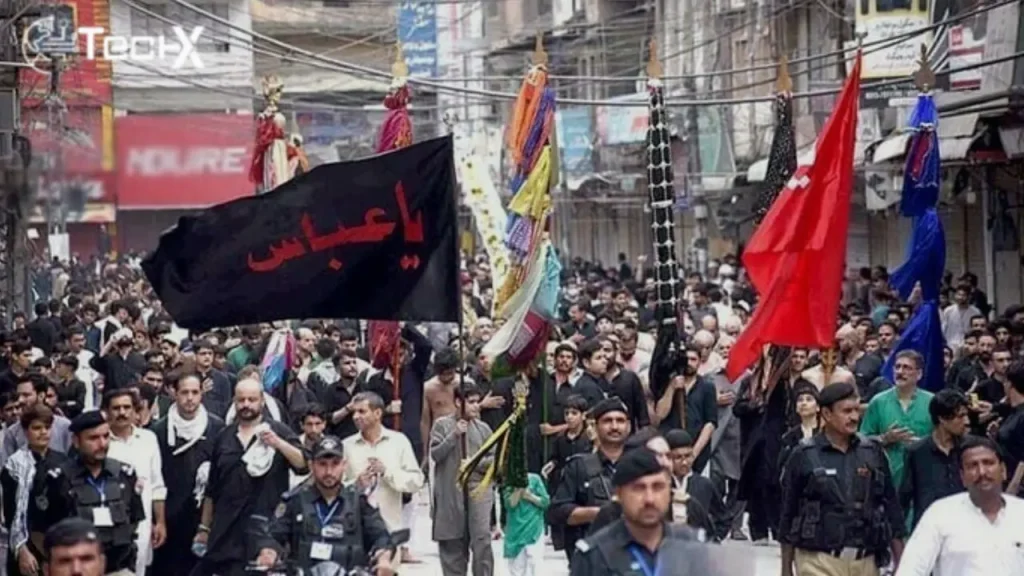
The Sindh government has enforced Section 144 province-wide, banning pillion riding on the 9th and 10th of Muharram. This decision aims to enhance security during religious processions. Exemptions apply to children, the elderly, and journalists. Licensed weapons are also prohibited, and drone cameras are banned until the 10th of Muharram. These measures seek to prevent unrest and ensure public safety during the sacred month.
Security Measures and Restrictions
Authorities have prohibited rallies and gatherings without prior approval to maintain order. Mobile and internet services faced partial suspensions in Karachi on the 8th of Muharram, disrupting daily life. Security forces, including police and Rangers, are stationed along procession routes. Checkpoints monitor movement, and a communication blackout is enforced in sensitive zones. These steps aim to deter potential threats and safeguard mourners during Muharram observances.
Army Deployment Across Pakistan
The federal government invoked Article 245, deploying the Pakistan Army in all provinces, including AJK and Gilgit-Baltistan. Troops will assist local administrations in maintaining peace. Punjab alone has mobilized over 25,000 police officers, with 2,600 in Lahore. The coordinated effort ensures tight security nationwide. The deployment aligns with intelligence assessments to prevent sectarian violence during Muharram processions.
Also Read: Karachi Traffic Plan Unveiled for Muharram Processions
Public Holidays Announced
The federal and Sindh governments declared public holidays on July 5 and 6 (9th & 10th Muharram). All government and semi-government institutions will remain closed. The move allows citizens to observe religious events without disruption. Similar measures are in place across Pakistan, reflecting the government’s commitment to facilitating peaceful mourning while prioritizing security.
Impact on Daily Life
Residents in Karachi reported connectivity issues due to internet suspensions. Businesses and commuters faced difficulties, but many support the measures for safety. The pillion-riding ban affects transportation, though exemptions ease restrictions for vulnerable groups. Despite inconveniences, the public largely acknowledges the necessity of heightened security during Muharram, given past incidents of violence.
Conclusion
Sindh’s stringent security measures underscore the government’s focus on preventing unrest during Muharram. With army deployment, communication restrictions, and public holidays, authorities aim to balance safety with religious observance. While these steps cause temporary disruptions, they are crucial for protecting millions participating in processions. The collective effort highlights Pakistan’s commitment to maintaining peace during this sacred period.