
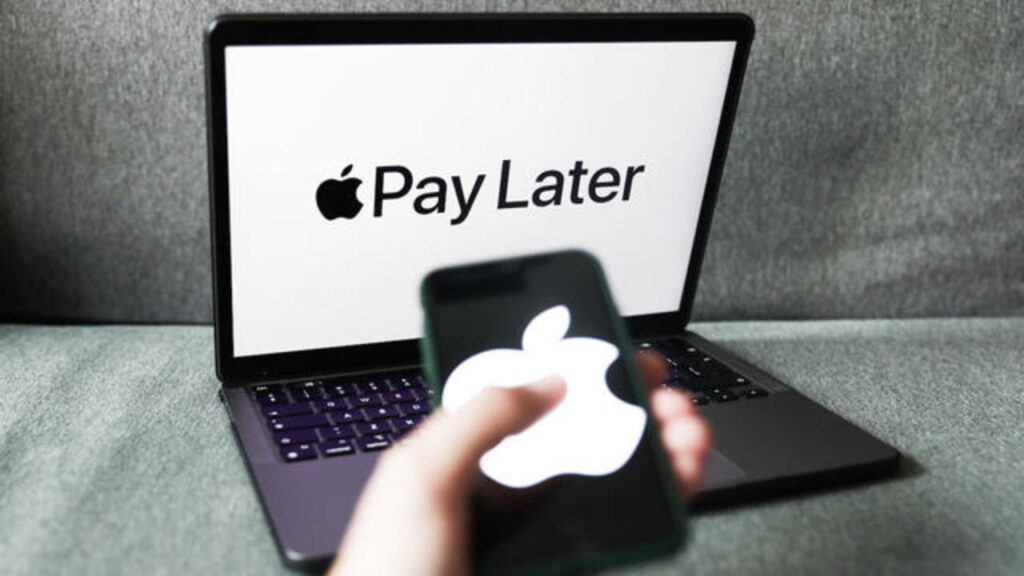
Apple launched its “buy now, pay later” (BNPL) service in the United States on Tuesday, threatening to disrupt the fintech sector dominated by companies such as Affirm Holdings and Swedish payments firm Klarna.
According to the company, Apple Pay Later will allow users to split purchases into four payments spread out over six weeks with no interest or fees. It will initially be available to a select group of users, with a full rollout planned in the coming months.
Apple services
According to the company, users can get loans ranging from $50 to $1,000 for online and in-app purchases made on iPhones and iPads with merchants who accept Apple Pay. According to the company, Apple Pay is accepted by more than 85% of US retailers.
Apple Pay Later will absolutely wallop some of the other players. Other companies would’ve taken a look at Apple’s announcement today because they are an ubiquitous name. This will take a bite out of the market share of other players,” said Danni Hewson, head of financial analysis at AJ Bell.
Affirm, a BNPL company, lost more than 7% of its value, while PayPal lost about 1%.
Pandemic-related lockdowns drove shoppers to online payment platforms in 2020, increasing demand for fintech companies that provide BNPL services, particularly to millennials and Gen Z customers.
PayPal and Block, both digital payments behemoths, have expanded into the sector through acquisitions, while Affirm went public in a multibillion-dollar IPO.
Rising interest rates and high inflation have dampened purchasing power and forced consumers to tighten their purse strings, so the sector’s fortunes have since turned.
“We expect Apple to tread cautiously, especially in this macro environment,” said Christopher Brendler, analyst at D.A. Davidson, alluding to its decision to not use a partner and underwrite, fund, and collect on the loans directly.
According to the company, Apple Pay Later is enabled through the Mastercard Installments program, with Goldman Sachs issuing the Mastercard payment credential.
Apple is entering the buy now, pay later space with a few tweaks to the existing model, including no credit card payment option.
The product will be available to some consumers this spring, and the loans will be reported to credit bureaus in the fall.
Since the outbreak, the option to “buy now, pay later” has gained popularity, particularly among young and low-income consumers who may not have easy access to traditional credit.
If you shop online for clothes, furniture, sneakers, or concert tickets, you’ve probably noticed the option to pay in smaller installments over time.
Companies such as Afterpay, Affirm, Klarna, and Paypal already provide the service, typically with late fees for missed payments and the option to make installment payments with a credit card or bank account.
According to the company, Apple’s version, which is integrated with Apple Pay and facilitated by MasterCard, will require consumers to use a debit card and a bank account to make those payments and will not charge flat or percentage late fees.
Missed payments, on the other hand, will eventually result in the consumer losing access to these types of loans.
According to the company, users can get loans ranging from $50 to $1,000 for online and in-app purchases made on iPhones and iPads with merchants who accept Apple Pay. According to the company, Apple Pay is accepted by more than 85% of US retailers.
PayPal and Block, both digital payments behemoths, have expanded into the sector through acquisitions, while Affirm went public in a multibillion-dollar IPO.
Rising interest rates and high inflation have dampened purchasing power and forced consumers to tighten their purse strings, so the sector’s fortunes have since turned.
To read our blog on “Huawei launches its new Watch, rival to Apple’s Watch Ultra,” click here