
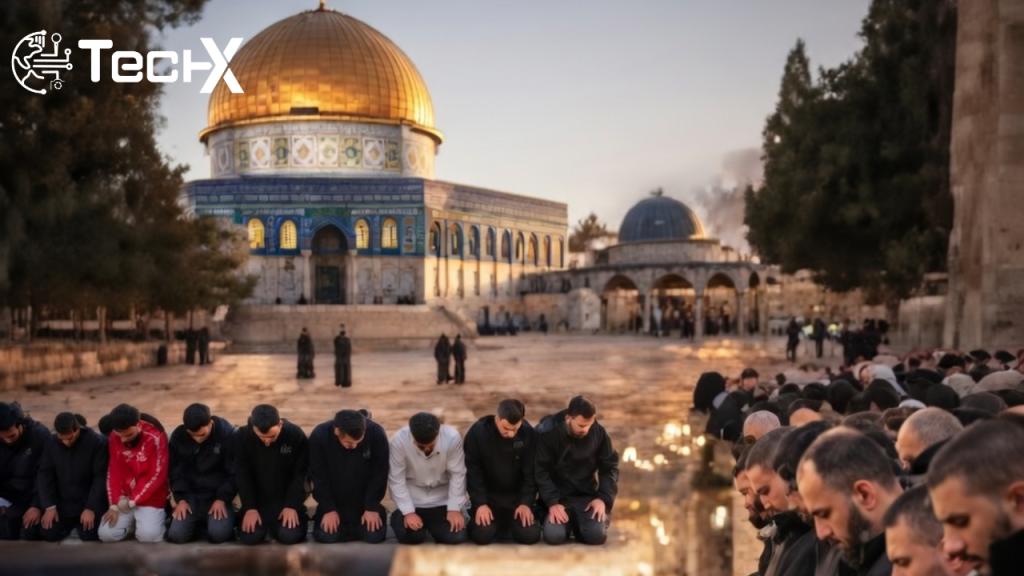
After being closed for about 40 days by Israeli authorities, the Al‑Aqsa Mosque in occupied East Jerusalem has been reopened to worshippers. The gates were opened early Thursday morning, allowing Muslim worshippers to enter the compound following a long period of restricted access.
Closure Amid Regional Tensions
The mosque had been shut since February 28, when Israeli authorities imposed a closure of major religious sites in Jerusalem, citing security concerns linked to the ongoing regional conflict and joint military actions involving Israel and its allies.
Dawn Prayers Mark the First Return
As the mosque reopened at dawn, hundreds to thousands of Palestinian Muslims entered the Al‑Haram al‑Sharif compound for morning prayers, marking the first large prayer gathering at the site since it was closed.
Emotional Homecoming
Many worshippers appeared emotional as they entered the holy site for routine prayers, including fajr (dawn) prayers, after weeks of being barred from accessing the mosque for worship. This moment was significant for local Muslim communities who consider Al‑Aqsa a central place of prayer and spirituality.
Security Deployment and Watch
Israeli authorities deployed hundreds of police and border guards in the Old City and on routes leading to the mosque ahead of the reopening, stating that the measure was intended to secure worshippers and visitors as access resumed.
Broader Religious and Political Impact
The reopening comes after a period in which other holy sites like the Church of the Holy Sepulchre were also closed. The temporary restriction of access to these sacred places had sparked regional concern over freedom of worship, making the reopening a deeply meaningful development for many believers.